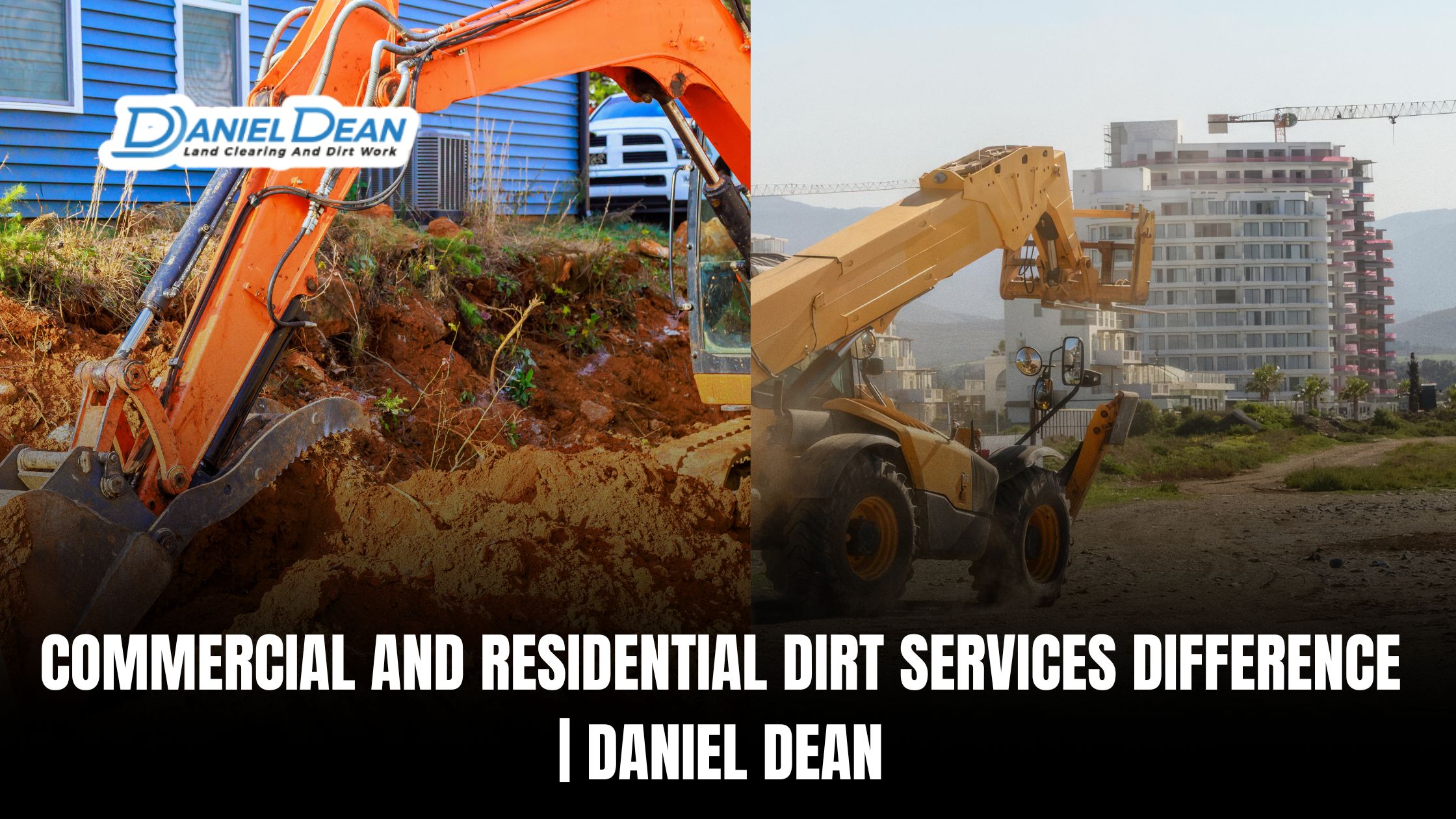
Not every dirt job is the same. A contractor prepping a 10-acre commercial development site has completely different challenges than a homeowner building a house pad on five acres outside of Houston. The equipment, timelines, regulatory requirements, and volume of material moved are all in a different league. At Daniel Dean, we work on both ends of that spectrum, and we have been doing it since 1993.
This guide breaks down what separates commercial and residential dirt services, what each type of project involves, and how to make a smarter decision when comparing providers or planning a budget.
The gap between residential and commercial dirt work becomes clear when you look at the amount of land, material, and infrastructure involved in a typical project.
- Advanced grading, drainage, and civil site preparation can add $5 to $45 per square foot, depending on site conditions and engineering requirements.
- Many warehouse and logistics developments in the Houston market are built on footprints that exceed 150,000 square feet, requiring substantial excavation, grading, and material movement before construction can begin.
What Residential Dirt Services Actually Look Like
When a property owner calls us about residential work, the conversation usually starts somewhere familiar: “I want to build a house on my land,” or “I’ve got standing water problems,” or “I need a driveway cut in.” These are real, practical problems and they all start with the ground.
Residential dirt services typically include things like house pad construction, final grading around foundations, driveway installation, culvert placement at roadside ditches, and drainage corrections. Before any of that happens, there is usually some lot clearing that needs to take place, whether that means removing brush, trees, or debris left from a previous structure.
One thing homeowners consistently underestimate is how much site prep affects everything that comes after. Land grading before construction is not optional, it is foundational. If the pad is not properly elevated and compacted, you will deal with settlement issues, poor drainage, and cracked slabs down the road. We have seen it happen on plenty of properties where someone tried to skip steps or hired a crew that did not take the time to do it right.
What Goes Into A Residential House Pad
- Soil sampling and bore testing to assess load-bearing capacity
- Sub-grade preparation, including wet sub-grade treatment if the soil is poor
- Compaction in lifts to meet the density requirements your foundation engineer specifies
- Final grade to direct water away from the structure
On the cost side, residential excavation pricing is most often quoted by the hour or as a flat project rate depending on scope. Hourly rates vary depending on equipment type, operator experience, material conditions, and haul distance. It is almost impossible to give an accurate number without seeing the site. If someone quotes you dirt work over the phone without asking about soil type, drainage conditions, or access, that is a red flag.
Request an Estimate
Every residential property is different. Contact Daniel Dean for a site-specific quote that actually accounts for your soil, terrain, and project goals.
Commercial Dirt Work Construction and What Makes It Different
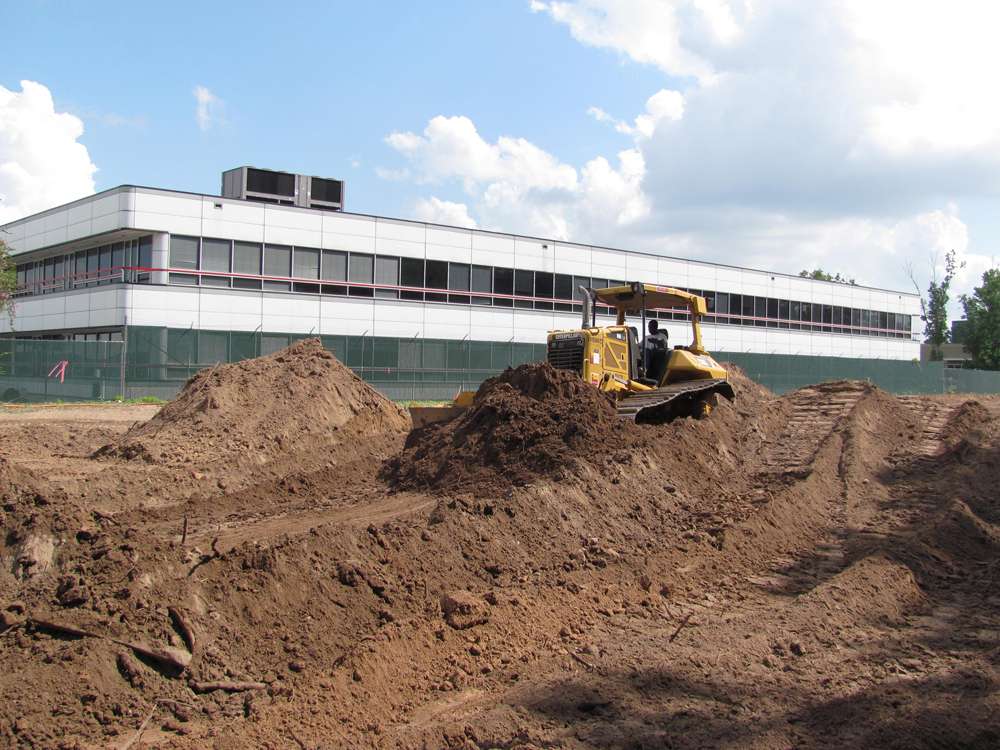
Commercial dirt work construction in Texas operates at a different scale and with a different set of requirements. A commercial building pad for a warehouse, retail strip, or industrial facility involves far more volume of material, stricter compaction standards, engineered grading plans, and tighter coordination with other trades on the job site.
At Daniel Dean, our commercial dirt work excavation work includes:
- Commercial building pad preparation and compaction
- Underground storm drain installation
- Detention and retention pond construction
- Laydown yard construction and grading
- Construction entrance installation
- Water filtration and erosion control systems during active construction
- Commercial final grading to engineered tolerances
One area where commercial and residential dirt work construction diverge the most is compaction testing. Residential work often relies on the experience of the operator. Commercial projects, by contrast, almost always require third-party compaction testing at multiple stages, with written documentation that the material meets the proctor density specified in the geotechnical report. There is no shortcutting this. If your building inspector asks for compaction test results and you cannot produce them, you are not moving forward.
Commercial Project Note
Commercial building pads in Texas typically require compaction testing performed by a licensed geotechnical firm at regular lift intervals. Make sure your dirt work contractor understands these requirements before they start moving material.
Commercial projects also tend to involve more coordination around drainage infrastructure. Underground storm drains, detention ponds, and engineered drainage swales all have to be sized and graded according to a civil engineer’s plans. We work within those plans, not around them.
Dirt Removal Service and Hauling
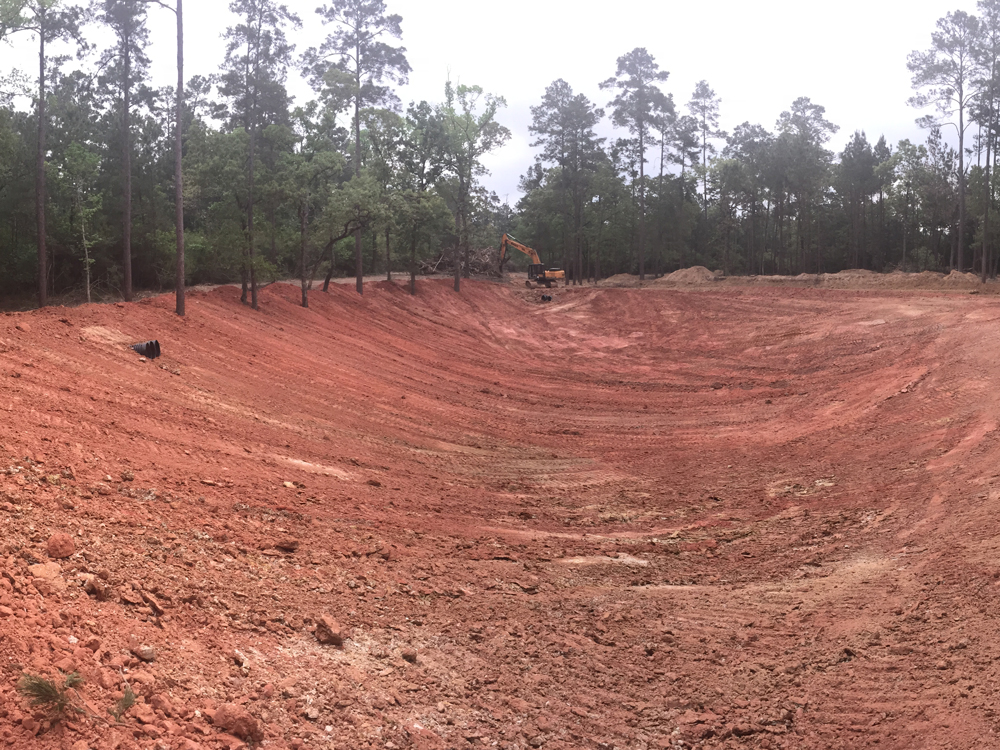
Whether the job is residential or commercial, there is almost always a question of what happens to the material that comes out of the ground.
Dirt work excavation generates spoils, and those spoils have to go somewhere. For some projects, excess fill can be redistributed on the same property to build up other areas. But often, the material is unsuitable for reuse (hydric soils, organic material, contaminated fill), or there simply is no place to put it on site. That is where a dirt removal service becomes part of the overall project cost.
Our dirt hauling service handles transport to appropriate disposal or fill sites, and we factor haul distance, material type, and truck loads into your project estimate. This is a line item that gets overlooked during budget planning more often than it should. If you have a commercial pad that requires cutting down a site by four feet across two acres, you are generating a significant amount of material. Not accounting for dirt removal in your budget will cost you later.
Hauling and Disposal Considerations
The cost of a dirt hauling service depends on material type, site accessibility, truck capacity, and disposal site distance. For commercial projects, always ask your contractor to break out hauling as a separate line item so you can evaluate it clearly. For residential projects, ask whether material can be redistributed on your property to reduce cost.
Dirt Work Contractors: What to Look For When Comparing Local Providers
When property owners start searching for dirt work contractors in the Houston area or in Texas, they often compare based on price alone. That is usually how projects go sideways. Price matters, but it is not the whole picture.
Here is what actually separates good dirt work contractors from the ones who will cost you more money in corrections later.
- Own their equipment. Contractors who own their machines have more control over scheduling and maintenance. When a subcontracted equipment provider pulls out of a job or goes down with mechanical issues, your timeline suffers. At Daniel Dean, we operate our own equipment and have for over 30 years.
- Understand local soil and drainage conditions. Houston-area soil is notoriously variable. You can have sandy loam in one area and expansive clay fifty feet away. A contractor who has worked this region for decades knows what to expect and how to deal with it. That local knowledge shows up in better outcomes.
- Communicate clearly. You should know what work is being done, why, and in what order. If a contractor cannot explain their process in plain terms, that is a problem. We make it a point to walk every client through what we are doing and why.
- Handle multiple phases. If you need tree removal before dirt work begins, it helps to work with a company that can handle both rather than coordinating multiple separate contractors. We offer land clearing, grading, excavation, drainage, pond work, erosion control, and more under one operation.
Ponds, Drainage, and Specialty Dirt Work Excavation
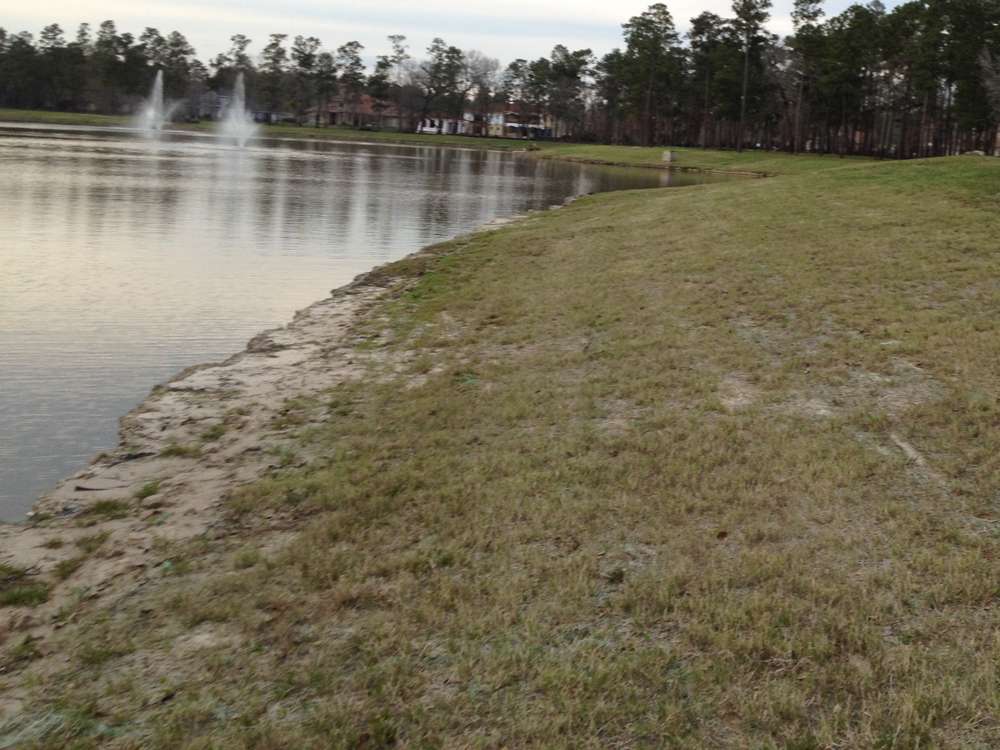
Not all dirt work excavation fits cleanly into a “residential house pad” or “commercial building pad” category. Some of the most complex work we do involves ponds, drainage corrections, and erosion control, and these projects require a different kind of thinking.
For property owners dealing with pond issues, sedimentation is one of the most common long-term problems. Ponds fill in over time as runoff carries sediment into the basin, you lose storage volume, water quality drops, and aquatic life suffers. Proper pond maintenance and sediment management starts with understanding where sediment is coming from and interrupting that process, not just dredging it out and starting the clock over.
On drainage, the most expensive mistake property owners make is treating the symptom instead of the cause. Installing a French drain when the real problem is that your grade pushes water toward your structure will not solve anything. We look at the full drainage picture before recommending a solution.
Request an Estimate
Dealing with standing water, pond sedimentation, or drainage issues on your property? Talk to us about a site evaluation. We have been solving these problems across the Houston area for over three decades.
How Dirt Hauling and Material Costs Affect Your Budget
A project budget that does not account for material movement in both directions is incomplete. You may need fill brought in to raise a pad, and you may also need spoils hauled off. Both of those are line items in a real dirt services estimate.
Factors that influence final excavation pricing include:
- Soil conditions (rocky, sandy, or expansive clay all behave differently and affect machine hours)
- Site accessibility for heavy equipment and dump trucks
- Haul distance to disposal or fill sites
- Volume of material to be moved
- Whether engineered plans require specific compaction standards
- Permits or environmental restrictions on the site
For commercial developers managing tight construction budgets, having a dirt work contractor who understands how to price accurately upfront matters. We do not low-ball estimates to win jobs and then hit you with change orders mid-project. Our estimates are based on actual site conditions.
Pricing Note for Commercial Projects
Commercial dirt work construction typically has project minimums because of equipment mobilization, trucking, fuel, operator costs, and crew scheduling. In Texas, small commercial site preparation projects often start around $25,000 to $100,000+ for sites between 1 and 5 acres. Meanwhile, larger developments can exceed that range depending on grading requirements, imported fill, drainage infrastructure, and compaction specifications.
Why the Daniel Dean Difference Matters
We are not a large anonymous contractor who picks up jobs off a bidding platform. Daniel Dean is a family-based operation with more than 30 years of experience in the Houston area, and every customer we have worked with has been willing to give a testimonial about the experience. That is not something we say lightly.
Our dirt services cover residential and commercial work including land clearing, site grading, excavation, road and driveway construction, pond work, drainage, erosion control, demolition, and more. We bring our own equipment, we know the regional soil and terrain, and we stay in communication from estimate to final grade.
If you are a property owner, developer, or general contractor trying to figure out what your site actually needs, start with a conversation. We will tell you what we see, what needs to happen, and what it will cost, without the runaround.
FAQs
What is the difference between residential vs commercial?
Residential projects typically serve homes, private landowners, and small-scale developments, while commercial projects support businesses, industrial sites, and larger developments. Commercial work usually involves stricter engineering requirements, larger equipment, and more extensive permitting and testing.
Is commercial concrete different than residential concrete?
Yes. Commercial concrete often requires higher strength ratings, thicker pours, reinforced designs, and engineered specifications to support heavier loads and greater traffic. Residential concrete generally focuses on driveways, patios, and home foundations with less demanding structural requirements.
Is there a difference between commercial and residential asphalt?
Yes. Commercial asphalt is typically thicker and designed to withstand heavy vehicle traffic, delivery trucks, and constant use. Residential asphalt is usually installed for driveways and light vehicle traffic, so it often requires a less robust pavement structure.
Final Thoughts on Dirt Services in Texas
The difference between a well-executed dirt project and a problematic one often comes down to who is doing it and how seriously they take site prep. Whether you are grading a residential tract or mobilizing on a commercial development, the ground work matters. Get it right the first time and everything built on top performs the way it should. Cut corners and you will spend far more fixing problems later than you would have spent doing it properly up front.
Request an estimate from Daniel Dean and let us take a look at what your property actually needs.