
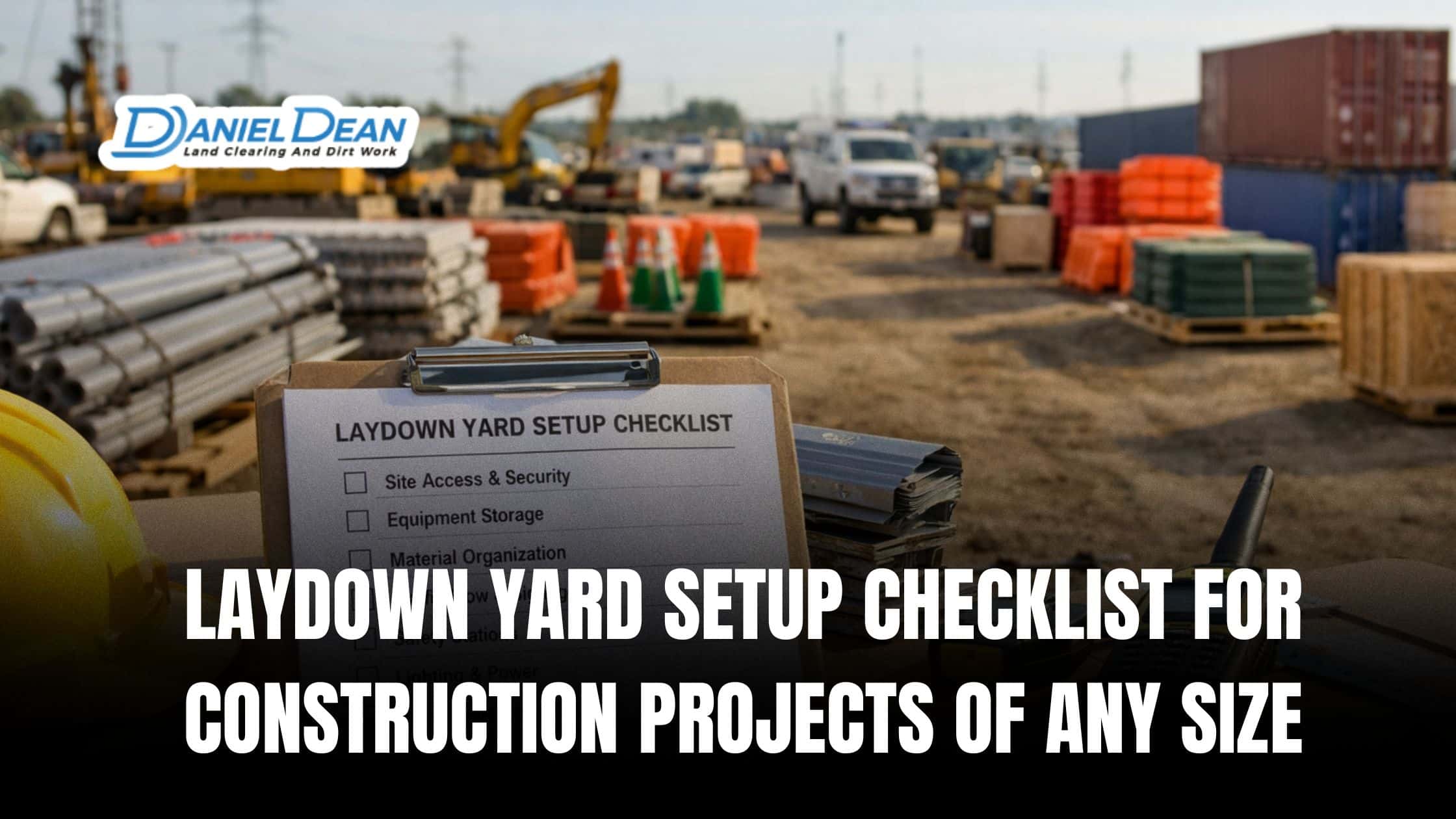
Have you ever watched a construction project fall behind schedule even though crews and equipment showed up ready to work? Does a disorganized laydown yard quietly slow production more than labor shortages or missed deliveries? Studies show that supervisors can lose roughly 35 to 45% of their time on non productive tasks such as locating materials and equipment, and that inefficiency often traces back to a poorly planned laydown yard. Even on mid sized projects, cutting search time by only ten percent can recover hundreds of labor hours each month.
The real problem is not effort but organization. When site preparation fails to account for a functional laydown area in construction, materials scatter, traffic patterns conflict, and safety risks increase. These issues compound daily and drain productivity across the entire job site.
In this blog post, you will learn how to set up a laydown yard that supports efficient workflow, clear zoning, and material control. This checklist shows how to design a laydown area that reduces wasted time, improves safety, and keeps construction projects of any size moving forward.
1. Site Selection and Ground Stabilization
Effective site selection sets the foundation for a functional laydown yard. Contractors must choose a location that supports daily operations without interfering with construction progress.
Start with site preparation. Evaluate soil conditions, drainage patterns, and load bearing capacity. Soft or uneven ground leads to equipment instability, standing water, and damaged materials. A stable surface reduces downtime and improves safety for forklifts, cranes, and delivery trucks.
Key considerations for site selection include:
- Proximity to active work zones to reduce material travel time
- Clear separation from public access and pedestrian routes
- Adequate space for future material deliveries and staging needs
- Access to utilities if lighting or temporary power is required
Ground stabilization plays a critical role, especially in high traffic laydown areas. Compacted gravel, crushed stone, or temporary ground protection mats improve load distribution and prevent rutting. In wet climates or long term projects, proper grading and drainage channels help control runoff and protect stored materials.
A well prepared base ensures that the laydown yard remains usable throughout the project lifecycle rather than only during ideal weather conditions.
2. Perimeter Security and Safety Compliance
Once the location is established, perimeter control becomes the next priority. A laydown area in construction often stores high value materials, tools, and heavy equipment, which makes it a frequent target for theft and unauthorized access. When contractors fail to secure the laydown yard properly, they increase safety risks, insurance exposure, and costly disruptions to daily operations.
| Security and Safety Element | Purpose in the Laydown Yard | Impact on the Job Site |
| Perimeter fencing or barriers | Clearly defines the laydown area boundary | Prevents unauthorized access and material loss |
| Controlled entry points | Limits access to approved personnel and deliveries | Improves accountability and site control |
| Safety signage and markings | Identifies hazards and traffic patterns | Reduces accidents and confusion |
| Adequate lighting | Improves visibility during low light conditions | Supports safe early and late shifts |
| Emergency access routes | Maintains clear paths for response vehicles | Protects workers during incidents |
Safety compliance must align with OSHA standards and the project specific safety plan. Contractors should separate pedestrian walkways from equipment routes, place fire extinguishers near fuel or combustible storage, and keep emergency access routes clear at all times. Regular inspections of the laydown yard help identify new hazards as site conditions change. When teams combine perimeter security with consistent safety enforcement, the laydown area supports productivity while protecting workers, materials, and equipment.
3. Zonal Organization and Traffic Logistics

Zonal organization transforms a crowded storage space into a high functioning laydown yard. Each zone should support a specific purpose within the construction workflow.
Divide the laydown area into clearly labeled sections such as:
- Bulk material storage
- Palletized materials and prefabricated components
- Equipment parking and maintenance
- Loading and unloading zones
- Waste and recycling areas
This layout reduces material handling time and minimizes confusion during peak activity. Workers locate materials faster and equipment operators navigate the site with fewer conflicts.
Traffic logistics require equal attention. Define one-way traffic routes where possible to prevent congestion and collisions. Allocate sufficient turning radius for delivery trucks and cranes. Use ground markings, cones, and signage to reinforce movement patterns.
Efficient zoning and traffic planning directly affect productivity. When materials flow smoothly from the laydown yard to the work area, crews maintain momentum and avoid costly delays. Setting up these systems correctly from day one is essential, as failing to account for space and flow is one of the site preparation common mistakes that can derail a project’s timeline and budget.
4. Inventory Management and Environmental Controls
Inventory management ensures that materials stored in the laydown yard remain accounted for, accessible, and protected. Without a system, projects risk over ordering, material damage, and lost assets.
Implement an inventory tracking method that matches project size and complexity. Smaller projects may rely on labeled zones and delivery logs, while larger sites benefit from digital inventory systems tied to procurement schedules.
Environmental controls protect materials from weather exposure and contamination. Construction materials often degrade when exposed to moisture, UV light, or temperature extremes.
Effective environmental strategies include:
- Covered storage for cement, drywall, insulation, and finishes
- Elevated pallets to prevent ground moisture damage
- Spill containment for fuels, oils, and chemicals
- Dust control measures to protect sensitive components
These practices extend material lifespan and reduce replacement costs. They also support environmental compliance and responsible site management. Beyond just protecting your assets, ensuring your site is properly prepped and cleared by a professional is the first step in preventing logistical headaches.
For those operating in specific regions, partnering with an experienced land clearing contractor in Magnolia, TX is a proactive way to avoid costly delays before the first pallet even arrives.
Frequently Asked Questions
What are the key requirements for a laydown area?
A laydown area must support safe, efficient material storage and movement throughout the project. Key requirements include proper site preparation, stable ground conditions, and clear access for delivery vehicles and equipment. Contractors should define boundaries, control entry points, and separate pedestrian routes from equipment paths. Adequate drainage, lighting, and signage also play a critical role. When these elements work together, the laydown yard reduces search time, prevents material damage, and supports consistent workflow.
What is the 20/20 rule in construction?
The 20/20 rule in construction refers to the principle that roughly 20 percent of activities or decisions often influence 80 percent of project outcomes. In material handling and logistics, small improvements in laydown yard organization can deliver outsized gains in productivity. Clear zoning, consistent labeling, and efficient access paths in the laydown area can significantly reduce wasted movement and non productive time on site.
What is a laydown area in construction?
A laydown area in construction is a designated space used to store materials, equipment, and prefabricated components before installation. It supports daily operations by keeping resources organized, protected, and accessible. When planned correctly, the laydown yard improves safety, minimizes congestion, and helps crews move materials from storage to the work area without delays.
Final Thoughts on Laydown Yard Setup Checklist for Construction Projects of Any Size
A well planned laydown yard ensures smoother workflow, better safety, and reduced delays on any construction project. From site preparation and ground stabilization to security, zoning, and inventory management, each step in this checklist helps protect materials, improve efficiency, and keep crews productive.
Now it’s time to take action. Review your site or upcoming project to identify gaps in layout, access, or preparation, and address them before materials and equipment arrive.
For expert support with land clearing and site preparation, contact the team at Daniel Dean. Our professionals can help prepare your laydown area and ensure your project starts on the right foot. Reach out today for guidance or any questions about your next construction site.