
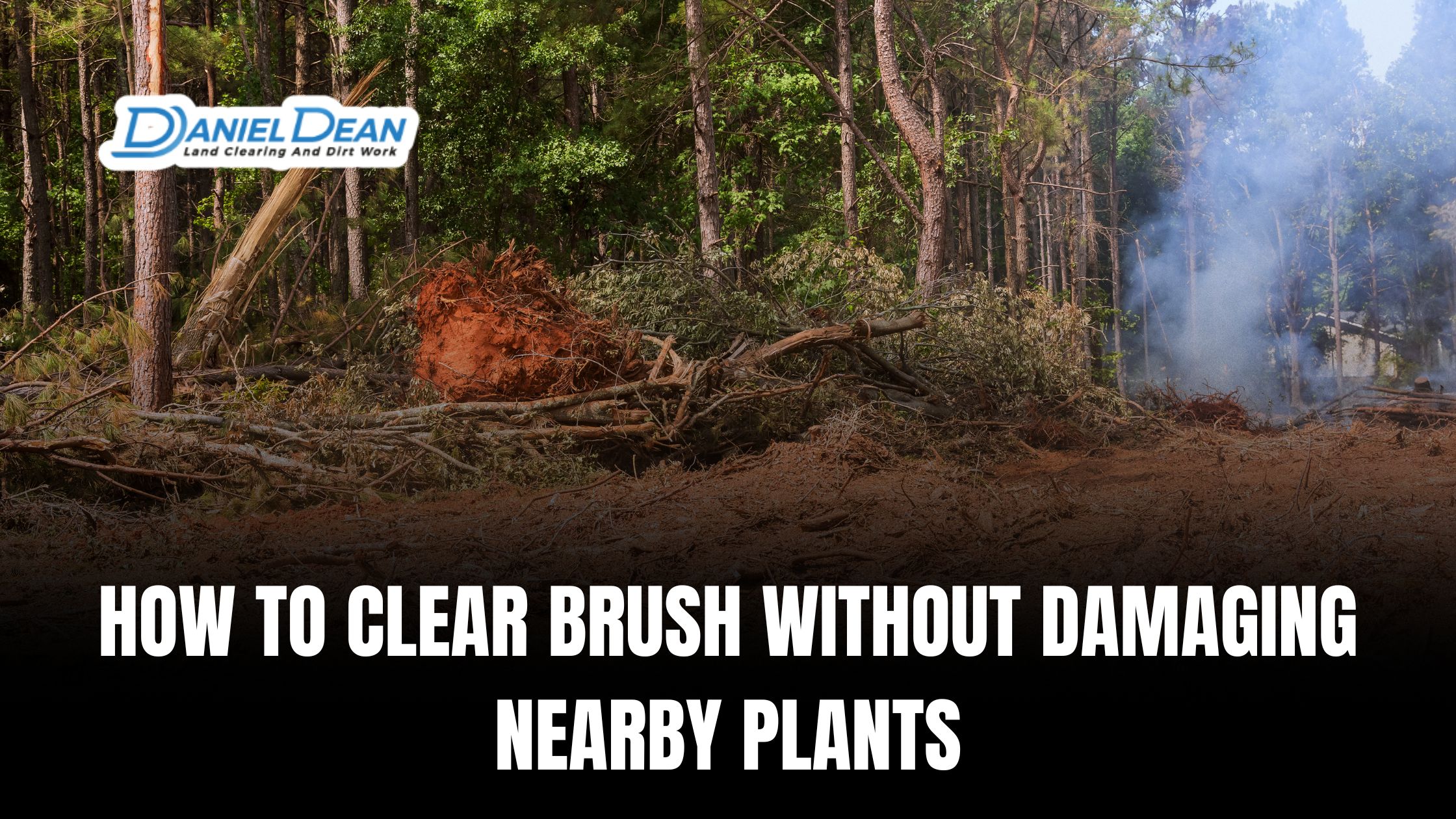
Have you ever stared at an overgrown yard or wooded area and wondered how to clear brush without harming the plants you want to keep? In Texas alone, invasive brush and weeds consume an estimated 38% of the state’s average annual rainfall, making effective underbrush removal critical for land management.
More than 32 million acres are classified as dense brush, with canopy cover between 31 and 100%, creating a challenging environment for homeowners and landowners alike. Learning how to clear brush the right way helps maintain healthy plants while reclaiming space for gardens, trails, or other projects.
Many people struggle with how to clear brush in woods or clear land of trees and brush without causing damage to surrounding vegetation. In this blog post, we will explore safe, practical strategies for removing unwanted growth, protecting priority plants, and managing debris to restore your property efficiently and sustainably.
Identify and Flag Priority Plants
Start by identifying which plants, shrubs, and trees you want to protect. Walk the area and look for ornamentals, young trees, native plants, or established root systems that you do not want disturbed. This step matters even more when learning how to clear land of trees and brush because heavy growth often hides valuable plants.
Use brightly colored flags, stakes, or biodegradable marking tape to mark priority plants. Place markers far enough from the base to show where roots may spread underground. This visual guide helps you avoid accidental cuts and prevents tools from straying too close. Taking time to mark protected plants also creates a clear work zone, which improves efficiency and safety throughout the project.
Once you flag priority plants, step back and plan the order of removal. Work from the outer edges toward the center to reduce foot traffic and soil compaction near sensitive areas.
Manual Removal and Precision Tools
Manual removal gives you the highest level of control when clearing brush near plants you want to preserve. Hand tools allow you to target unwanted growth without disturbing surrounding soil, which makes this method ideal for underbrush removal in gardens, wooded areas, and landscaped properties. When learning how to clear brush safely, especially in tight spaces, precision tools reduce the risk of damaging roots, stems, and beneficial ground cover. This approach proves especially effective for homeowners working on how to clear brush in woods where plant spacing is tight and visibility can be limited.
| Tool | Ideal Brush Type | Typical Cutting Capacity | Best Use Scenario | Key Benefit |
| Pruning Shears | Soft stems, vines, weeds | Up to 0.75 inch diameter | Close to flowers and young plants | Clean, controlled cuts with minimal effort |
| Loppers | Woody brush, small branches | 0.75 to 2 inches diameter | Around shrubs and low tree limbs | Added leverage without excessive force |
| Hand Saws | Thick brush, saplings | 2 to 5 inches diameter | Tight wooded areas or near trunks | Precise cuts without root disturbance |
| Narrow Blade Brush Cutters | Dense undergrowth | Mixed thickness growth | Clearing paths and edges | Focused cutting with reduced soil impact |
| Root Cutters or Mattocks | Shallow rooted brush | Root level removal | Selective clearing without uprooting | Limits damage to nearby root systems |
Cut brush at ground level rather than pulling it out when roots intertwine with nearby plants. Pulling often tears root systems and disrupts soil structure, which can stress or kill desirable vegetation. For thicker stems and woody growth, make clean angled cuts to reduce splintering and prevent bark damage to surrounding plants. Work in small sections and remove debris regularly to maintain visibility and footing. Although manual removal takes more time, it delivers cleaner results and better plant preservation when learning how to clear land of trees and brush with minimal impact.
Barriers and Protection Techniques
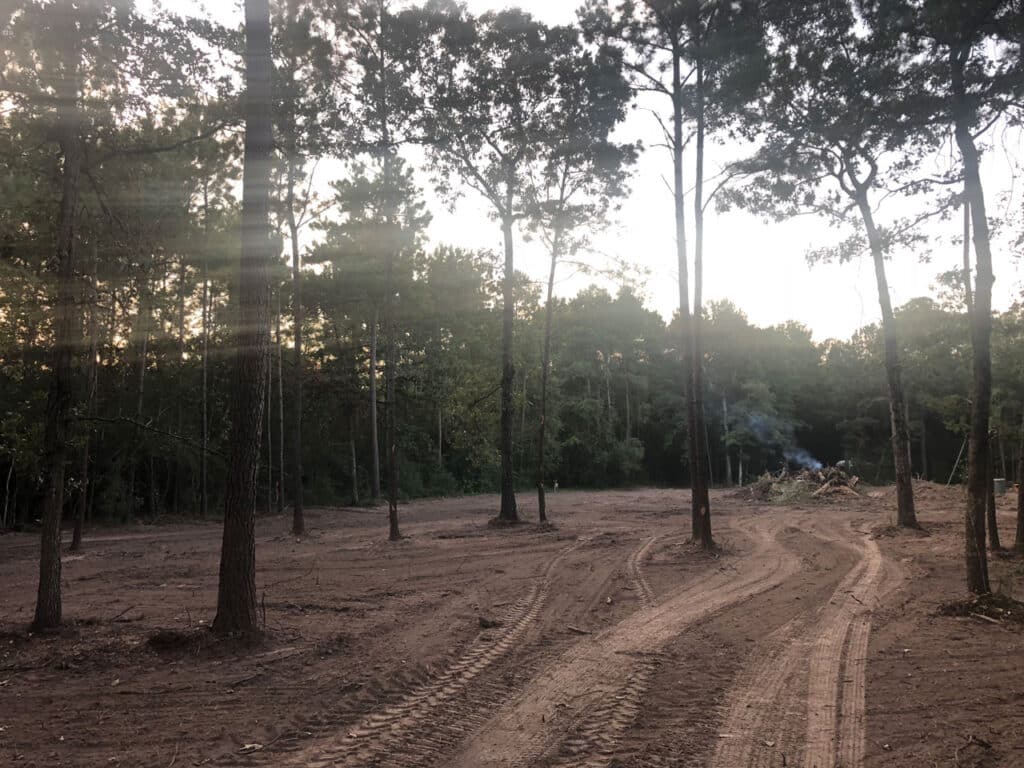
Physical barriers provide essential protection when working close to valuable plants and established root systems. When learning how to clear brush safely, barriers help prevent accidental cuts, bark damage, and soil disturbance caused by tools or foot traffic. Simple materials like cardboard, plywood, and landscape fabric create a protective buffer during underbrush removal, especially in tight spaces. This approach proves useful when figuring out how to clear brush in woods or how to clear land of trees and brush where vegetation grows close together and visibility remains limited.
- Place cardboard or plywood around tree trunks to shield bark from saws and cutters
- Use landscape fabric to cover exposed roots and delicate ground cover
- Secure barriers loosely to allow airflow and prevent moisture buildup
- Remove barriers immediately after clearing to avoid trapping pests or heat
- Reposition barriers as you move through sections to maintain consistent protection
Mulch supports protection and recovery after clearing brush. Apply a light, even layer around priority plants to cushion the soil, reduce erosion, and stabilize moisture levels. Mulch also limits weed regrowth, which reduces future underbrush removal needs.
When moving through dense growth, adjust your walking paths, lift tools instead of dragging them, and limit repeated steps near root zones. These habits protect soil structure, reduce plant stress, and improve results when clearing brush in sensitive areas. To complement these protective measures, follow the tips in common site preparation mistakes to ensure your land stays healthy and well-prepared.
Controlled Disposal and Aftercare
Proper disposal completes the brush clearing process without undoing your careful work. Pile cut brush away from protected plants to prevent smothering or moisture buildup. Depending on local rules, you can chip the debris, compost it, or arrange for yard waste removal.
After removal, inspect the cleared area for exposed roots or compacted soil. Lightly loosen soil by hand where needed and water deeply to help plants recover. This aftercare step matters when learning how to clear land of trees and brush because cleared areas often experience increased sun and wind exposure.
Monitor the site over the next few weeks and watch for new shoots that emerge from remaining roots. Address regrowth early with targeted trimming instead of aggressive removal, which can disturb soil and harm nearby plants. Consistent maintenance keeps the area clear while supporting long term plant health.
For added insight into protecting soil and preventing runoff after clearing, review these pond erosion control best practices to support a healthier and more stable landscape.
FAQs
How to clear a brush by yourself?
Clearing a brush by yourself requires planning and the right tools. Start by identifying the area you want to clear and marking any plants you want to protect. Use hand tools like pruning shears, loppers, or a small saw for precision. Work in small sections, cutting brush at ground level rather than pulling it, and remove debris as you go. Taking your time and following proper safety practices ensures effective underbrush removal without damaging surrounding plants.
What is the best way to clean out a hairbrush?
Cleaning a hairbrush regularly prevents buildup of hair, oils, and debris. Start by removing hair strands with a comb or fingers. Soak the brush in warm water mixed with mild shampoo or baking soda for 10 to 15 minutes. Use an old toothbrush to scrub between the bristles, rinse thoroughly, and let it air dry completely before using again.
How to clear a thick bush?
Clearing a thick bush requires a combination of cutting tools and careful planning. Begin by trimming the outer branches with pruning shears or loppers. For larger stems, use a hand saw to make clean, angled cuts at the base. Remove cut branches carefully to avoid damaging nearby plants or soil. If the bush has deep roots, cut at ground level instead of pulling it out to prevent soil disruption. For dense wooded areas, clearing in sections helps maintain control and visibility.
Final Thoughts on How to Clear Brush Without Damaging Nearby Plants
Clearing brush without harming nearby plants requires planning, precision, and ongoing care. Start by identifying and flagging priority plants, use manual tools for controlled cuts, protect sensitive areas with barriers and mulch, and manage debris through proper disposal and aftercare. Regular monitoring for regrowth ensures that your cleared space remains healthy and manageable, while minimizing stress on desirable vegetation.
Now that you understand the safe techniques for underbrush removal and how to clear brush in woods or open land, it’s time to put these strategies into action. Take small, deliberate steps and follow best practices to preserve your landscape while reclaiming space efficiently.
For professional support with land clearing, brush removal, or related services, contact Daniel Dean. Our team can provide expert guidance, answer your questions, and help ensure your property is cleared safely and sustainably. Reach out today to get started.