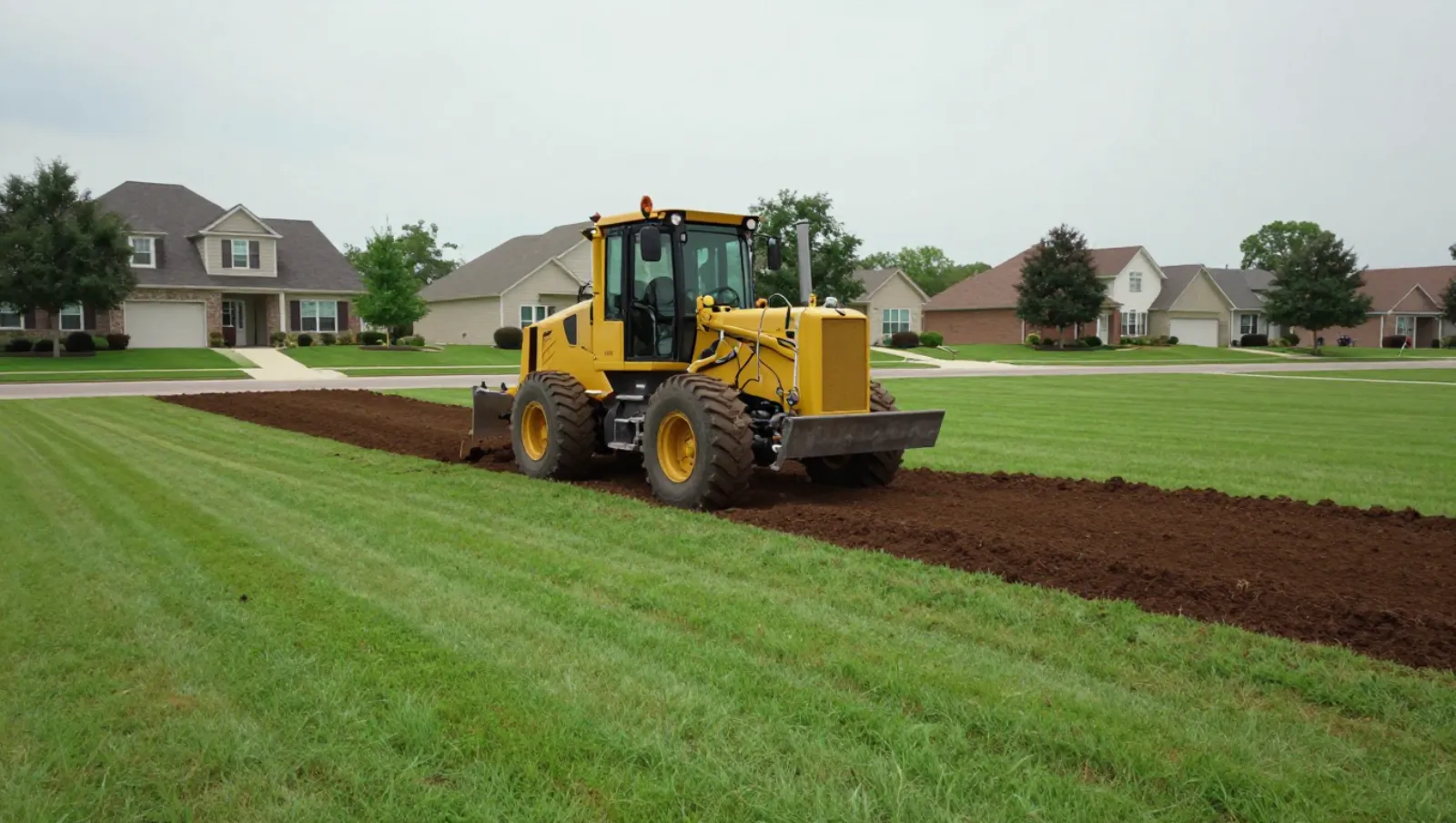
Most Houston yard-grading calls start as a water complaint. The lawn holds water after rain, or the ground slopes back toward the house, and the fix is shaping the ground so water leaves rather than adding pipe to carry it away.
On a typical lot that means establishing positive fall away from the foundation, filling the low spots that hold water, and finishing to a grade that can actually be mowed. Ground that only looks level is not the goal — a consistent, gentle fall is.
Where the whole lot sits low relative to the street or the neighbours, grading alone will not solve it and we will say so. That becomes a drainage job with a real outfall, which is a different scope and a different price.
What this covers in Houston
- Positive drainage grade established away from the foundation
- Low-spot filling and lawn leveling
- Rough-terrain smoothing on larger lots and acreage
- Topsoil placement and finish grading before sod or seed
- Honest assessment when grading alone will not fix the water
How the work runs in Houston
Map the high and low spots
The fall across the field decides the plan. Ground that only looks level is not the goal — a consistent, drainable grade is.
Cut the highs into the lows
Material is moved rather than imported wherever possible, which keeps the cost down and the topsoil on the property.
Fill and compact the old holes
Wallows, filled tanks, and abandoned terraces get filled properly. Loose fill in an old hole reappears as a depression after the first wet season.
Finish for the intended use
Hay, grazing, an arena, and a build site all want different finishes, so the last pass is set by what the ground is for.
Land & Yard Grading in Houston — common questions
- What does land leveling involve?
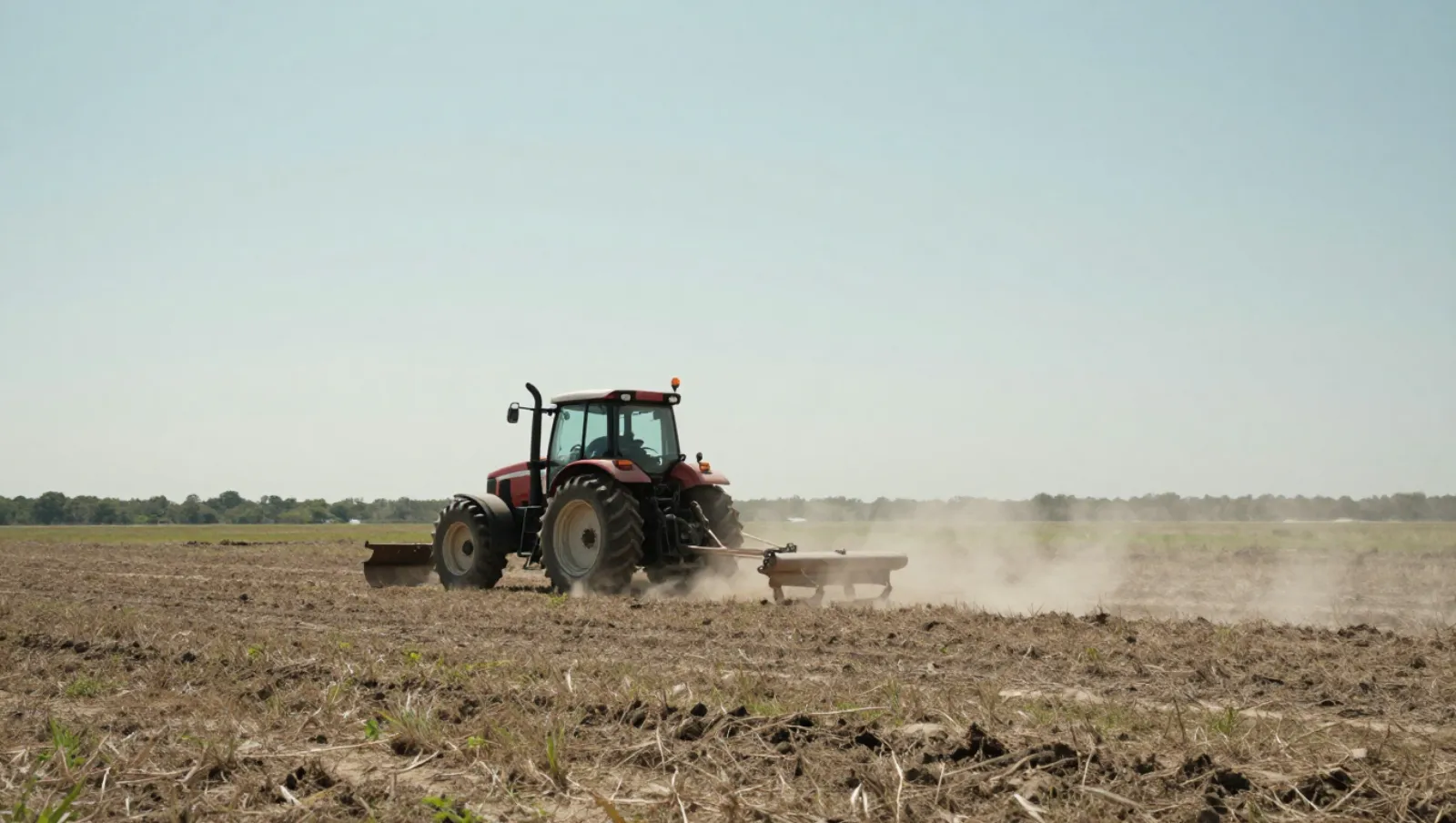
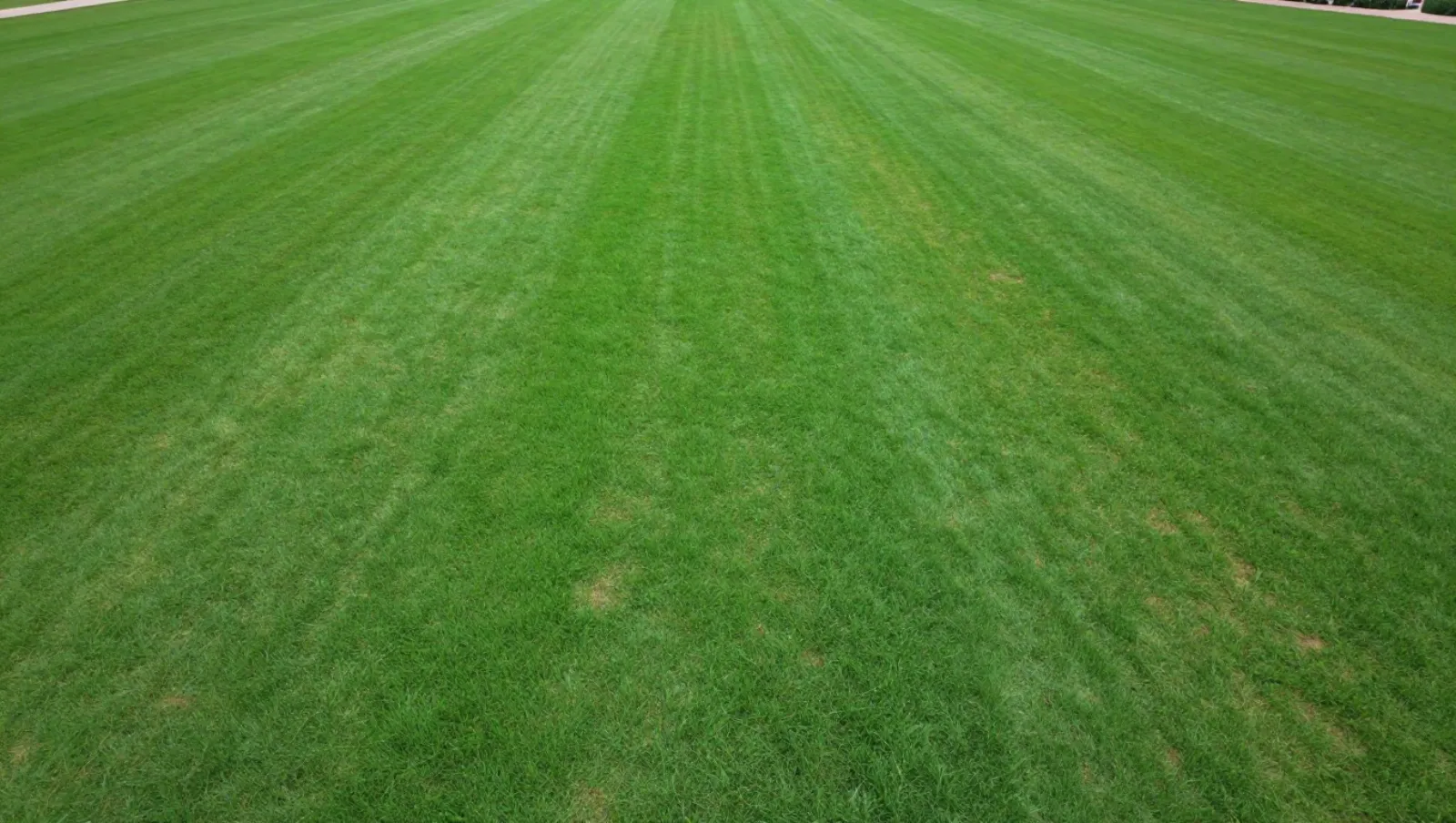
- Cutting the high ground into the low spots until the field drains and can be crossed at speed. It is not one pass with a blade — old wallows, filled tanks, and abandoned terraces have to be filled properly, and the finish grade is set for what the ground is actually for.
- Will the field stay level once it is done?
- If the drainage was right, yes. Ground that ponds water will rut again under the first equipment that crosses it wet, which is why shaping and the water path get worked out together rather than levelling first and dealing with wet spots afterward.
- Can you level around existing trees and fences?
- Yes. Working around fixed features slows the machines down and that shows up in the quote, but it is normal work. What matters is agreeing beforehand what stays, because a tree removed by assumption cannot be put back.
- Is this the same as grading for a building pad?
- Related but not the same. A pad is built to a specific elevation and compacted to carry structure. Field smoothing is about consistent, drainable fall across a larger area, and it does not need the same compaction.
Areas we serve around Houston
Bellaire · Memorial · Spring Branch · Cypress · Katy · Humble · Harris County