
Most people have no idea how important drainage really is. Construction or property improvements often impact the flow of water on the property. It's important to work with the water flow, not against it.
Drainage Solutions in Houston, TX
Most people have no idea how important drainage really is. Construction or property improvements often impact the flow of water on the property. It's important to work with the water flow, not against it.
- 33 years in businessSoutheast Texas since the start
- 1,000's of projectsResidential and commercial
- Fully insuredCertificate available on request
- Free on-site estimatesPriced from your actual property
- 11 counties servedHarris · Montgomery · Waller · Washington · Fort Bend and beyond
How much does drainage work cost?
Drainage is priced by the solution, not off a rate card. Open swales, a swale-and-pipe combination, an underground system, and an underground system with a lift station are four different jobs on the same size property. Below is what actually swings a drainage quote — we walk the site, figure out where the water can go, and put a firm number in writing at no charge.
What moves the price
- Where the water starts and where it can go
- The first two questions on every drainage job are where the water is coming from and where it needs to go. The elevation drop between those two points decides which of our named solutions will actually work.
- Which of the four named solutions the site calls for
- Open swales, a swale and pipe combination, an underground drainage system, or an underground system with a lift station are four different jobs with four different costs, on the same size property.
- How much pipe, and what size
- Swales, pipe, French drains, and channel drains price by the linear foot. Catch basins, area drains, headwalls, and inlet boxes price by the structure. More pipe and bigger pipe both move the number.
- Whether the water needs a pump to get there
- Gravity is free. When a site is too flat for gravity to carry water to the outfall, a lift station and pump are added to the job, which is a different scope than a gravity-fed system.
- Restoration and access
- Tight access, a property line the neighbor has to sign off on, and how much disturbed ground needs seed, fabric, or riprap afterward all move the price beyond the pipe and dirt itself.
Tell us where the water is coming from and where it is causing trouble, and we will come look at where it can go. The estimate is free and the number comes to you in writing before any equipment rolls.
Get my free estimateDitch Regrading
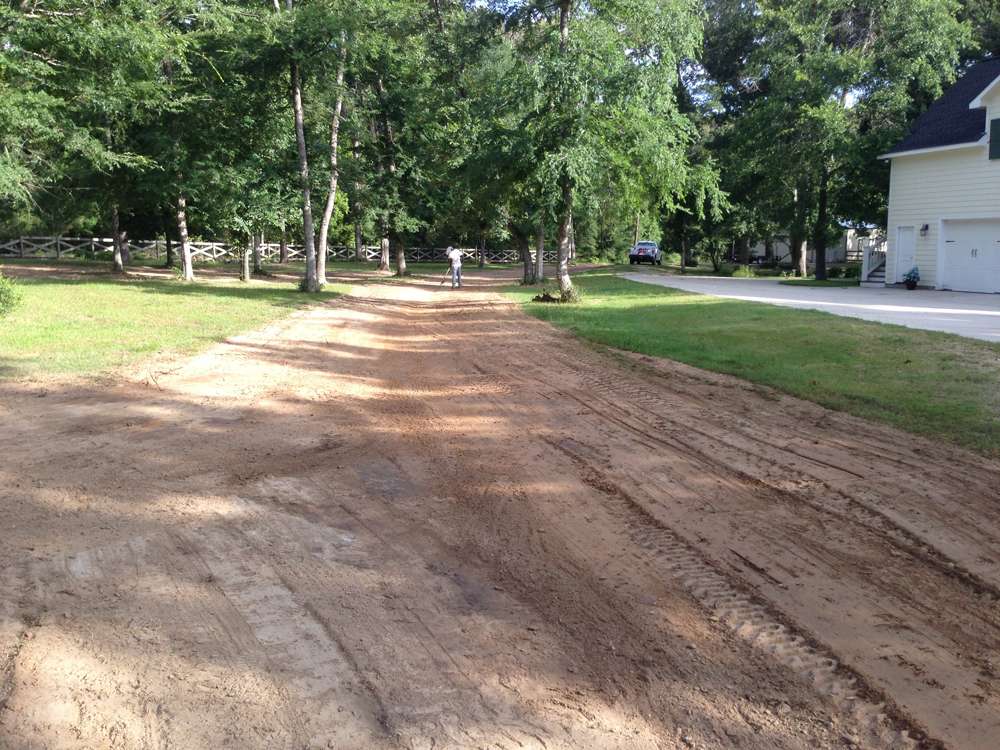
Ditches require maintenance over time. Ditch walls erode and silt accumulates on the bottom, reducing the ditch's ability to carry water effectively. When water can't flow properly, it backs up and causes flooding on your property.
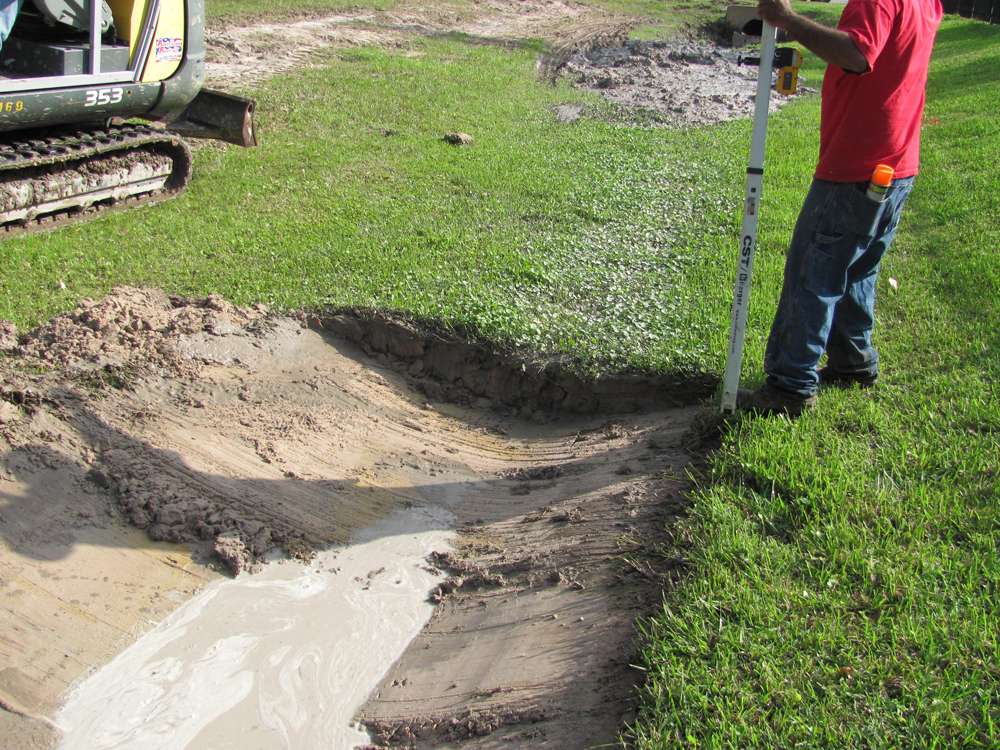
We shoot elevations to determine exactly where the blocking material is and how much needs to be removed. Proper ditch regrading restores the flow of water and prevents future drainage problems.
- Walls eroding and collapsing into the ditch over time
- Silt and debris accumulation reducing water capacity
- Elevation shooting to identify problem areas precisely
- Erosion control blankets to prevent future degradation
- Proper slope restoration for consistent water flow
Swales & Berms
Swales are shallow channels graded into the ground to redirect surface water away from structures. Berms are raised areas of compacted earth that act as barriers to control water flow direction.
Standing water destroys lawns, breeds mosquitoes, and can threaten your home's foundation. Swales and berms work together to move water where you want it to go -- away from your house and toward a proper outfall.
- Swales redirect surface runoff away from foundations
- Berms create barriers to block unwanted water flow
- Combination approaches for complex drainage problems
- Protects lawns, patios, and swimming pools from standing water
- Eliminates mosquito breeding grounds on your property
Culverts
Culverts are pipes installed under driveways, roads, and creek crossings to allow water to pass through without eroding the surface above. They come in a variety of materials including concrete, steel, and HDPE plastic.
Proper sizing is critical -- an undersized culvert causes water to back up and overflow, while an oversized one wastes money. We evaluate flow requirements and recommend the right diameter and material for every installation.
- Concrete, steel, and HDPE plastic material options
- Installations with or without stabilized sand bedding
- Proper sizing based on water flow calculations
- Driveway culverts, road crossings, and creek crossings
- Safety-sloped ends for roadside installations
Inlets & Underground Pipe
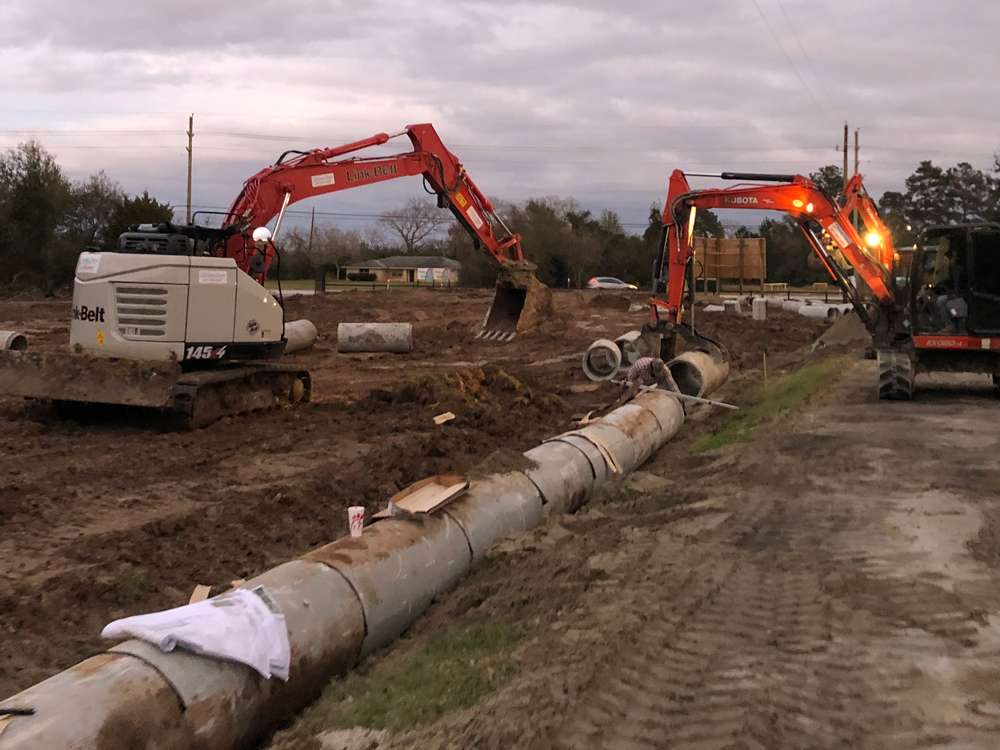
Inlets collect surface water and channel it into underground pipe systems that carry it to an outfall point. This is the most effective way to move large volumes of water across a property without open ditches.
Underground systems start with a smaller diameter pipe at the highest point and increase in size as they move downhill, collecting more water along the way. This reduces pressure buildup and prevents pipe failures.
- Pipe diameter increases downhill to handle growing volume
- Reduces pressure buildup in the system
- Eliminates the need for open ditches across your property
- Multiple inlet points for comprehensive water collection
- Outfall to ditch, creek, or retention area
Drainage questions we get asked
Drainage excavation is everything we do to get water moving correctly instead of pooling where it shouldn't. That covers cutting and laser-grading swales, regrading existing ditches, installing culverts, French drains, catch basins, area drains, and buried pipe systems, and tying all of it into an outfall. The first question on any job is where the water is coming from; the second is where it can actually go. The elevation drop between those two points is what decides which solution will work.
Before work starts
Before any grading is planned it is worth confirming which flood zone the property actually sits in, because that determines what a plan has to account for. You can read the current rules straight from FEMA's Flood Map Service Center, and we confirm what applies to your property during the site visit rather than guessing at it from an address.
If you are weighing us against another contractor, the work our customers describe is a better read on what we are like to deal with than anything we could write here.
Worth reading before you hire
Guides on this work
What it costs, how it is done, and what to ask before hiring.
Ready to Transform Your Property?
Get an estimate for your land clearing, dirt work, or property development project. We serve Houston and surrounding areas.