
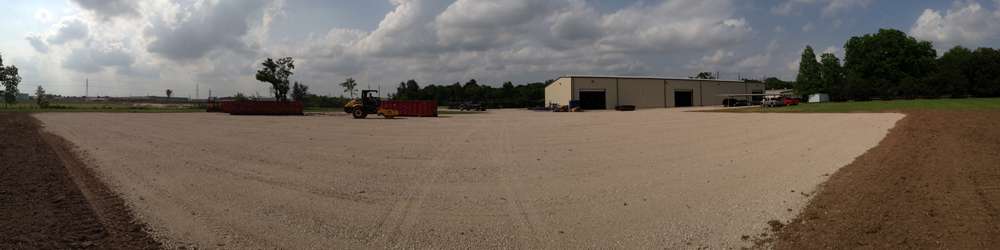
Daniel Dean builds and repairs laydown yards for general contractors, pipeline, and energy crews across Greater Houston, with staging pads that hold up under trucks and heavy equipment, whether the fix is on the surface or in the subgrade beneath it.
Laydown Yard Construction & Repair in Houston, TX
Daniel Dean builds and repairs laydown yards for general contractors, pipeline, and energy crews across Greater Houston, with staging pads that hold up under trucks and heavy equipment, whether the fix is on the surface or in the subgrade beneath it.
- 33 years in businessSoutheast Texas since the start
- 1,000's of projectsResidential and commercial
- Fully insuredCertificate available on request
- Free on-site estimatesPriced from your actual property
- 11 counties servedHarris · Montgomery · Waller · Washington · Fort Bend and beyond
How much does a laydown yard cost?
Laydown yard work is priced per project, not off a rate card. The size of the yard, what it has to carry, and what the ground underneath is doing are what move the number. Below is what actually swings a quote — we walk the yard, measure it, and put a firm number in writing at no charge.
What moves the price
- How much area has to be built or fixed
- Laydown yard work prices against the yard limits described in the scope. A small staging pad off a driveway is a different job from a multi-acre pipe yard, and the footprint drives both material volume and machine time.
- What the yard has to carry
- A yard staging pickup trucks is a different build than one holding cranes, pipe racks, or loaded trailers. The intended traffic and loads set the base depth and compaction standard before anything else is decided.
- What's underneath the surface
- Soft or wet subgrade has to be dealt with before rock goes down — that means mixing in cement, lime, or fly ash to stabilize it. Skipping this step is why yards fail again a season later.
- Aggregate type and depth
- Crushed concrete, limestone, road base, or aggregate are priced and placed differently, and the depth called for changes with the loads the yard needs to carry.
- Whether geotextile fabric is needed
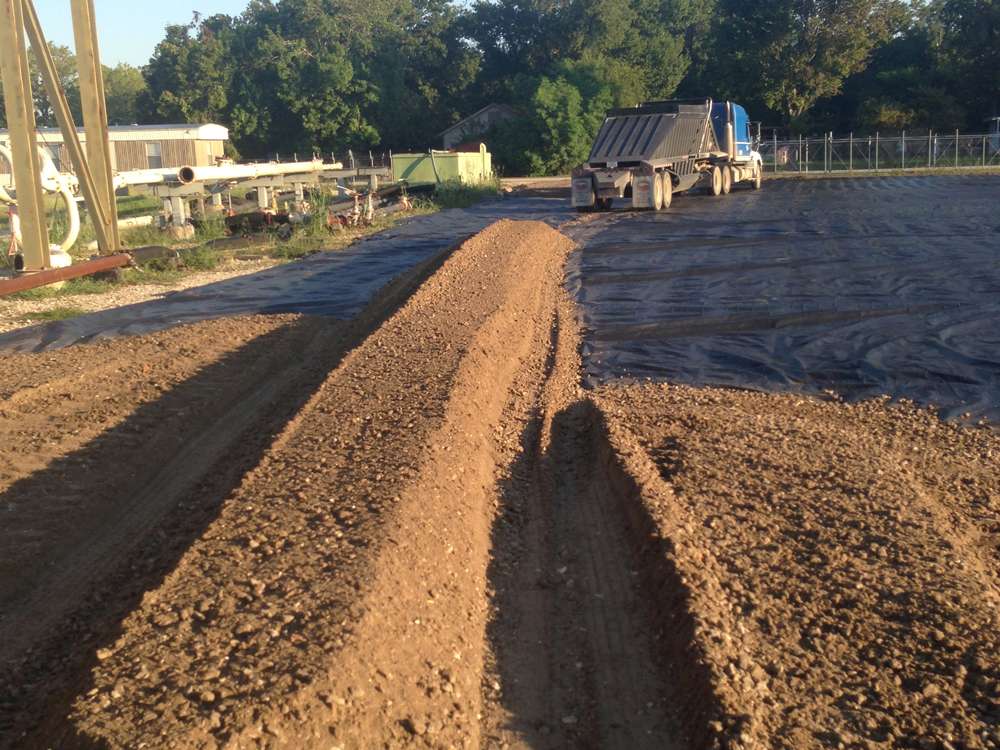
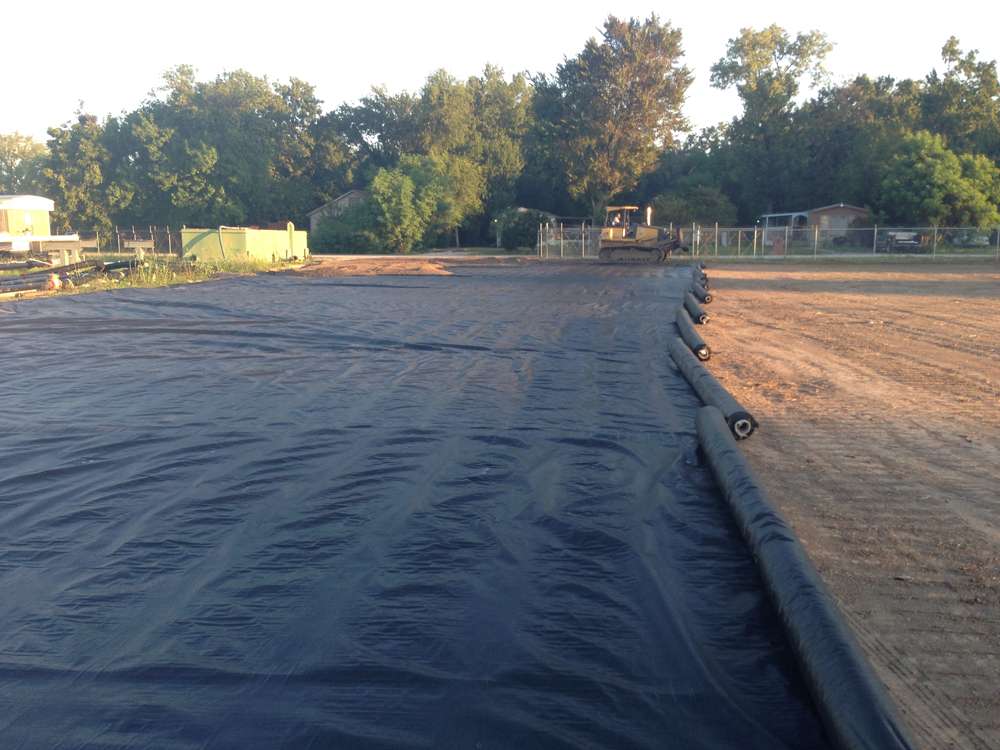
- On wet or unstable ground, a geotextile fabric layer between the subgrade and the base adds cost up front but keeps the base from working itself down into the soil under repeated loading.
- Drainage and outfall work
- If water has nowhere to go, cutting swales or lowering grade toward an approved outfall, and installing inlets, pipe, or culverts, gets priced as its own scope alongside the pad itself.
Tell us what the yard needs to hold and where it is, and we will come measure what it will take. The estimate is free and the number comes to you in writing before any equipment rolls.
Get my free estimateSurface & Sub-grade Problems
A laydown yard will need repair when the sub-grade becomes soft, causing the top surface to fail. The quality of the top surface depends entirely on the condition of the sub-grade underneath. Without a solid foundation, even the best surface material will break down under heavy traffic.
- Sub-grade failure causes surface breakdown
- Small puddles expand progressively with traffic
- Trucks and forklifts track muddy material
- Early intervention prevents costly full repairs
Preventative Maintenance
Preventative maintenance starts with addressing small puddles before they grow. As trucks and forklifts travel across a puddle, they track muddy material elsewhere, making the puddle larger each time — much like elephants enlarging water holes by wallowing in the mud and carrying it away on their bodies.
The best repair method is to scrape off the topsoil, import lime or fly ash, mix it into the sub-base material, then add 8 to 10 inches of crushed rock or limestone on top. Geotextile fabric can also be installed for additional drainage support.
- Address small puddles before they expand
- Scrape topsoil and import lime or fly ash
- Mix stabilizer into sub-base material
- Add 8-10 inches of crushed rock or limestone
- Geotextile fabric installation for drainage
Laydown yard questions we get asked
A laydown, or laydown yard, is the area on or near a job site where equipment, materials, and supplies are staged, stored, and moved in and out during a project. It is a construction and industrial term — pipeline, energy, and general contracting crews use it constantly, and the ground it sits on has to be built to handle repeated truck and heavy equipment traffic without breaking down.
Before work starts
Subgrade behaviour under repeated heavy loads depends on the underlying soil series, which is published free for any parcel. You can read the current rules straight from the USDA's Web Soil Survey, and we confirm what applies to your property during the site visit rather than guessing at it from an address.
If you are weighing us against another contractor, the work our customers describe is a better read on what we are like to deal with than anything we could write here.
Worth reading before you hire
Guides on this work
What it costs, how it is done, and what to ask before hiring.
Ready to Transform Your Property?
Get an estimate for your land clearing, dirt work, or property development project. We serve Houston and surrounding areas.