
Are you wondering what a professional land clearing contractor actually handles before construction or property development begins? More Texas property owners now invest in Texas land clearing because over 60% of land tracts across the state measure under 100 acres, which increases demand for residential and commercial land clearing services. A skilled land clearing contractor helps remove trees, brush, debris, and uneven terrain while preparing land for drainage, grading, and future construction.
Many property owners underestimate how difficult Texas soil conditions can be. Rocky caliche ground and dense hardwood vegetation often turn DIY projects into slow and expensive mistakes. While a professional land clearing service can clear roughly 0.5 to 2 acres daily with specialized equipment, rental equipment often takes several times longer and produces inconsistent results.
In this blog post, we will talk about the services a Texas land clearing contractor provides and how professional site preparation helps property owners avoid costly problems.
Core Land Clearing Services Texas Contractors Provide
Professional land clearing services go far beyond basic brush removal. Contractors address multiple aspects of site preparation that are critical to project success.
Tree Removal and Stump Grinding
Tree removal is one of the most demanding aspects of any land clearing project. Contractors assess tree health, size, location, and proximity to structures before determining the best removal strategy. For hazardous trees near power lines or buildings, specialized techniques prevent property damage and personal injury.
Once trees come down, stump grinding is just as important. This eliminates tree roots that would otherwise complicate future construction or landscaping, prevent regrowth, and free ground space for new development.
Vegetation and Brush Clearing
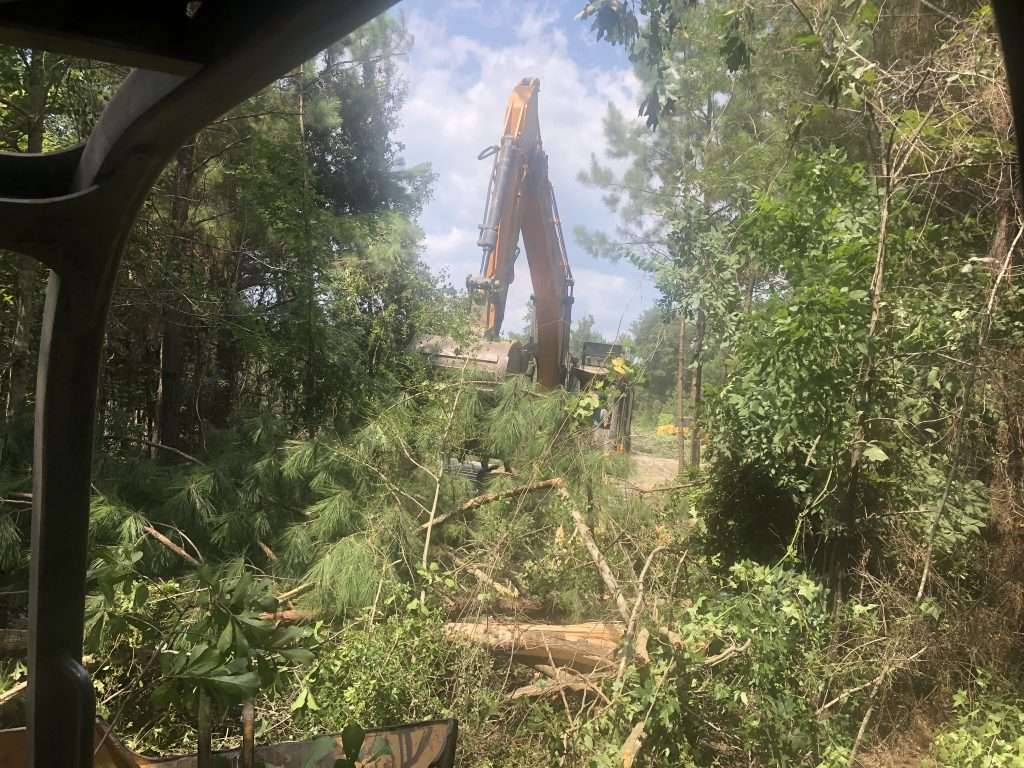
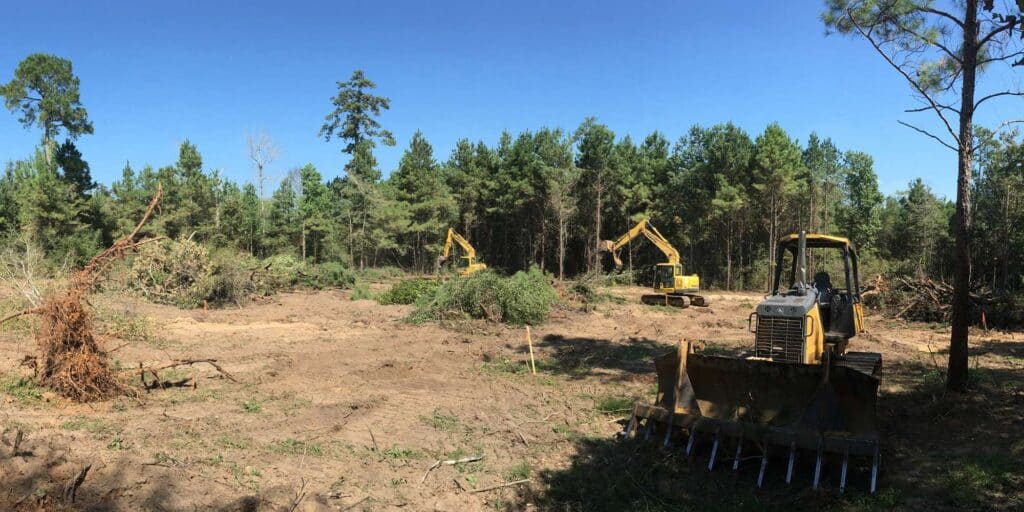
Dense brush, undergrowth, and small trees require systematic removal using heavy machinery. Professional contractors employ cutting-edge equipment to cut, mulch, and haul vegetation efficiently. This service does more than improve appearance:
- Reduces fire hazards significantly
- Eliminates pest habitats and breeding grounds
- Prevents erosion-prone bare spots
- Varies by region from piney woods in East Texas to scrubland in central regions
Land Grading and Soil Preparation
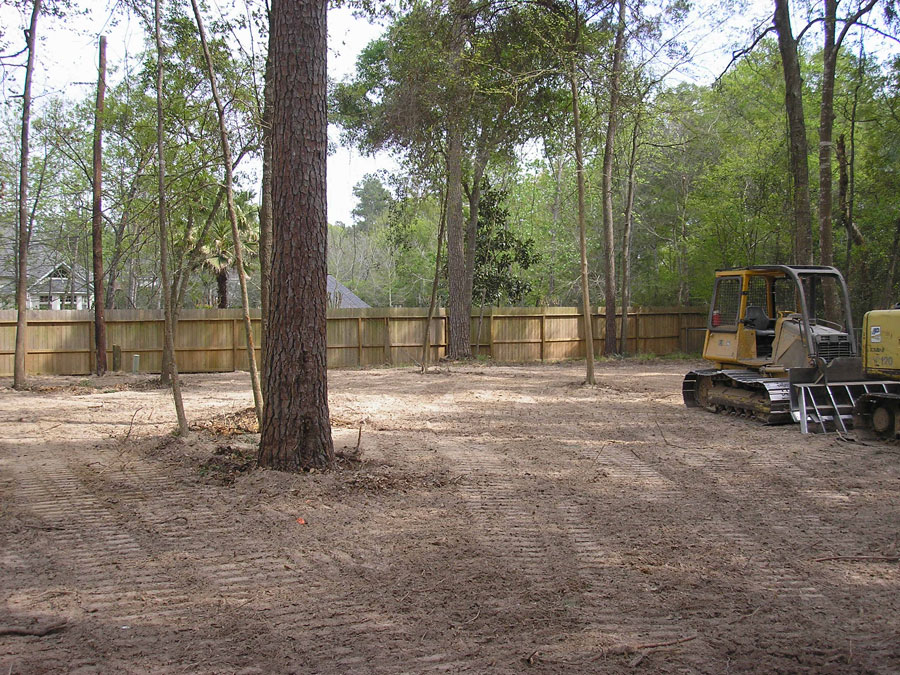
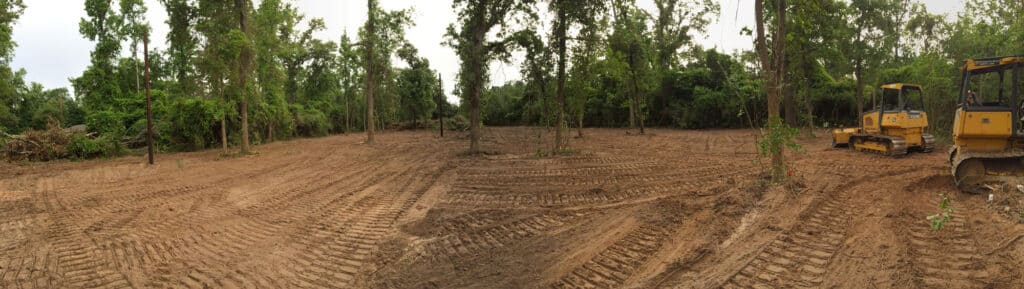
After vegetation removal, proper ground leveling and stabilization ensure drainage and construction readiness. Contractors grade sites to proper slopes, remove rocks and debris, and compact soil appropriately for foundation stability. This preparatory work is essential before any building can occur.
Debris and Waste Removal
Professional land clearing includes complete debris disposal. Contractors haul away logs, branches, rocks, and excavated soil responsibly. Many recycle cleared wood into mulch or donate it to property owners, demonstrating environmental responsibility while managing waste efficiently.
Selective Clearing
Not every project requires total vegetation removal. Selective clearing preserves valuable trees while removing problematic vegetation, maintaining mature specimens and scenic views during property development. This targeted approach protects what matters while improving functionality.
Texas Land Clearing Challenges Explained
Texas presents distinct environmental obstacles that require experienced contractors. Here’s what contractors commonly encounter and how they navigate these challenges.
| Challenge | Impact | Contractor Response |
| Extreme heat and weather shifts | Affects crew safety and equipment performance | Schedule strategically during spring/fall; use weather forecasting |
| Varied soil composition | Rocky limestone resists excavation; sandy soils erode | Use specialized equipment; conduct soil tests upfront |
| Regional vegetation differences | East Texas pine requires different techniques than West Texas mesquite | Employ region-specific removal strategies |
| Environmental restrictions | Wetlands, protected species, waterways require permits | Conduct environmental assessments; verify regulations early |
Why Soil and Terrain Matter
Rocky limestone areas in central Texas require specialized equipment. Sandy coastal soils present erosion concerns. Experienced contractors understand local soil composition and recommend appropriate clearing methods.
Regional Ecosystem Variations
East Texas pine forests demand different removal techniques than West Texas mesquite ranch land. Dense cedar thickets present mechanical challenges. Professional contractors tailor strategies to each region’s unique characteristics.
Environmental Compliance
Protected species, sensitive waterways, and environmental regulations restrict clearing methods in certain areas. Professional contractors identify protected habitats and adjust procedures accordingly. Wetland areas require special permits and careful handling. Non-compliance triggers substantial penalties and project shutdowns, which proper planning prevents.
Texas Land Clearing Permits and Regulations
Understanding regulatory requirements prevents costly delays or legal complications. Most Texas municipalities require clearing permits before major projects commence. The permit process typically includes:
- Detailed site plan preparation
- Environmental impact assessments
- Permit applications and tracking
- Processing coordination (typically 2-6 weeks depending on municipality)
A knowledgeable land clearing contractor manages permit acquisition efficiently, ensuring full compliance before equipment arrives on site.
Environmental Protection Standards
The Texas Parks and Wildlife Department oversees protected species and sensitive habitats statewide. Clearing near waterways requires compliance with Clean Water Act standards. Contractors must verify whether projects affect designated wetlands or endangered species habitats before starting work. Non-compliance results in substantial fines and mandatory project shutdowns.
Tree Preservation Ordinances
Many Texas cities enforce strict tree preservation ordinances protecting mature trees above specific diameter thresholds. Oak trees receive particular protection in numerous jurisdictions. Professional contractors identify protected species during initial site assessment and build compliant removal plans.
Debris Disposal Requirements
Texas counties regulate construction debris disposal strictly. Licensed facilities, not random dumping sites, must receive cleared materials. Reputable contractors maintain relationships with certified disposal and recycling facilities, managing waste legally and responsibly.
How to Choose a Land Clearing Contractor
Selecting the right contractor determines project success, safety, and regulatory compliance. Here’s what property owners should evaluate.
1. Verify Licensing and Insurance
Legitimate contractors carry:
- Current business licenses
- Heavy equipment operator certifications
- Comprehensive liability insurance coverage
Request proof of all credentials before hiring. Insurance protects property owners if accidents occur during clearing operations, and licensing confirms regulatory compliance. Texas requires contractors operating across multiple municipalities to maintain appropriate credentials.
2. Assess Equipment and Capabilities
Larger projects require excavators, bulldozers, mulchers, and haul trucks for efficient execution. Contractors with diverse equipment handle varied clearing challenges effectively. Evaluate whether they can tackle specific requirements, from selective tree removal to complete site clearing.
3. Review References and Portfolio
Established contractors provide multiple references from previous clients. Contact former clients about:
- Timeline adherence
- Quality of results
- Professionalism throughout the project
- Problem-solving during unexpected issues
Request photos of similar land clearing projects demonstrating capability levels. Online reviews offer additional perspective on reliability and customer satisfaction.
4. Evaluate Environmental Practices
Responsible contractors implement erosion control measures, recycle cleared materials, and follow environmental protection standards. Ask about waste management practices and material recycling commitments. Environmental responsibility indicates professional standards and regulatory awareness.
5. Compare Detailed Quotes
Obtain written quotes from multiple contractors. Detailed estimates include equipment costs, labor, timeline, and disposal expenses. Compare specifics rather than simply selecting the lowest bid, as quality and reliability matter significantly.
Understanding Your Land Clearing Investment
Property owners should understand how professional land clearing equipment and techniques accelerate project timelines. Daniel Dean Land Clearing offers a guide on how to clear land fast that explores methods like forestry mulching and strategic grubbing tailored to different terrain types.
Cost Breakdown and Planning
Land clearing fees vary based on site conditions. Here’s what typically affects project costs:
| Factor | Cost Range | Notes |
| Tree removal per acre | $5,000-$15,000 | Depends on tree count and size |
| Grading and leveling | $3,000-$8,000 | Creates buildable surface |
| Utility connection | $2,000-$25,000+ | Varies by distance and type |
| Erosion/drainage control | $2,000-$5,000 | Prevents costly future damage |
| Total project estimate | $15,000-$40,000 (modest sites) | Challenging sites: $75,000+ |
Proper site work during land preparation prevents expensive problems down the line. Daniel Dean Land Clearing’s article on building homes on land and site work costs explains how skipping soil testing, inadequate drainage planning, or miscalculating setbacks can cost $20,000 to $50,000 in retroactive fixes. Early investment in professional site assessment always pays dividends.
Texas Land Clearing Costs and Timelines
Simple brush clearing costs less than removing established trees from challenging locations. Permit costs vary by municipality. Most Texas projects range from $1,000 for modest residential clearing to $50,000+ for extensive commercial clearing.
Small residential projects typically complete within 1-2 weeks once permits approve. Larger commercial operations span weeks or months depending on acreage. Professional contractors provide realistic schedules during consultation.
Spring and fall offer optimal clearing conditions in Texas. Summer heat stresses crews and equipment, potentially extending timelines. Winter weather variations affect soil conditions across different regions. Planning projects during favorable seasons improves efficiency and reduces costs.
Frequently Asked Questions
How much does it cost to clear land in Texas?
Texas land clearing costs usually range from $1,500 to more than $15,000 per acre depending on tree density, terrain, grading needs, and debris removal. Light brush clearing costs less, while heavily wooded properties with large trees, stump grinding, and drainage work increase the total price. Commercial land clearing projects often cost more because they require larger equipment and additional site preparation.
How much is 2 acres of land worth in Texas?
The value of 2 acres in Texas varies widely based on location, road access, utilities, zoning, and development potential. Rural land may cost under $20,000 in some areas, while property near growing cities or high demand regions can exceed $100,000. Cleared and build ready land often holds higher market value than overgrown property.
Do you need a permit to clear land in Texas?
Many Texas cities and counties require permits before major Texas land clearing projects begin. Permit requirements often depend on tree removal, grading, drainage changes, protected habitats, and proximity to waterways. A professional land clearing contractor can help property owners understand local regulations and secure the proper approvals before work starts.
Final Thoughts on Texas Land Clearing Contractor Services
Hiring the right land clearing contractor plays a major role in the success of any residential or commercial property project. Professional Texas land clearing services help property owners prepare land safely, improve drainage, remove hazardous vegetation, and create stable ground for future construction. From tree removal and grading to debris hauling and environmental compliance, experienced contractors handle every stage of site preparation efficiently.
Property owners should avoid rushing into land clearing projects without proper planning, equipment, and local expertise. Poor site preparation often leads to drainage issues, erosion problems, construction delays, and higher long term costs. Working with an experienced contractor helps prevent these expensive setbacks while keeping projects compliant with Texas regulations.
If you need help with land clearing, grading, drainage, excavation, or site preparation services, contact Daniel Dean for professional guidance and project support. Visit Daniel Dean contact page to ask questions or request a consultation for your property.