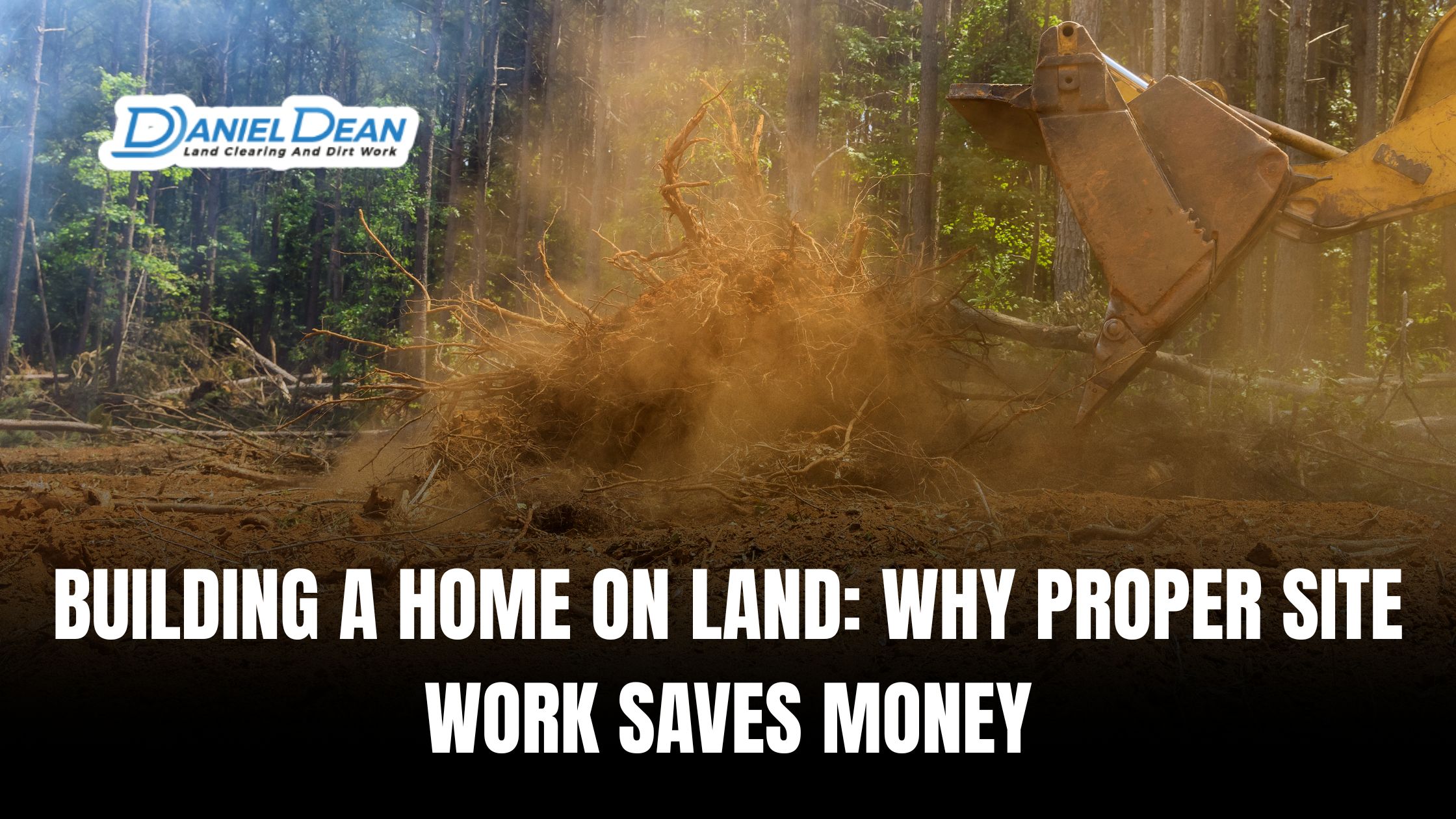
Are you building a home on land and wondering why some projects stay on budget while others spiral fast? Building a home on land often costs more than buyers expect because site prep can consume 5 to 10 percent of the total construction budget before the foundation even starts. When land work gets rushed, later fixes can push total project costs up by 20 to 30 percent, which makes early planning essential.
That gap creates the real problem for new buyers. A lot that looks ready may still hide drainage issues, weak soil, slope problems, or permit delays. If you are building a house on land, you need to know what do you need to build a house on land before construction begins. In this blog post, we explain the site work decisions that protect your budget, reduce surprises, and help you move from raw land to a buildable lot with confidence.
What Most First-Time Land Buyers Don’t Know Before Breaking Ground
Many first-time buyers assume raw land is ready for a house as soon as it is purchased. That is rarely true. A property can look buildable and still hide serious issues below the surface. Soft soil, poor drainage, steep slopes, utility access problems, and easements can all affect whether the lot can support a home.
The question of what do you need to build a house on land goes far beyond a house plan. You need a buildable site, legal approval, and practical access for crews and equipment. That usually means confirming several things before construction begins.
Here are the biggest surprises for new landowners:
- The property may need extensive clearing before equipment can reach the build site.
- Soil may not support a slab without extra stabilization.
- Drainage patterns may send water toward the future home site.
- Utility tie-ins may be farther away than expected.
- County or city requirements may delay the project if permits are not complete.
The earlier you identify these issues, the easier they are to solve. That is the real value of early site evaluation.
How Soil Tests, Surveys, and Permits Determine Whether Your Land Is Actually Buildable
Before anything else, your land requires three critical evaluations that determine actual buildability. Each one answers a fundamental question: Can this land be developed, where can it be developed, and are we legally allowed to develop it?
| Evaluation | Cost | What It Determines | Why It Matters |
| Soil Testing | $500-$2,000 | Foundation type, drainage capacity, bearing strength | Prevents $50,000+ foundation failures |
| Professional Survey | $800-$2,000 | Property lines, elevation, setback compliance | Ensures building fits lot legally |
| Permits & Zoning Check | Free-$500 | Legal building rights, septic requirements, restrictions | Avoids building code violations |
Soil Testing
Soil testing forms the foundation of site assessment. A qualified soil engineer performs bore tests at multiple depths to examine soil density, drainage characteristics, and bearing capacity. This testing is non-negotiable. Soil types range from ideal conditions to problematic clay or fill that demands specialized foundation solutions. The modest testing investment prevents catastrophic failures that emerge years later.
Surveying
Surveying establishes whether your building footprint actually fits on the lot while meeting local setback regulations. Many buyers learn during survey that they can’t build where they planned because of required distances from property lines or utility easements. A professional survey protects your vision from code violations that force costly redesigns.
Permits and Zoning Verification
This confirm that your intended use matches local regulations. What you’re legally allowed to build may differ from your assumptions. Septic systems require minimum lot sizes in some areas. Building height restrictions, density zoning, or agricultural easements can eliminate options entirely. Always contact your local planning department before finalizing purchase.
The True Cost Breakdown of Site Work When Building a Home on Raw Land
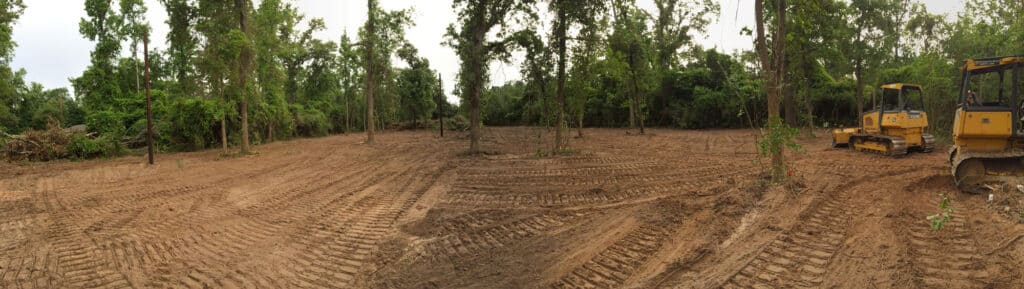
Site work expenses vary dramatically based on your land’s existing conditions. Understanding typical costs helps separate realistic budgets from dangerous underestimating.
- Clearing and Grading This typically represents the largest site work expense. Dense tree removal runs $5,000 to $15,000 depending on tree count and size. Grading to create level building areas costs $3,000 to $8,000. If significant excavation is needed, these costs double or triple. Professional excavation and drainage work ensures your site prepares correctly from the start, as documented in our dirt work, excavation, and drainage guide for Conroe TX.
- Driveway Installation This item gets overlooked in initial budgets. A 200-foot gravel driveway costs $1,200 to $3,000. Asphalt driveways cost $4,000 to $8,000. If utilities are distant, driveway length increases substantially, pushing costs higher.
- Utility Connection This ranges from $2,000 for nearby electric lines to $25,000 or more for water line extensions or new septic system installation. Septic system design and installation alone costs $3,000 to $10,000 depending on soil conditions and regulations.
- Erosion and Drainage Control Proper grading, French drains, or stormwater retention areas cost $2,000 to $5,000 but prevent basement flooding and foundation damage worth tens of thousands. This is where strategic planning pays dividends.
- Budget Expectations A realistic total for modest site work on prepared land: $15,000 to $40,000. Challenging sites with poor drainage, difficult soil, or utility distance can easily reach $75,000 or more.
Real Site Work Mistakes Homebuilders Made and the Costly Fixes That Followed
Learning from others’ expensive mistakes accelerates your decision-making. Here are the most common and costly errors that proper planning prevents.
- Skipping Soil Testing: One homebuilder discovered during construction that native soil couldn’t support standard foundation depth. Retrofitting required underpinning with pilings, adding $45,000 to project costs and causing six-week delays. This is precisely why geotechnical testing before construction begins is non-negotiable.
- Inadequate Drainage Planning: A builder in a sloped lot assumed natural drainage would handle rainfall without modification. Two years post-completion, the home experienced chronic basement moisture. Installing exterior French drains and sump systems retroactively cost $18,000. Prevention through proper site grading and drainage design saves this expense entirely.
- Miscalculating Setback Requirements: A homeowner purchased what seemed like extra-large acreage only to discover building codes required 50-foot setbacks from a creek running through the property, reducing usable building area by 60 percent and forcing costly redesign. Professional surveying caught this immediately.
- Underestimating Driveway Costs Choosing inadequate materials results in early failure. Cheap gravel driveways deteriorate within three years if not properly graded. Upgrading to asphalt or crushed stone requires removal and replacement, costing three times the original investment.
- Poor Site Drainage During Construction Without sediment control and proper grading during building, stormwater runoff damages neighboring properties. One builder faced a $30,000 lawsuit for erosion damage to a downslope neighbor’s foundation. Beyond liability, these failures affect pond functionality and water retention on your property, topics covered in detail in our pond sealing guide for farms and ranches in Conroe.
Each mistake traces back to skipping preliminary assessments or rushing site preparation work.
Red Flags in Site Preparation That Reputable Contractors Will Always Disclose Upfront
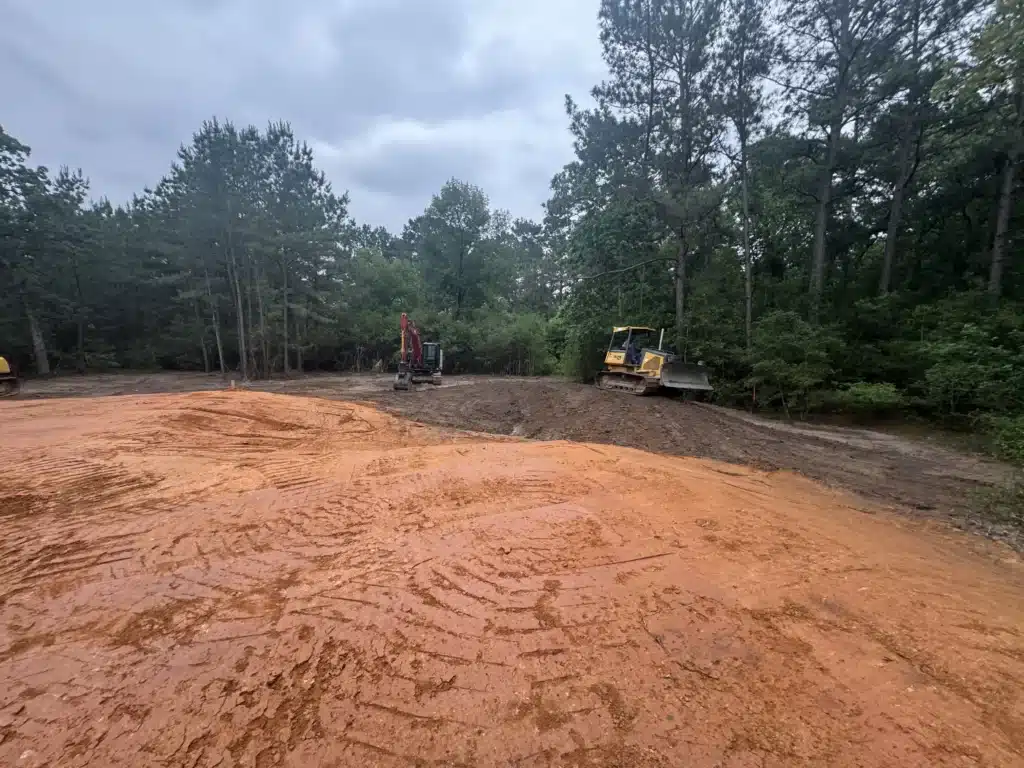
Professional builders understand that cutting corners during preparing a raw lot for construction creates long-term liability. Experienced teams treat groundwork for custom homes as a critical phase that directly affects durability, safety, and overall acreage construction costs.
Here is what reputable contractors always prioritize.
Proper Testing and Analysis
Trusted contractors insist on soil testing before finalizing any foundation plan. They do not rely on assumptions or standard designs without geotechnical data. Instead, they explain how soil conditions affect structural decisions, timelines, and cost. Avoid anyone who resists this step.
Transparent Drainage Assessment
Reliable site work specialists evaluate drainage early in the process. They review slope direction, study water flow patterns, and recommend grading or drainage solutions based on real site conditions. General statements about “natural drainage” often signal inexperience or shortcuts.
Documented Site Work Process
Professionals break down residential land development into clear phases. They document site conditions, maintain detailed plans, and secure permits before work begins. This ensures accountability and clarity throughout the project.
Expertise in Land Development
Experienced professionals like Daniel Dean approach site preparation with a long-term perspective. Their knowledge of soil behavior, drainage challenges, and regulatory requirements helps prevent costly mistakes.
Any contractor unwilling to follow these steps puts your project at risk. Proper site work supports everything that comes after, so it demands careful execution and proven expertise.
Frequently Asked Questions
What is the cheapest way to build a house on land?
The most budget-friendly approach is choosing a flat, “shovel-ready” lot with existing utility hookups and using a pre-designed modular or kit home. Limiting the building’s footprint to a simple rectangular shape and opting for a gravel driveway also significantly reduces initial site work and labor costs.
What are common mistakes to avoid building a house?
The most expensive errors include skipping a geotechnical soil test and failing to establish a detailed drainage plan before the foundation is poured. Many owners also neglect to verify local zoning setbacks, which can lead to forced redesigns or legal disputes after construction has already started.
What devalues a house the most?
Structural issues like a cracked foundation or chronic water damage from poor site grading are the primary drivers of massive value loss. Beyond the build itself, being located in a high-risk flood zone or having significant “deferred maintenance” on core systems like septic and roofing will deter buyers and slash the asking price.
Final Thoughts on Building a Home on Land: Why Proper Site Work Saves Money
Building a home on land requires more than a vision and a floor plan. It demands careful planning, proper evaluation, and disciplined execution from the ground up. As you have seen, soil testing, surveying, drainage planning, and grading all play a direct role in controlling costs and preventing long-term issues. Skipping or rushing these steps often leads to expensive repairs that could have been avoided early on.
If you are serious about building a house on land, your next step is to evaluate your property the right way. Work with professionals who understand site preparation and can guide you through each phase with clarity and precision.
If you have questions or need expert help with land clearing, excavation, or site work, reach out to Daniel Dean Land Clearing & Dirt Work. You can also contact Daniel Dean here to get started and discuss your project today.