A dead cedar elm out past the fence line and a cracked live oak leaning over the roof are both “just a tree” on paper. In practice, one is a same-day job and the other needs rigging, a bucket truck, and a crew that knows what they’re doing. That gap is exactly why a real tree removal estimate has to come from someone standing under the tree, not a number quoted over the phone. Here’s what actually moves the price, using live oaks, pecans, and cedar elms as the examples, since those are the trees we deal with most across Texas.
The short version, size and access usually matter more than species.
A couple of numbers worth knowing first.
- Texas tree removal typically runs $300 to $700 for a small tree, $1,500 to $3,000 or more for a large one, and $2,000 to $4,000 or higher for a mature live oak, thanks to the weight and branch spread (House Escort).
- Nationally, homeowners spend around $750 on average, but that number climbs past $2,000 fast once a tree is tall, complex, or close to a structure (Angi).
What a Tree Removal Estimate Should Actually Include
A number by itself doesn’t tell you much. A proper written tree removal estimate should spell out all of this.
- The tree’s height, trunk diameter, and condition
- What equipment the job needs to reach it safely
- Whether debris hauling and disposal costs are included or billed separately
- What happens to the stump, and whether that’s a separate line item
Not every tree removal company puts all of that in writing upfront. That’s usually how a $600 quote turns into an $900 invoice. A tree removal service worth hiring walks the property with you first and explains each line before anyone signs anything.
Size and Species Set the Baseline for Tree Removal Cost
Height and trunk diameter drive most of the price. A 20-foot ornamental might run a few hundred dollars. A 70-foot tree with a wide canopy can run into the thousands, because it needs more rigging, more time, and often a bucket truck.
| Tree Size | Typical Height | Rough Cost Range | Notes |
| Small | Under 30 ft | $300 to $700 | Crepe myrtle, yaupon, young cedar elm |
| Medium | 30 to 60 ft | $700 to $1,500 | Established cedar elm, younger post oak |
| Large | 60 to 80 ft | $1,500 to $3,000 | Mature pecan, larger cedar elm |
| Mature live oak | 60 ft+ with wide canopy | $2,000 to $4,000+ | Heavy limbs, dense wood, longer rigging time |
Species matters on top of size. Live oaks carry serious weight in their limbs, which is why they’re consistently the most expensive tree to remove in Central and South Texas. Pecans grow large fast, but the wood is brittle, so unpredictable limb breaks add risk (and time) to the job. Cedar elms are common street and yard trees across North and Central Texas and generally come down faster than a live oak of the same height, though a big one still isn’t quick work.
Access Changes the Price as Much as Size Does
Where the tree sits on the property matters just as much as how tall it is.
- Open yard, clear driveway access. The easiest, cheapest scenario. A crew drives in, sets up, and gets to work.
- Tree wedged near a fence, pool, or power line. Requires careful, piece by piece removal instead of a straight fell, which adds hours.
- Gated backyard, no truck access. Crews bring in smaller heavy machinery or do more by hand, and both options cost more labor time.
- Storm damaged or leaning tree. Unstable wood can shift or snap without warning, so the risk itself gets priced into the job.
What Happens to the Stump
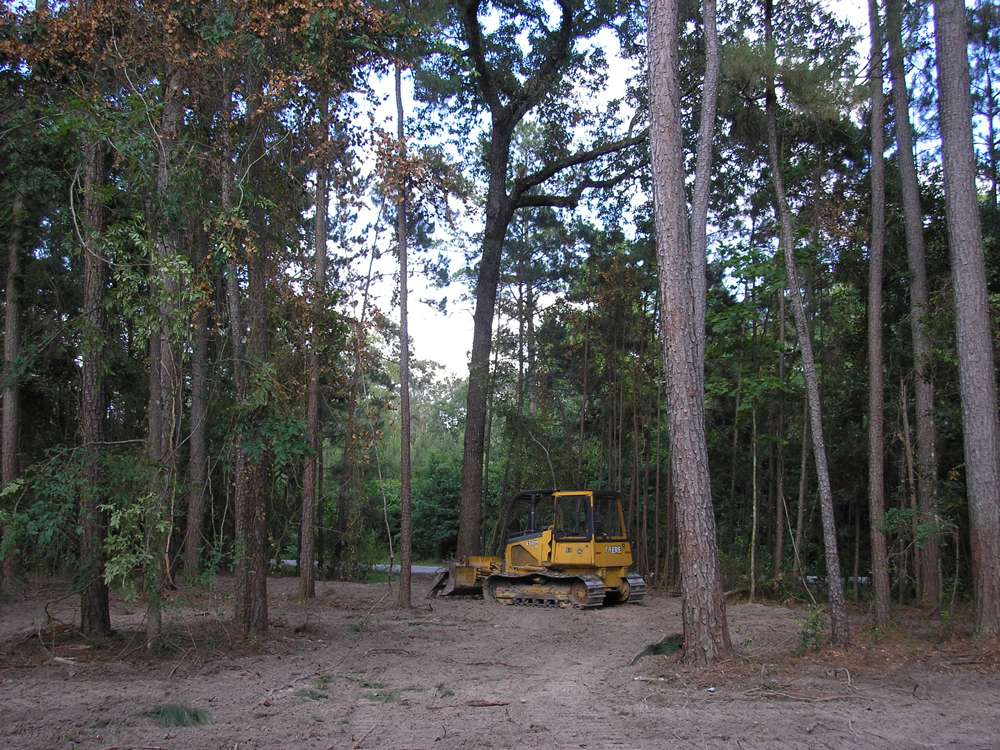
Most quotes don’t automatically include the stump. Grinding it a few inches below grade is the cheaper, faster route. But if you’re planning to build, grade, or plant grass in that exact spot, the roots need to come out completely, not just the visible stump.
On larger properties or construction sites, we’ll bring in excavator root raking to pull the stump and major roots out entirely. That prevents the ground from settling later once it’s graded or built on. Worth flagging when you request a quote if you already know what’s going into that spot next.
Permits, HOA Rules, and What Can Slow You Down
Rural Texas land has few restrictions on removing a tree. Cities are a different story.
- Austin, San Antonio, and several DFW suburbs regulate trees above a set trunk diameter, and a protected live oak, pecan, or heritage tree may need an arborist report before it can come down.
- Municipal permits can run anywhere from a small filing fee to a few hundred dollars, plus review time before work even starts.
- Zoning regulations often come into play on commercial sites and new construction, where local codes may require a tree survey or mitigation planting.
- HOAs add a separate layer entirely, and HOA covenants are sometimes stricter than the city’s own rules.
A tree removal company that’s done this before will ask about your city and HOA before quoting, not after the crew is already standing in your yard.
Why We Walk the Property Before Naming a Number
Every factor above is easier to judge in person than over the phone. Before we write down a price, we’re checking the tree’s lean, root condition, what’s nearby, and how our equipment will actually reach it.
We’ve written before about how removing a hazardous or poorly placed tree protects a home and can even raise what a property is worth, covered in our post on how tree clearing prevents damage and increases value. If the removal is step one of a bigger project, like clearing a lot for construction, our grading and land leveling work usually follows right behind it, which we walk through in our guide to land grading near me.
How We Handle Tree Removal at Daniel Dean
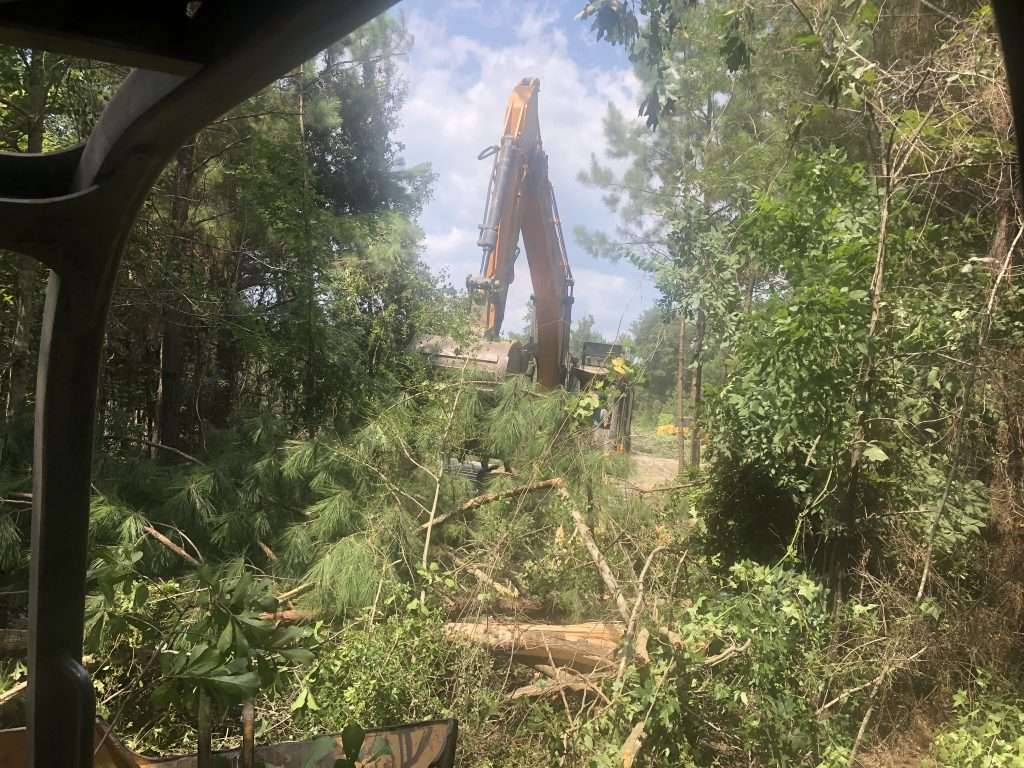
We’ve been doing tree and brush removal across Texas for more than 30 years, from a single yard tree to full acreage clearing ahead of construction. A few things that set our approach apart.
- We bring our own equipment, so we’re not waiting on rented machinery to start a job
- We handle debris hauling, stump grinding, or full root removal, whatever the site actually needs next
- We walk every property in person before quoting, no exceptions
You can see our full range on our tree and brush removal page. In parts of Central Texas where cedar and brush buildup raise wildfire risk, we also help homeowners build defensible space around structures, covered in our post on brush and tree removal for wildfire risk reduction.
Frequently Asked Questions
Do I need a permit to remove a tree in Texas?
Usually not on rural or standard suburban property. Cities like Austin and San Antonio are the exception, protecting trees above a set trunk diameter, with heritage species sometimes needing formal review. Check your city and HOA before you cut.
How much does tree removal cost for a large tree in Texas?
Generally $1,500 to $3,000 or more for anything over 60 feet, and a mature live oak or pecan with a wide canopy can push past $4,000 depending on access and rigging.
Does homeowners insurance cover tree removal?
Only when a fallen tree damages a covered structure like a house, garage, or fence. A tree that falls in the yard without hitting anything typically isn’t covered.
What’s included in a typical tree removal service?
Cutting the tree down and hauling it away is the baseline. Stump grinding, full root removal, and permit help are usually quoted as separate line items, so ask what’s bundled before you compare quotes.
Final Thoughts on Tree Removal Estimate in Texas
A cedar elm in an open yard and a leaning live oak over the roofline are not the same job, even on paper where both just say “remove one tree.” Size, species, access, storm damage, permits, and what happens to the stump afterward all shape the final number. The only estimate worth trusting is one from someone who’s actually looked at the tree. If you’ve got a tree that’s dead, leaning, too close to the house, or standing in the way of a project, contact Daniel Dean and we’ll come take a look before you spend a dime.
About the Author
Daniel Dean has spent more than 30 years clearing trees, brush, and land across Texas, from single yard trees to full acreage clearing ahead of construction. What started as hands on tree and dirt work has grown into a full service land clearing and site preparation company trusted by homeowners, builders, and developers throughout the Houston region and beyond. The Daniel Dean team writes from firsthand experience walking properties, assessing risk, and pricing jobs the right way, in person, every time.