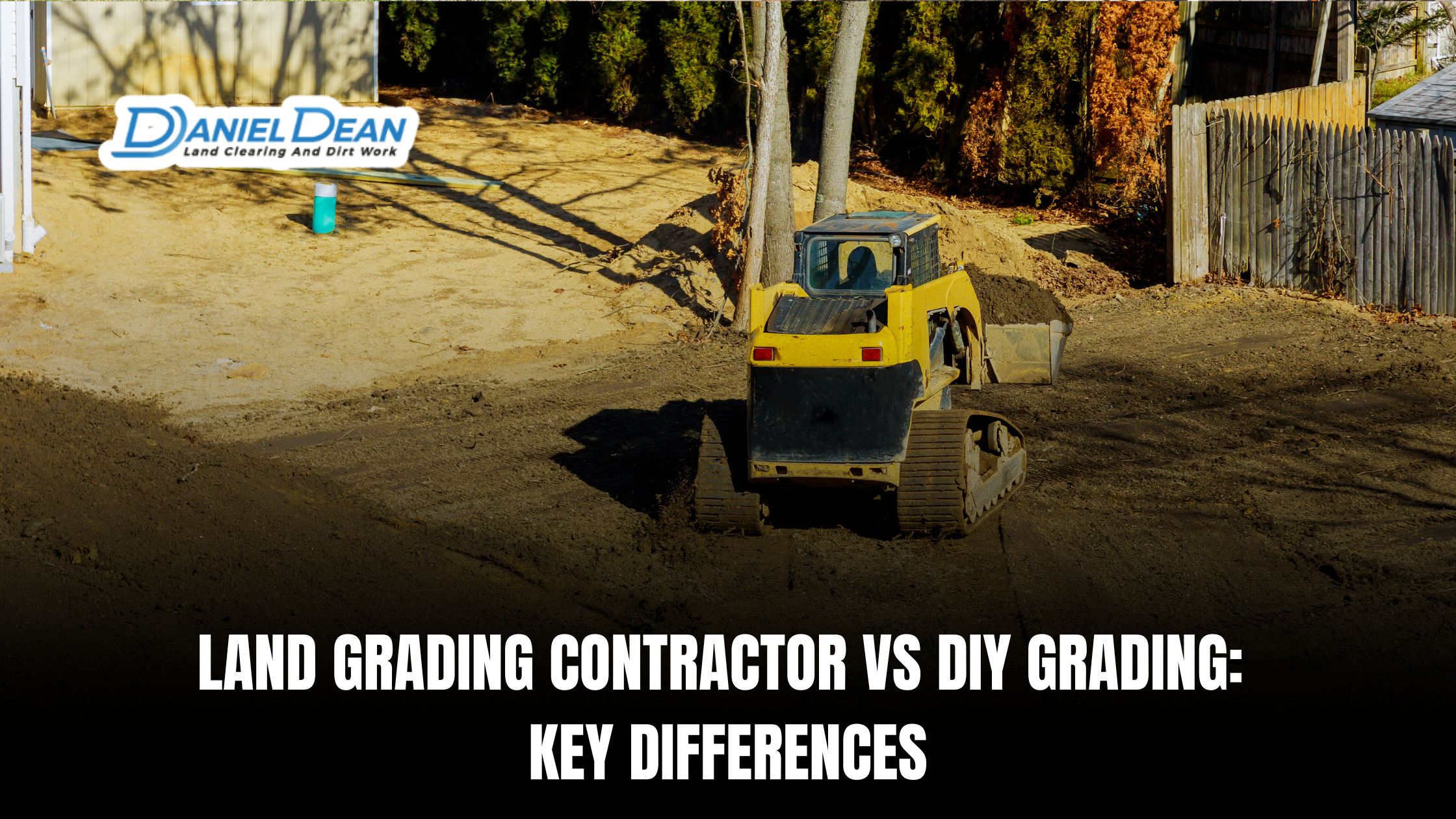
Renting a skid steer for the weekend and leveling your yard yourself sounds reasonable on paper. You save money, you get the job done, and you move on. But land grading is one of those projects that punishes guesswork more than almost any other. At Daniel Dean, we have cleaned up more than a few DIY grading jobs that ended up redirecting water straight into a foundation or wiping out a septic system. The difference between doing this right and doing it wrong is not always visible until the next heavy rain.
Grading is not about moving dirt. It is about controlling where water goes and keeping it there permanently.
Here is what the numbers tell us about DIY projects overall:
- According to a Hippo survey of over 1,700 homeowners, more than half (58%) spent more than anticipated on DIY projects due to errors, and 38% ended up paying $500 or more to repair damage caused by their own mistakes. (Source: Hippo)
- Research from Clovered found that 87% of homeowners made at least one mistake when attempting a DIY home improvement project. (Source: Clovered)
What a Land Grading Contractor Actually Does That You Cannot Replicate With a Rented Machine
Most homeowners picture grading as scraping the surface until it looks flat. A licensed land grading contractor does something fundamentally different. Before a single blade touches the soil, we are reading the topography of your entire property, mapping where water currently travels, identifying low points, and calculating the exact slope needed to move runoff away from structures and toward appropriate drainage channels. This is the foundation of what separates professional land grading services from a weekend rental attempt.
That calculation matters more than most people realize. The standard grading requirement for residential properties is a drop of at least 6 inches over the first 10 feet from your foundation. Get that slope wrong by even a small margin and water starts pooling exactly where it should not. Without surveying equipment and experience reading drainage patterns, that margin is nearly impossible to hit consistently across a full lot.
Professional land grading services also account for soil type. Sandy soils behave differently than the clay-heavy soils common in Texas. Clay compacts under equipment pressure, which changes how it drains after grading. A contractor who has worked Texas land for decades knows how to prep and compact each soil type so the grade holds through wet seasons instead of washing back to its original shape.
Why Rented Equipment Is Not the Same as the Right Equipment
Equipment rental is available, and that accessibility makes DIY grading feel more achievable than it is. The machines you rent at a home improvement store, typically a small skid steer or box blade attachment, are designed for light residential use. They move soil. What they do not do is give you the precision control, laser-guided elevation readings, or compaction power that real land grading services require.
Professional land grading services use GPS-guided grading equipment that holds elevation tolerances within fractions of an inch across large areas. This technology is not available for weekend rental. It is a capital investment that professional land grading companies near me use specifically because hand-eye judgment on a small machine cannot replicate it. The equipment gap alone is enough reason to call a contractor before renting anything.
There is also the issue of scope. A rented machine has limited cutting depth and blade width, which means you may be making dozens of passes to accomplish what a full-size grader does in a fraction of the time. Each additional pass risks over-compaction in some areas and insufficient compaction in others, creating an uneven soil density that leads to settling after the first rain cycle.
Slope Calculations and What Goes Wrong Without Them
Slope is the single most important technical factor in grading. Too little slope and water sits. Too much slope in the wrong direction and you accelerate erosion. Slope in the wrong direction entirely and you have created a drainage problem where there was none.
Here is where DIY grading consistently goes sideways. A homeowner eyeballing a grade without a level or laser instrument cannot reliably distinguish between a 1% slope and a 3% slope across a 50-foot span. Both look flat to the naked eye. One drains. One floods.
Professional yard grading services use instruments that catch these differences every time. We set elevation benchmarks, run string lines or laser levels across the work area, and verify slope at multiple checkpoints before compaction begins. It is methodical and it has to be, because once you compact and seed, correcting the grade means starting over. Proper land grading services also document final grades so you have a record if drainage questions come up later.
When land has significant vegetation or brush covering it before grading, that material has to come out first. You cannot grade accurately over root systems and debris. We cover what that prep process looks like in our post on tree and brush removal, which is usually the step before grading begins on overgrown lots.
The Risks of Improper Grading That Most Homeowners Do Not See Coming
This is the section that matters most if you are on the fence about hiring a professional. Improper grading does not just create a soggy yard. The downstream consequences are significant.
- Foundation damage. When grading pushes water toward your home instead of away from it, hydrostatic pressure builds against your foundation walls. Over time, that pressure causes cracks, shifting, and moisture intrusion. Foundation repair in Texas runs from several thousand dollars for minor crack injection to tens of thousands for pier and beam stabilization.
- Septic system failure. Many rural and suburban Texas properties use septic systems with drain fields that depend on proper soil drainage. If DIY grading redirects runoff onto your drain field, the system saturates and stops functioning. Septic replacement routinely runs $10,000 to $20,000 or more.
- Utility line damage. Underground utilities are often buried just a few inches below grade. Rented equipment operated by someone unfamiliar with the property layout can cut through these lines, creating both a repair expense and a serious safety hazard.
- Neighbor liability. Texas law requires that property owners not redirect natural drainage in ways that damage adjacent properties. If your DIY grading sends water onto a neighbor’s lot, you may be liable for their damages. It is a common outcome when grading is done without understanding where runoff terminates.
These risks are exactly why professional yard grading services exist and why the yard grading cost for doing it right is almost always lower than the cost of fixing what goes wrong when it is done incorrectly. Comprehensive land grading services include risk assessment as part of the planning phase, not as an afterthought.
Land Grading Cost Compared to the Price of Getting It Wrong
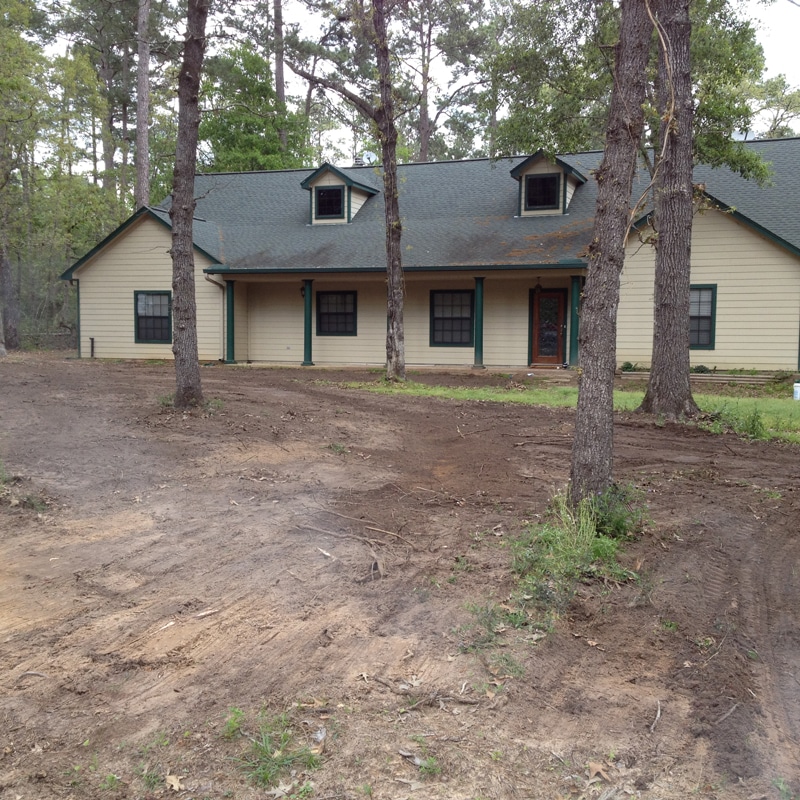
Yard grading cost for a professional job varies based on lot size, soil conditions, how much material needs to be moved, and whether the site needs clearing first. For a standard residential lot in Texas, yard grading cost generally runs from several hundred dollars for minor slope corrections to a few thousand for more extensive reshaping.
That range sounds significant until you compare it against foundation repair, which starts at $2,000 for simple fixes and can exceed $30,000 for severe structural issues. Yard grading cost is a fraction of what you pay when water damage is left to compound.
For commercial or larger acreage properties, professional yard grading services are priced differently, and the stakes are proportionally higher. Our breakdown of Texas land clearing cost per acre covers the site prep that typically comes before grading on larger lots.
The other hidden cost of DIY grading is the redo. If you grade your yard incorrectly, a contractor has to remove what you did before correcting it. That means you pay for the original rental equipment, any materials, and then you pay again for a professional to fix it. A significant portion of the land grading services we perform each year are corrections, not fresh starts. Getting quality land grading services the first time is almost always the more economical path.
Where DIY Grading Sometimes Works and Where It Does Not
To be fair, not every grading task requires a professional. Small cosmetic touch-ups, filling a low spot in the middle of your lawn with no drainage implications, or minor leveling for a garden bed are reasonable DIY tasks if you have basic tools and a good eye for level.
Where DIY grading consistently fails is anywhere drainage actually matters: anything within 20 feet of your foundation, near a septic system, any slope connecting to a neighbor’s property line, or any lot with significant elevation change or clay-heavy soil.
For those situations, professional land grading services are not an upsell. They are the only approach that protects your property long-term. Our post on commercial vs. residential dirt services explains how both categories of projects differ and what each typically involves.
Why Experience Is the Variable That Equipment Cannot Replace
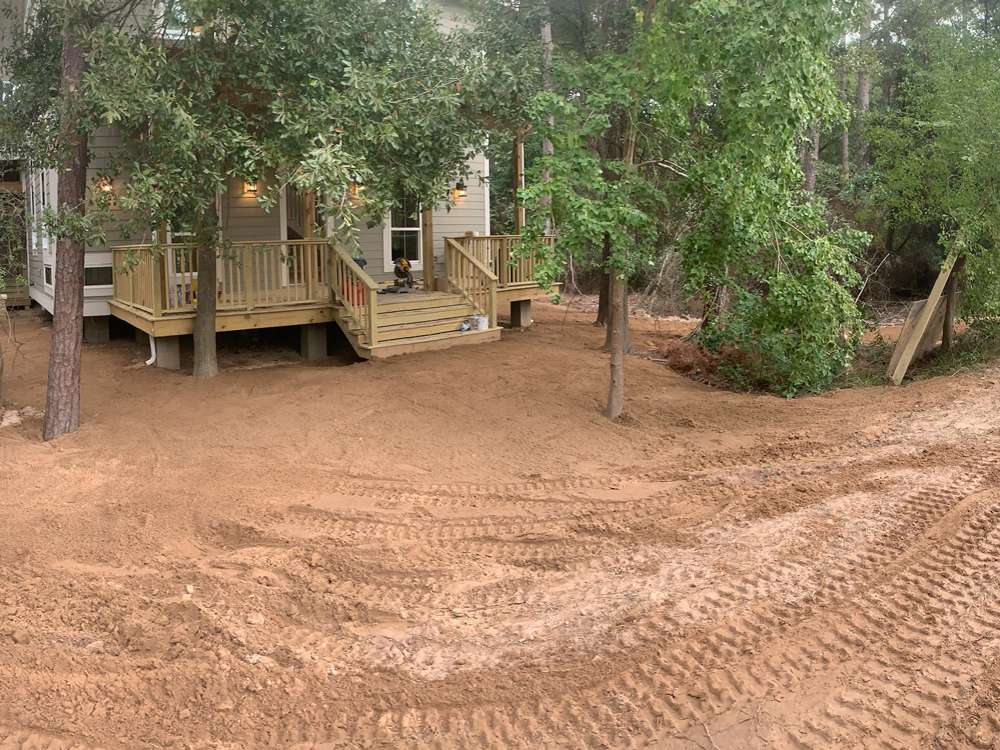
A machine does what the operator tells it to do. That is the core limitation of the DIY approach. If the operator does not understand how water moves through soil, how compaction affects drainage, or how slope must transition across a graded area to prevent erosion at the edges, the machine executes those misunderstandings precisely.
Experience in land grading means knowing what a property will look like after the first three rain cycles, not just after the final pass. It means recognizing soil conditions that require amendment before grading, not after. It means reading a lot and predicting drainage behavior before moving anything.
At Daniel Dean, we have been working Texas land for over 30 years. We have seen every soil type, every drainage challenge, and every mistake a homeowner or less experienced crew can make. When you hire us for yard grading services, you are not just paying for equipment time. You are paying for decades of knowing exactly what this land will do when it rains. Our land grading services are built around that predictive understanding, which is why properties we grade stay graded correctly.
If you are searching for land grading companies near me and want a crew that brings that level of experience to your property, we are ready to take a look. Reach out today for an on-site assessment and a straight answer on what your property needs.
Frequently Asked Questions
What is the process of land grading?
The land grading process starts with evaluating the property’s elevation, drainage patterns, and soil conditions. Contractors then remove or redistribute soil to create the proper slope, compact the ground, and verify elevations to ensure water flows away from structures and toward designated drainage areas.
How much does it cost to excavate 1 cubic meter?
The cost to excavate 1 cubic meter varies based on soil type, site accessibility, equipment requirements, and disposal needs. In most cases, excavation costs range from a few dollars to several dozen dollars per cubic meter, but larger projects often receive lower per-unit pricing.
Is grading land difficult?
Yes, grading land can be challenging because it requires precise slope calculations, drainage planning, and soil management. Even small grading errors can lead to standing water, erosion, foundation problems, or drainage issues that become expensive to fix later.
What is the purpose of land leveling for new construction?
Land leveling creates a stable, properly drained surface for construction. It helps prevent foundation settlement, reduces water accumulation around structures, improves site accessibility, and provides a solid base for buildings, driveways, and other improvements.
Final Thoughts on Land Grading Contractor
Choosing between a professional land grading contractor and a DIY approach comes down to more than equipment or upfront cost. Proper grading affects drainage, foundation stability, erosion control, and the long-term health of your property. While minor cosmetic leveling projects may be suitable for homeowners, any grading work that impacts water flow, structures, septic systems, or neighboring properties requires professional expertise. The cost of correcting drainage problems, foundation damage, or failed grading often exceeds the cost of hiring experienced professionals from the start.
At Daniel Dean, we bring more than 30 years of experience working with Texas soil, drainage challenges, land clearing, excavation, and grading projects. Our team understands how to prepare land correctly so it performs as intended for years to come. If you have questions about grading, site preparation, land clearing, or any of our other services, we are here to help. Contact us today through our contact page to discuss your project and schedule an on-site assessment.