
How much should you expect to pay for land clearing cost per acre in Texas? Many Texas property owners struggle to estimate costs because every property has different terrain, vegetation, and access conditions. Land clearing cost per acre can range from a few hundred dollars to several thousand depending on the amount of tree and brush removal, equipment needs, and site preparation involved.
Texas continues to see rapid land development as more rural acreage gets divided for residential and commercial projects each year. Since more than 95% of Texas land is privately owned, property owners often need reliable land clearing service providers to prepare land for farming, construction, or fire prevention. The challenge is that brush clearing equipment, debris disposal, permits, and grading can quickly increase costs if you do not understand what affects pricing.
In this blog post, we will talk about average Texas clearing costs, pricing factors, clearing methods, hidden fees, and how to budget accurately for your project.
Texas Land Clearing Cost Per Acre
In Texas, standard residential or commercial land clearing runs about $800 to $1,500 per acre on average. But location matters a lot.
East Texas and the Piney Woods region? That’s our most expensive territory. Dense forest cover means more equipment time, more careful removal work, and higher per-acre costs. We regularly see $2,500+ per acre in heavily wooded areas because those old pine and hardwood trees demand respect and precision.
Central Texas falls in the middle. Mixed brush and scattered trees make for moderate costs. West Texas acreage with sparse vegetation and flat terrain tends to be more affordable. It’s not just about trees either. Rocky limestone, sandy soil, and water drainage all factor into the final bill.
How do we charge? Some land clearing service providers work hourly, some go by the acre, and we use a combination depending on the job. The only way to get an accurate quote is to let a contractor actually visit your property and see what they’re working with.
What Drives Tree and Brush removal Clearing Price Up
Here’s what we always tell people: the price you see isn’t random. Several real factors push land clearing costs up or down, and it helps to know what you’re paying for.
- Vegetation Type: What’s on your land matters more than acres alone. Dense hardwood forests eat up equipment time and require careful felling. Scattered brush is faster. Pine plantations are usually cheaper than native forests. That thick cedar and mesquite you see in some Texas properties? That demands specialized equipment and takes longer.
- Debris Handling: This is where a lot of people get surprised. Clearing trees is one thing. Dealing with what’s left behind is another. Some contractors chip or mulch debris on site. Others haul it off completely. If you need stump grinding, grading, or new topsoil, those are separate line items that add up fast. Properties with hazardous trees near your house or power lines also take more care and more time.
- Site Accessibility: Easy access means lower costs. Rough terrain, poor road conditions, or wet soil limits equipment movement. We end up using smaller machinery or manual labor, which costs more. Flat, open land? That’s our sweet spot for efficiency and lower per-acre pricing.
- Environmental Concerns: Protected wetlands need specialized handling and permits. Heritage trees require individual assessment. Properties with endangered species habitat demand compliance-focused work. These aren’t roadblocks, but they do increase labor and planning costs.
For a deeper look at effective clearing methods and how they impact pricing, we’ve covered ground clearing techniques in detail.
Clearing Methods and What They Cost
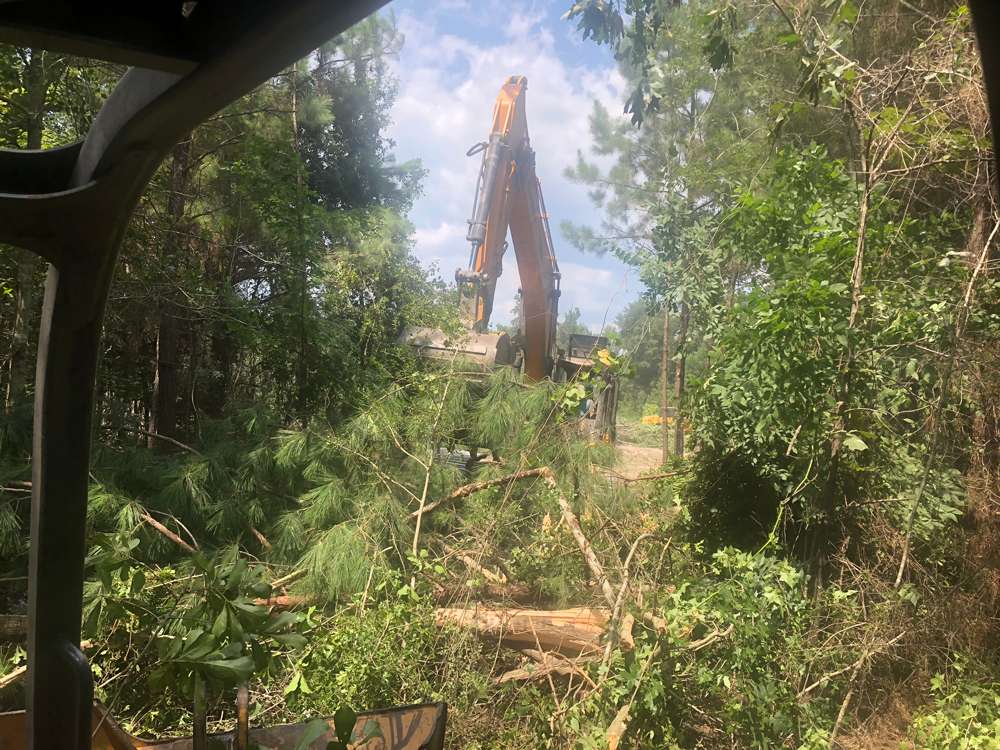
Texas property owners have options. Each method comes with different equipment, timelines, and costs, so choosing the right fit for your property matters.
Mechanical Clearing (Bulldozers and Mulching Equipment)
The fastest approach for larger properties. We use heavy machinery to knock down trees and brush, then grind it into usable mulch or haul debris off site. This works great when you want the job done quickly and don’t have sensitive environmental concerns.
Cost range: $600 to $1,200 per acre depending on vegetation density and debris handling
Manual Crew Removal
When you need precision. This approach works near structures, utilities, or areas where you want to preserve specific trees. It’s slower than mechanical work but gives you control over what stays and what goes.
Land clearing cost range: $1,200 to $2,500 per acre for labor-intensive projects
Selective Clearing
This is what we recommend for most residential projects. You keep the mature trees that add value, remove the problematic vegetation, and end up with property that’s actually usable. Yeah, it costs more upfront, but you’re protecting your investment.
Land clearing cost range: $1,000 to $2,000 per acre
Brush Clearing Equipment
For ongoing maintenance or light vegetation removal, this is your middle ground. Not as intensive as full clearing, but more thorough than DIY brush removal.
Land clearing cost range: Varies widely, typically $500 to $1,500 per acre
Permits, Rules, and Hidden Fees for Tree Clearing
Most Texas property owners don’t think about permits until we mention them. Here’s what actually happens.
| Requirement | Typical Cost | What You Need to Know |
| City/County Permits | $50-$500 per permit | Required in most municipalities for significant removal |
| Environmental Assessments | $200-$1,000 | Needed for wetlands, protected species, or sensitive areas |
| Tree Preservation Compliance | $100-$300 | Oak, pine, and heritage tree ordinances add review time |
| Erosion Control Installation | $500-$1,500 | Required if project affects drainage or water quality |
| Stump Grinding | $150-$300 per stump | Often overlooked but adds up fast with multiple trees |
| Site Restoration/Regrading | $300-$800 per acre | Final grading and land stabilization |
The one we see trip people up most is stump grinding. Clients think it’s optional. But if you don’t remove those stumps and roots properly, you get regrowth, drainage problems, and an unstable building surface. It’s not optional if you want the land to actually be usable.
Protected tree ordinances in Texas cities are pretty strict. Oak, pine, and trees over a certain diameter often can’t be removed without permits or environmental justification. We always recommend checking your city’s specific requirements before planning work.
Environmental compliance is another area where we see costs jump. Wetlands mitigation, sediment fencing, and erosion control measures aren’t expensive add-ons. They’re necessary, required by law, and we budget them from the start.
For a complete look at what professional land clearing contractors actually handle, check our breakdown of contractor services.
How to Get an Accurate Per Acre Quote
Here’s our honest take, over-the-phone quotes are worthless. You need someone on your property actually looking at what they’re working with.
Step 1: Document Everything
Before you call contractors, prepare your property info:
- Total acreage (measure it yourself or get the plat)
- Types of trees and brush present
- Large trees that need careful removal
- Equipment access (can heavy machinery reach the work area?)
- Utilities (power lines, gas, water locations)
- Soil conditions (rocky, sandy, wet?)
- Any protected species or environmental concerns
Take photos from multiple angles showing tree sizes, density, and terrain. A contractor seeing photos plus having your description can give a better ballpark. But they still need to visit for an accurate bid.
Step 2: Get Multiple Site Visits
Contact at least three qualified contractors. A real site evaluation takes time. Experienced land clearing services will walk the property, discuss challenges with you, and ask questions about your timeline and budget. That conversation is where real quotes come from.
Step 3: Ask How They Price the Work
Pricing structure matters. Do they charge flat per-acre rates or adjust for complexity? Do quotes include debris disposal, stump removal, and site restoration? Some contractors bundle everything. Others nickel and dime you with add-ons. Get clarity upfront.
Step 4: Request Itemized Quotes
Don’t just look at the total. Get a breakdown showing:
- Labor costs
- Equipment rental and fuel
- Permits and fees
- Debris disposal or mulching
- Stump removal
- Final grading and restoration
This breakdown shows where the bulk of work happens and where you might adjust scope if needed. Sometimes removing stump grinding or selecting partial clearing brings costs down without compromising the core job.
Step 5: Verify Credentials
Check for:
- Current business license
- Liability insurance (minimum $1 million coverage)
- Worker’s compensation insurance
- References from recent Texas projects similar to yours
A bonded contractor protects your property if something goes wrong. Ask to see insurance certificates, not just hear they’re insured.
Hidden Land Clearing Costs Nobody Warns You About
We want you to walk into this eyes open. Here’s what typically surprises property owners:
- Root Systems Don’t Disappear – Removing a tree doesn’t remove all the roots. Left underground, roots keep sending up sprouts. This means regrowth, ongoing maintenance problems, and an unstable building surface. Professional stump grinding removes roots below ground level. Cheap clearing sometimes skips this.
- Drainage Gets Complicated – When you remove vegetation from uneven terrain, water drainage changes. You might create pooling areas or erosion problems that weren’t there before. Good contractors grade during the clearing process to manage runoff. Bad ones leave you with a muddy mess.
- Debris Disposal Costs Are Real – Every chip, every log, every rock has to go somewhere. Licensed disposal facilities cost money. Some contractors cut corners by pushing debris to the property edge or burying it. That’s not clearing. That’s just hiding the problem.
- Soil Compaction Issues – Heavy equipment compacts soil. Compacted soil doesn’t drain well and makes building difficult. Professional contractors manage this with proper grading and sometimes recommend soil treatment. DIY or cheap clearing leaves you with hardpan that costs thousands to fix later.
- Environmental Compliance Isn’t Cheap – If your property has protected wetlands, endangered species habitat, or water frontage, compliance costs real money. There’s no way around it, and violations bring serious fines. Budget for this upfront.
FAQs on Land Clearing Cost
What is the minimum price of 1 acre land?
The cost of 1 acre of land in Texas depends on location, utilities, zoning, and property condition. Rural land may cost only a few thousand dollars per acre, while land near cities costs much more.
How to estimate clearing and grubbing?
Contractors estimate clearing and grubbing costs based on acreage, vegetation density, terrain, and debris removal needs. Heavy tree and brush removal usually requires more labor and brush clearing equipment, which increases pricing.
What is the best time of year for land clearing?
Late fall and winter are usually the best seasons for land clearing because vegetation growth slows and ground conditions stay more stable. Cooler weather also helps equipment operate more efficiently with fewer drainage issues.
Final Thoughts on Land Clearing Cost Per Acre
Land clearing cost per acre in Texas depends on your property size, vegetation density, terrain conditions, debris removal needs, and the type of equipment required for the project. Costs can increase quickly when properties require extensive tree and brush removal, stump grinding, grading, or environmental compliance work. Understanding these factors helps property owners plan better, compare quotes accurately, and avoid expensive surprises during development.
Before starting your project, take time to evaluate your land, document site conditions, and work with experienced contractors who understand Texas regulations and clearing requirements. Request itemized estimates and ask questions about debris handling, restoration, and permit costs so you know exactly what services are included.
If you need professional land clearing, excavation, tree removal, or site preparation services in Texas, Daniel Dean is ready to help. Contact our team today through our contact page for project inquiries, estimates, or questions about our services.