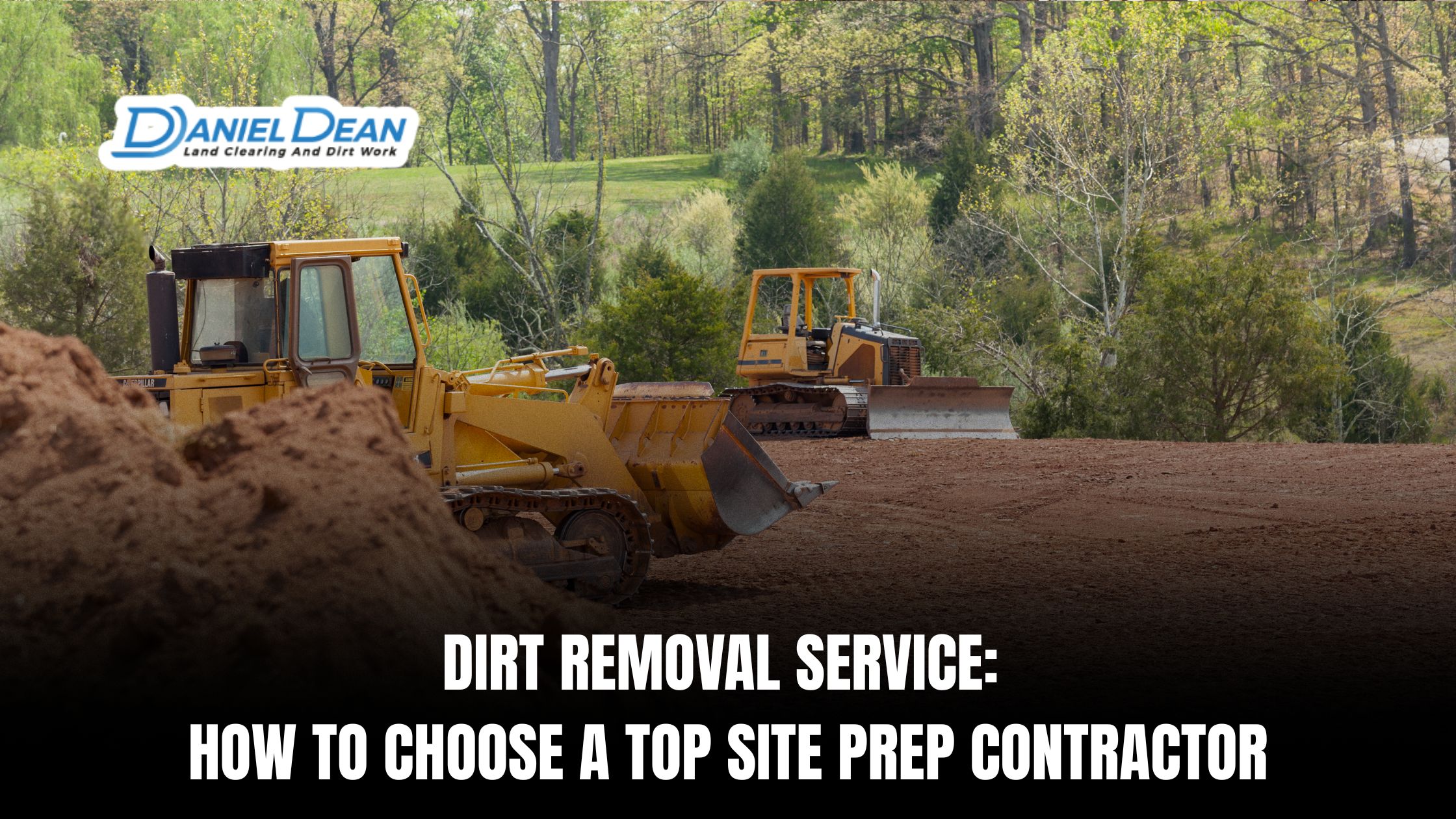
If you are planning a construction project or improving your property, one of the most important decisions you will make is choosing the right dirt removal service. Get this wrong and you are looking at drainage problems, failed foundations, permit violations, and cost overruns that could have been avoided. We have been doing this work in Texas for over 30 years, and we have seen what bad site prep costs people. This guide walks you through exactly what to look for so you hire a contractor who gets it done right.
The right contractor makes or breaks your site before a single wall goes up.
- The U.S. excavation contractor industry is valued at approximately $142.5 billion as of 2026, reflecting how critical site preparation is across both residential and commercial construction. (IBISWorld)
- There are currently 240,814 excavation contractor businesses operating in the U.S., making vetting the right one more important than ever. (IBISWorld)
What Does a Dirt Removal Service Actually Do?
A lot of people use the term loosely. Dirt removal is not just scooping soil off a lot. A real site prep contractor handles the full scope of getting your land ready for whatever comes next.
Here is what that typically includes:
- Bulk excavation for foundations, pads, and drainage systems
- Rough and final grading to establish proper slope and water flow
- Land clearing before excavation begins, including brush, trees, and stumps
- Dirt hauling to move excess material off-site or redistribute it on the property
- Site drainage planning to prevent water from pooling near structures
At Daniel Dean Land Clearing and Dirt Work, we handle all of these in-house using our own equipment. That matters because contractors who subcontract the dirt works excavation phase often lose control of scheduling, quality, and cost.
If you are dealing with low spots, soggy ground, or standing water on your property, a qualified dirt excavation contractor can also regrade your land to fix drainage before it becomes a structural problem. We have written more about that in our guide on how to drain water away from your house and land.
Verify Credentials Before You Hire Anyone
This is the step most property owners skip. A dirt work company near me search will return dozens of results, but not all of them are operating with the right documentation. Here is what to ask for before signing anything.
Insurance
At a minimum, any legitimate contractor should carry:
- General liability insurance (we recommend no less than $1 million per occurrence)
- Workers’ compensation coverage for all on-site crew
- Commercial auto coverage for their equipment fleet
Ask for certificates of insurance and verify they are current. Do not accept verbal assurances.
OSHA Safety Records
Excavation and grading work carries real safety risk. You can request a contractor’s OSHA 300 log, which documents recordable workplace injuries and illnesses. A contractor with a strong safety record runs a tighter operation overall. This is not just about compliance. It reflects how a company treats its equipment, its crew, and your property.
Local Environmental Permits
This one trips up a lot of projects in Texas. Depending on your county and the scope of your dirt excavation work, you may need permits related to:
- Stormwater discharge and erosion control (TCEQ requirements)
- Wetland or floodplain work (Army Corps of Engineers jurisdiction)
- Solid waste disposal if contaminated soils are encountered
A contractor who tells you permits are not required without actually checking your specific site is a contractor who may be cutting corners elsewhere. We stay current on Harris County, Montgomery County, and surrounding area requirements because it protects our customers and keeps their projects on track.
Evaluate Their Equipment and Fleet
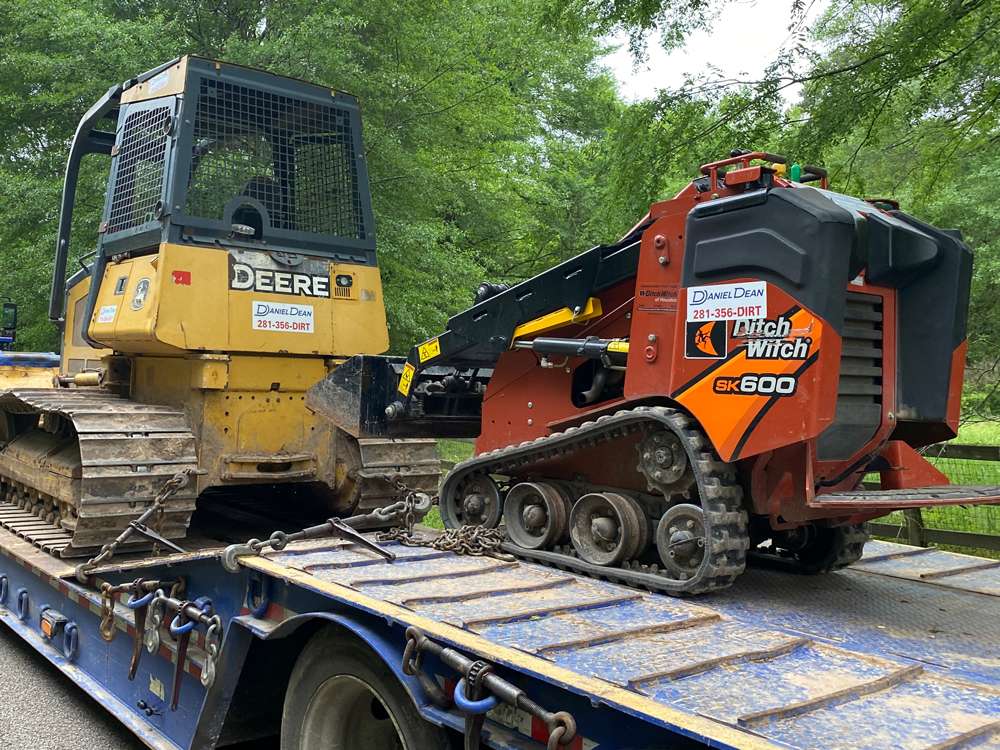
A site prep job is only as good as the equipment behind it. For any serious dirt removal service or bulk excavation project, you want to see bulldozers for clearing and rough grading, excavators in multiple size classes, motor graders for finish work, dump trucks for hauling, and compaction equipment to hit required subgrade specs.
At Daniel Dean, we own our fleet. We do not rent and we do not wait on availability when your project needs to move. Daniel maintains the equipment himself, so nothing shows up to your job broken or underpowered.
When comparing contractors, ask directly: is this your equipment or rented? How old is your primary excavator? When was your fleet last serviced? The answers tell you a lot about how a company operates.
You can see the full scope of dirt work and site services we provide for residential and commercial clients across Texas.
Understand Dirt Removal Cost Before You Get a Quote
One of the most common frustrations we hear is that property owners got a quote they did not understand, and they ended up with surprise charges. Knowing how dirt removal cost is structured helps you evaluate bids fairly.
How Contractors Price Dirt Work
Most contractors price by one of three methods:
| Pricing Method | Typical Range | Best For |
| Per cubic yard (excavation) | $2.50 to $15.00 | Foundation digs, bulk removal |
| Per hour (equipment + operator) | $100 to $300 | Grading, smaller jobs |
| Per cubic yard (hauling) | $8 to $25 | Off-site disposal runs |
| Full project flat rate | Varies by scope | Large commercial or multi-phase jobs |
What Drives Dirt Removal Cost Up
Several site conditions can push your final number higher than a base estimate:
- Clay-heavy or rock-laden soil requires more time and wear on equipment
- Limited site access means smaller equipment or longer haul routes
- Wet or waterlogged ground slows compaction and may require dewatering
- Distance to disposal site affects trucking costs significantly
- Permit fees, which typically run $50 to $400 depending on jurisdiction
What Drives Cost Down
- Off-season scheduling (late fall and early winter in Texas tend to be slower)
- Clean fill dirt that can be redistributed on-site rather than hauled away
- Easy equipment access with no overhead lines, fencing, or tight approaches
A trustworthy dirt work company near me will walk your property before quoting, not guess from a description. Any contractor who prices your job without seeing it is not giving you a real number.
Red Flags to Watch For When Comparing Bids
With over 30 years doing dirt works excavation across the greater Houston area, we have heard from a lot of customers who had bad experiences before finding us. Here are the warning signs worth catching early.
- Significantly lower bids with no explanation. When one quote comes in 40 percent below the others, the contractor is either missing scope or planning to add it back as a change order later.
- No site visit before quoting. Dirt excavation pricing without a physical inspection is guesswork.
- No written scope of work. Everything should be documented in writing: what work gets done, what equipment is used, how spoil material is handled, and what the finished grade will look like.
- Unwillingness to provide references. A legitimate contractor with years of local work will have customers who will talk to you.
- No mention of drainage. Grading without addressing drainage is incomplete site prep that will create problems down the road.
We have put together a deeper guide on how to find reliable dirt work contractors near you if you want to go further into the vetting process.
Commercial vs. Residential Site Prep: Know the Difference
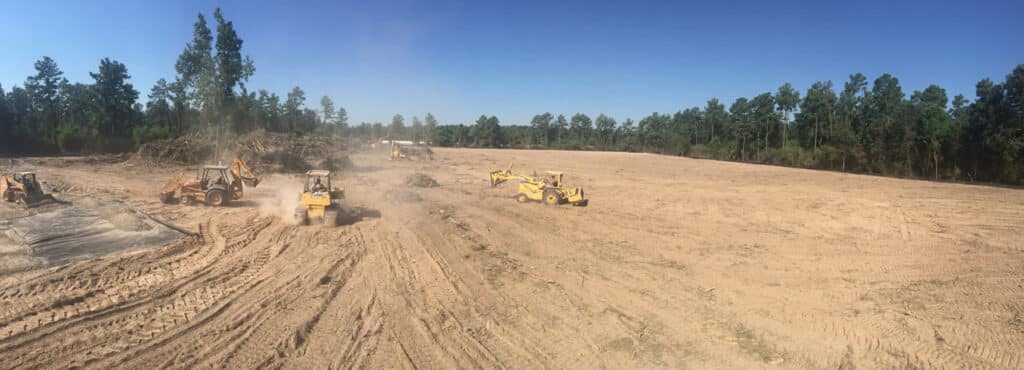
The scale is different, but so are the requirements.
Residential work typically covers house pad construction and compaction (we provide testing documentation at 95 percent compaction minimum), final grading around the foundation, driveway subgrade, and utility trench preparation. Commercial site prep goes further with large-scale bulk excavation, underground storm drain systems, detention pond construction, engineered building pads, and laydown yards for staging.
If you are a developer searching for a dirt work company near me who handles commercial-scale work, the equipment fleet and the local experience record are what separate real operators from those who take the job and figure it out as they go.
Why Local Experience in Texas Matters
Texas soil is not one thing. The greater Houston area has expansive clay that swells with moisture and shrinks in drought. Montgomery County has sandy loam transitions. Some rural tracts near Magnolia and Conroe have high water tables that require active dewatering during excavation. Getting the wrong contractor on a Texas property can mean re-doing work that should have been done right the first time.
Understanding local soil behavior, seasonal weather patterns, and the specific permit requirements from TCEQ and county drainage authorities is knowledge that only comes from years of working in the same region. We have handled jobs near Lake Conroe, in Harris County, in Austin County, and across the Brazos Valley. That ground familiarity changes how we approach every estimate.
Land clearing is often the step that comes before dirt excavation, and how it is done affects what the grading phase looks like. If you are trying to figure out what that scope costs on your own, read our breakdown of professional land clearing costs versus DIY approaches.
FAQs
What is the best way to get rid of dirt?
The best way to get rid of dirt depends on the volume and type of material. For small amounts, on-site redistribution may work. For larger excavation projects, hiring a professional dirt removal service ensures proper hauling, disposal, grading, and compliance with local regulations.
What is the minimum charge for junk removal?
Minimum junk removal charges typically range from $75 to $200, depending on the contractor, location, and load size. Dirt and soil removal often costs more because of the weight, equipment requirements, and disposal fees involved.
What is debris hauling?
Debris hauling is the process of removing and transporting unwanted materials from a property. This can include dirt, concrete, brush, tree stumps, construction waste, and other site-clearing debris that must be taken to an approved disposal or recycling facility.
Final Thoughts
Choosing a dirt removal service is not a decision to rush. The wrong contractor will cost you more in rework, permit problems, and drainage failures than the money you thought you saved. Look for verified insurance, a solid safety record, owned equipment, and someone who will walk your land before they ever give you a number.
We have been doing this work in Texas since before most of the neighborhoods we now prep were built. If you are ready to talk through your project, get a free estimate from Daniel Dean and we will come out and take a look.