
Have you noticed standing water around your property after clearing land? Many homeowners search for ideas to drain water away from house once runoff starts pooling near the foundation, driveway, or yard. The best way to drain water away from house areas starts with understanding how land clearing changes the way water moves across Texas soil.
Natural land with trees and vegetation can absorb roughly 80% to 90% of rainfall before runoff becomes a problem. After clearing and soil compaction from heavy equipment, absorption rates can fall to nearly 10% to 30%. That dramatic shift sends more water across the surface instead of into the ground, which increases the risk of erosion, mud, and foundation damage.
The right yard drainage solutions and dirt work solutions can redirect runoff before it causes expensive repairs. In this blog post, we will talk about the most effective drainage methods for Texas properties after land clearing.
Why Texas Land Clearing Disrupts Natural Drainage
What happens during land clearing in Texas? Contractors remove vegetation and those root systems that slow water movement.
The exposed soil compacts under heavy equipment, and suddenly it can’t absorb water anymore. Add in Texas’s intense rainfall events in spring and early summer, and you’ve got a real problem. Bare land just can’t handle the water volume that cleared vegetation used to manage.
Clay soil makes this worse. Texas has plenty of it, and clay sheds water instead of absorbing it. After clearing, that water’s got nowhere to go except toward your foundation, basement, or whatever landscaped areas you’ve got. The grading process often leaves low spots unintentionally, and that’s where water pools. Those wet areas attract mosquitoes and can create structural issues within weeks of a heavy rain.
This is why addressing drainage patterns immediately after clearing matters so much. The sooner you handle the water flow, the less damage you’re dealing with down the road.
Best Post-Clearing Drainage Solutions for Your Home
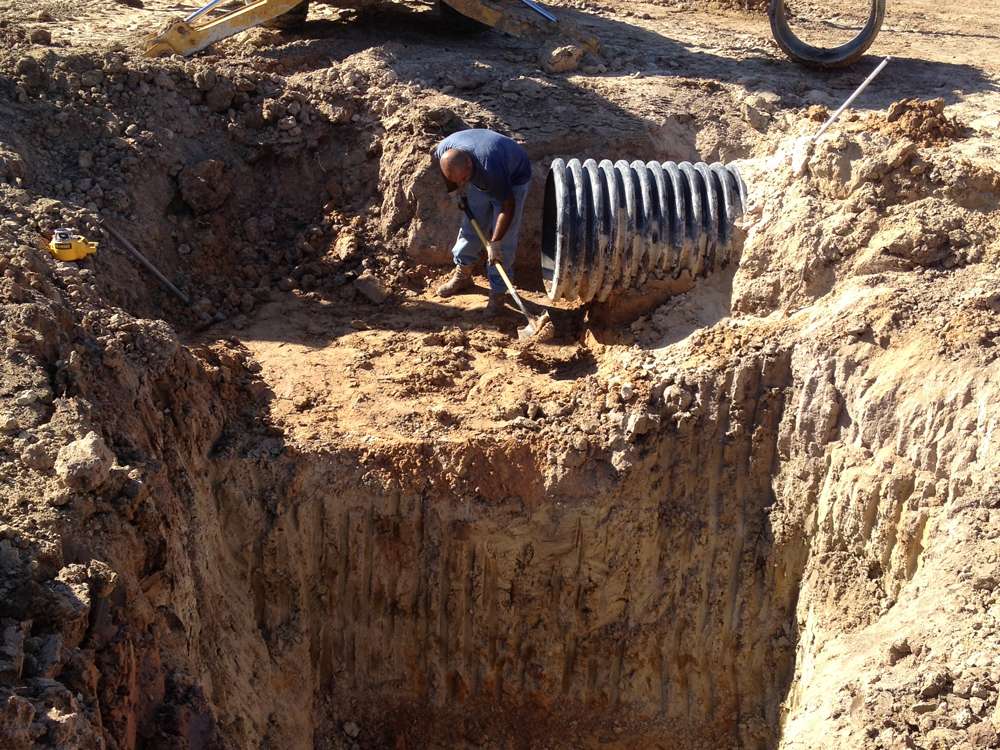
You’ve got several solid options for draining water away from your house after the clearing’s done.
French Drains and Subsurface Systems
French drains are honestly one of the best investments you can make. These systems use perforated pipes surrounded by gravel that capture groundwater and redirect it away from your foundation. They work great when you need drainage but don’t want it visible. Subsurface drains are particularly effective when surface drainage just isn’t practical or you want to keep things looking clean.
Surface and Swale Drainage
This is simpler than it sounds. You create shallow, vegetated swales that guide water across your yard toward designated drainage areas. No underground installation needed. They work best when graded at least 5 percent and planted with native Texas vegetation like buffalograss or native sedges that hold the soil while letting water move through.
Catch Basins and Storm Drain Connection
If your property connects to municipal storm drains, catch basins are your friend. They collect surface water and funnel it through underground pipes to the system. This works well for urban and suburban properties and keeps water from spreading all over your landscape.
Sump Pumps for Basement Protection
Got a basement? A sump pump collects water in a pit and pumps it away from your foundation. It needs electricity, but during those heavy Texas rainfall events, it’ll save you from basement flooding.
Rain Gardens and Bioswales
Here’s where drainage meets landscaping. Rain gardens are planted depressions that capture runoff, filter it through native plants and soil, then slowly release it into the groundwater. In Texas, you want native plants adapted to our climate and soil. They’re functional and actually look good.
The truth is, you probably need a combination of these methods working together. What you choose depends on your property’s slope, soil type, how much rain you typically get, and whether you’re near drainage easements or municipal systems.
Sometimes it takes mixing a couple approaches to get it right. If you’re not sure which direction to go, consulting with a professional who understands professional land clearing can point you in the right direction.
Texas Grading and Slope Requirements for Drainage Systems
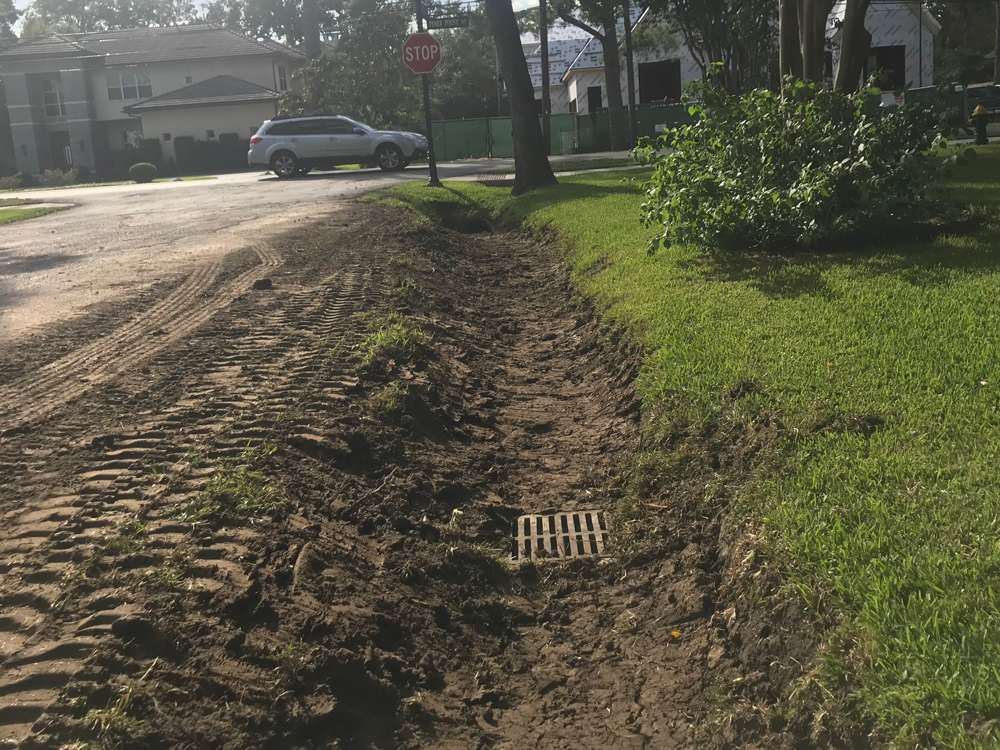
Here’s something a lot of people skip, but it’s critical: proper grading. Texas codes and engineering standards spell out minimum slopes for water to actually move where you want it. Get this right and your drainage system works. Skip it and you’ve got problems.
The standard minimum slope for effective drainage is 2 percent, though 5 percent is way more reliable. That means water should drop at least 2 feet in elevation for every 100 feet of horizontal distance. If you’ve got clay-heavy soil, steeper slopes are your friend because clay won’t cooperate unless gravity does the heavy lifting.
Your dirt work solutions need to account for several things:
- Foundation clearance: keep at least 6 inches of elevation drop from your foundation to the surrounding grade within 10 feet
- Proper pitch away from structures: don’t let water pool against your home’s exterior
- Drainage swales graded at minimum 1 percent slope along their length
- Surface prep that prevents those annoying low spots where water settles
- Room for settling, since newly graded land compacts over months
Texas isn’t uniform, so the grading specs change depending on where you are. North Texas clay is different from Hill Country rocky terrain. South Texas coastal areas need considerations for salt-resistant vegetation in drainage zones. This is one area where local experience matters more than generic advice.
Professional grading contractors use laser levels and surveying equipment to get the slopes right. If you’re dealing with erosion control after land clearing, these grading requirements become even more important. Bad grading becomes expensive pretty quickly, so getting a professional to do this right is worth the investment.
How to Hire a Licensed Texas Drainage Contractor
Finding the right contractor makes all the difference. Don’t just grab the first name that pops up in a Google search.
1. Verify Credentials
Make sure whoever you hire is actually licensed. In Texas, drainage contractors need proper credentials from the Texas Commission on Environmental Quality (TCEQ) or your local municipal licensing board. Ask to see proof. Also ask for liability insurance and workers’ compensation coverage. If they hesitate to show you this stuff, move on.
2. Ask About Experience
You want someone who’s done this kind of work before, preferably on properties like yours in your region. Call their references, especially recent projects. Ask specifically if they’ve handled post-land clearing drainage work. Someone with experience in North Texas clay is going to approach your property differently than someone who normally works in West Texas.
3. Review Warranty and Guarantees
Real professionals back their work with warranties. They’ll put it in writing and explain what happens if something doesn’t work as planned. Get specifics on labor warranties and material guarantees. Since soil settles and Texas weather can be intense, you want clarity on how they handle potential issues later.
4. Compare Written Estimates
Get at least three estimates, and they need to be detailed. I’m talking materials, labor, timeline, and warranty info. Contractors who give you verbal estimates or dodge your questions about specifics aren’t the ones you want.
5. Check Online Reviews
Look them up on the Better Business Bureau, Google Reviews, and local community forums. If you see patterns of complaints about drainage system failures or poor grading, that’s a red flag worth paying attention to.
Licensed contractors understand the Texas specifics, soil conditions, and climate factors that affect how long your drainage system lasts. They’re worth the investment. Experienced contractors also know how heavy clay soil, sudden rainfall, and improper grading can quickly turn minor drainage issues into foundation or erosion problems.
Companies like Daniel Dean Land Clearing handle drainage planning, grading, culvert installation, and other dirt work solutions with local Texas conditions in mind. That local experience helps homeowners choose yard drainage solutions that work long after the land clearing process is complete.
Real-World Drainage Fixes from Texas Homeowners
Real people have dealt with these issues, and they’ve learned some valuable lessons the hard way.
One Dallas homeowner didn’t think much about drainage after land clearing until cracks started showing up in their foundation within a few months. After getting a structural engineer to look at it, they realized water was pooling right against the foundation. They had a French drain system installed and regraded the yard. Their biggest regret? Not doing it immediately after clearing. They spent twice as much fixing the damage as they would’ve spent preventing it.
Over in Hill Country, another homeowner watched their cleared slopes erode after heavy rains. The exposed dirt just washed away. They installed bioswales with native Texas plants, and over two years, the erosion problem basically disappeared. The plants established themselves and stabilized the soil. Now it actually looks nice too.
A Houston-area homeowner got stuck with standing water in their yard after spring rains hit their cleared property. Water just pooled everywhere. They brought in a drainage contractor who installed catch basins connected to the municipal storm drain system. Problem solved. No more water pooling, no more landscape damage from sitting water.
These aren’t unusual situations. What they have in common is that all three homeowners waited until they saw problems before addressing drainage. If they’d invested in drainage solutions right after clearing, they would’ve saved time and money.
FAQs
What is the best way to drain water away from a house?
The best way to drain water away from a house depends on your soil type, slope, and drainage problem. Most Texas properties benefit from a combination of grading, French drains, swales, and downspout extensions that move runoff away from the foundation before it can pool or cause erosion.
What can I use outside my house to create a drain for water?
Homeowners commonly use French drains, catch basins, trench drains, swales, and gravel drainage channels to control runoff outside the house. The right choice depends on how much water collects, where it pools, and how the land slopes around the property.
What is the cheapest drainage method?
The cheapest drainage method is usually improving the yard slope and extending downspouts away from the home. Simple swales and gravel trenches can also provide affordable yard drainage solutions when the water problem is minor and the property already has a workable grade.
Final Thoughts on Ideas to Drain Water Away from House After Land Clearing in TX
Land clearing can completely change how water moves across your property, especially in Texas where clay soil, heavy rain, and uneven grading create serious drainage challenges. The right combination of grading, French drains, swales, catch basins, and other yard drainage solutions can help drain water away from house foundations before erosion, mud, or structural damage starts.
The most important step is acting early. Waiting until water pools around the home often leads to more expensive repairs and long term property damage. Professional dirt work solutions and proper drainage planning help protect your land investment and improve the safety and usability of your property.
If you have questions about drainage issues, land clearing, grading, culvert installation, or erosion control, the team at Daniel Dean Land Clearing can help. Contact Daniel Dean Land Clearing to discuss your project or request a consultation for your Texas property.