
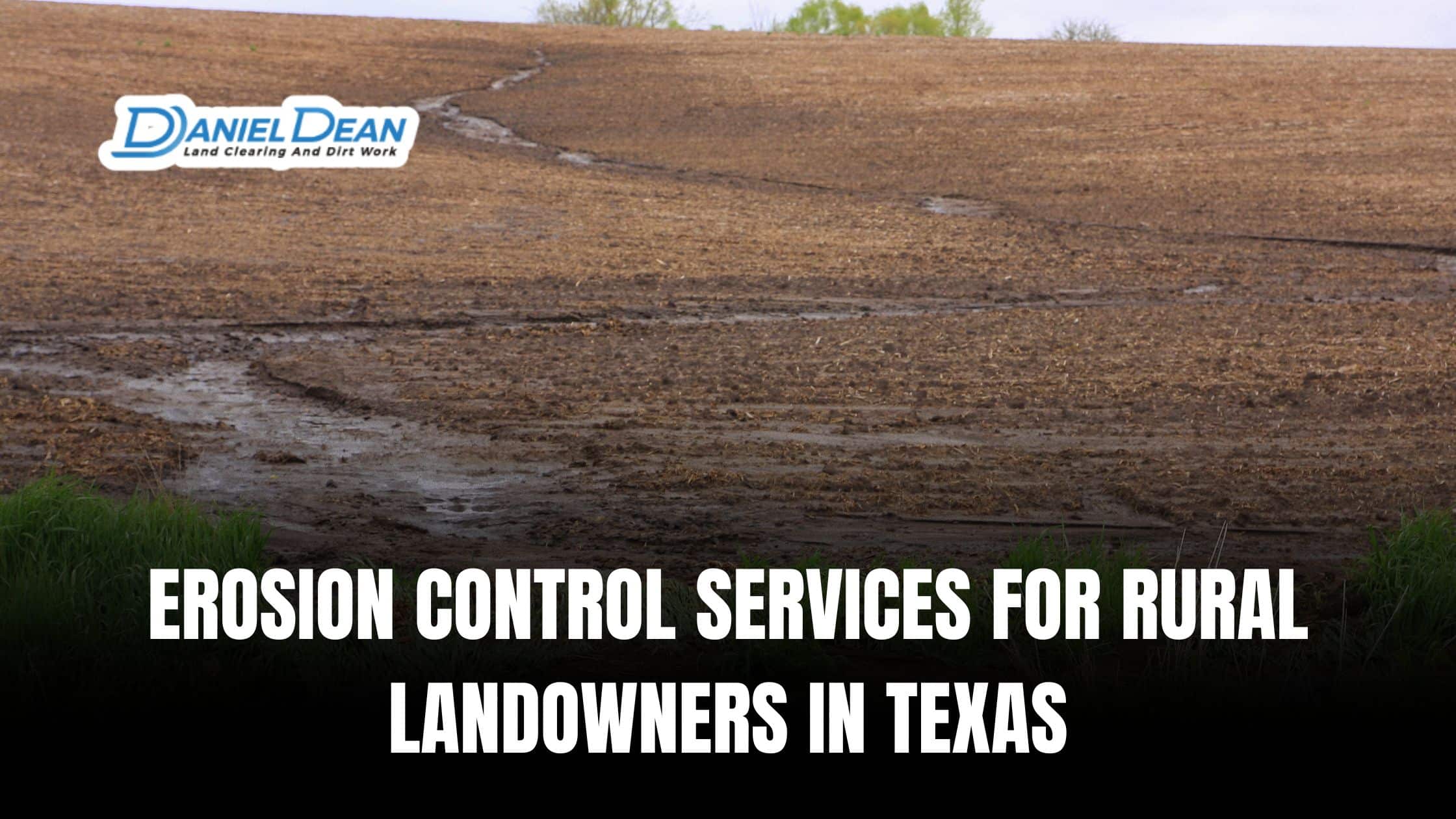
Are you seeing your soil wash away after every storm despite investing in your land? Many rural property owners turn to erosion control services only after damage becomes visible, but by then the loss can be significant. Texas ranks among the top states in the country for soil erosion, and losing just one sixteenth of an inch of topsoil across an acre can mean around 10 tons gone.
This problem often starts after tree clearing or poorly managed construction dirt work, where exposed soil and improper grading accelerate runoff. Without the right plan, small issues quickly turn into costly repairs that affect land value and usability.
In this blog post, you will learn how professional erosion control contractors address these challenges, what solutions work best for Texas conditions, and how to protect your land before erosion gets worse.
Texas-Specific Erosion Risks Rural Landowners Overlook
Rural properties in Texas face a distinct combination of environmental factors that accelerate erosion. Many landowners focus on surface issues without addressing the underlying causes tied to soil type, terrain, and land use.
One of the most common issues involves expansive clay soils. These soils absorb water slowly, then release it unevenly, which creates runoff instead of proper absorption. During heavy storms, water moves quickly across the surface, carrying topsoil with it.
Land clearing activities also play a major role. When vegetation is removed through tree clearing, the soil loses its natural anchor. Roots that once held the ground in place disappear, leaving the land exposed to rainfall and wind.
Other overlooked risks are the following:
- Overgrazed pasture that weakens grass coverage
- Uncontrolled runoff from neighboring properties
- Improper grading after construction dirt work
- Natural slopes that funnel water into concentrated paths
These conditions often combine, which makes erosion worse over time. Without intervention, small washouts can turn into deep gullies that damage usable land and reduce property value.
Drainage-First Solutions: Swales, Berms, and Water Redirection
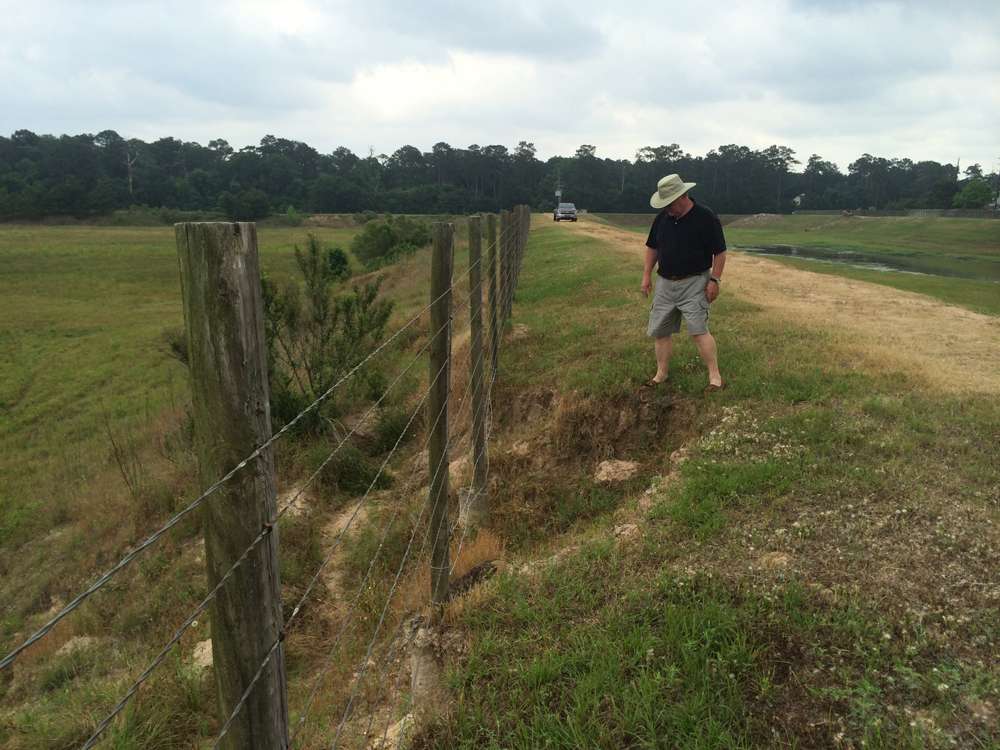
Effective erosion control services begin with one priority: controlling how water moves across your land.
Professional erosion control contractors focus on drainage first because unmanaged runoff causes most erosion issues on rural properties. Instead of treating surface damage after it appears, these solutions guide water safely across or away from vulnerable areas. This approach becomes even more important after tree clearing or construction dirt work, where natural water flow often changes and exposes soil to faster runoff.
The following solutions show the most effective drainage methods used to control water flow and prevent erosion on rural Texas properties.
Swales
Swales are shallow, carefully graded channels that guide water across your property in a controlled way. Unlike ditches that move water quickly, swales slow down runoff and allow it to spread out and absorb into the soil. This reduces the force that typically causes erosion. Swales work especially well on large rural properties where water needs to travel long distances without creating washouts.
After tree clearing, swales help replace the natural flow patterns that vegetation once controlled. Experienced erosion control contractors design swales based on slope, soil type, and rainfall patterns to ensure they function effectively as part of a complete erosion control services plan.
Berms
Berms are raised mounds of compacted soil that act as barriers to redirect water away from sensitive areas. They are often placed near driveways, building sites, or freshly disturbed ground after construction dirt work. Berms prevent water from flowing directly into these vulnerable zones, which reduces the risk of erosion and structural damage.
When built correctly, berms also help distribute water evenly across a property instead of allowing it to concentrate in one location. As part of professional erosion control services, berms are often combined with other drainage features to create a layered system. Skilled erosion control contractors ensure proper height, compaction, and placement so berms remain stable over time.
Diversion Channels
Diversion channels are engineered pathways designed to carry large volumes of water safely across or off a property. These channels play a critical role in rural areas where heavy rainfall can create sudden and powerful runoff. Instead of allowing water to carve its own path, diversion channels direct it toward controlled outlets such as ponds, natural drainage areas, or lower elevations. This prevents soil loss and protects surrounding land.
Diversion channels are especially important after construction dirt work, when grading changes natural flow patterns. Reliable erosion control services include precise channel design to match the land’s slope and water volume. Experienced erosion control contractors ensure these channels remain stable and do not contribute to further erosion.
Culverts and Crossings
Culverts and crossings allow water to pass underneath roads, driveways, or access paths without damaging the surface above. Without proper installation, water can build up and wash out these structures, leading to costly repairs and unsafe conditions. Culverts maintain continuous water flow while protecting critical access points on rural properties. They are often installed during or after construction dirt work to support long-term drainage needs.
As part of comprehensive erosion control services, culverts are sized and positioned based on expected water volume and flow direction. Professional erosion control contractors ensure proper installation, alignment, and reinforcement so these systems function effectively during heavy rainfall and prevent erosion from forming around crossings.
To complement culvert installation and enhance overall land stability, consider exploring land grading and professional clearing services that prepare your property for effective drainage and erosion control.
Slope Stabilization Methods Used on Ranch and Acreage Land
Once drainage is under control, the next step in effective erosion control services involves stabilizing areas that are most vulnerable to soil movement. Slopes, embankments, and land disturbed by tree clearing or construction dirt work often lack the structural integrity needed to resist runoff. On rural Texas properties, natural elevation changes allow water to gain speed as it moves downhill, increasing the risk of washouts and long-term land damage. Professional erosion control contractors use targeted stabilization methods to reinforce these areas, reduce soil displacement, and create a more durable landscape that can handle heavy rainfall.
To better understand how each method works and when to use it, the table below outlines the most common slope stabilization techniques used on ranch and acreage land.
| Method | How It Works | Best Use Case |
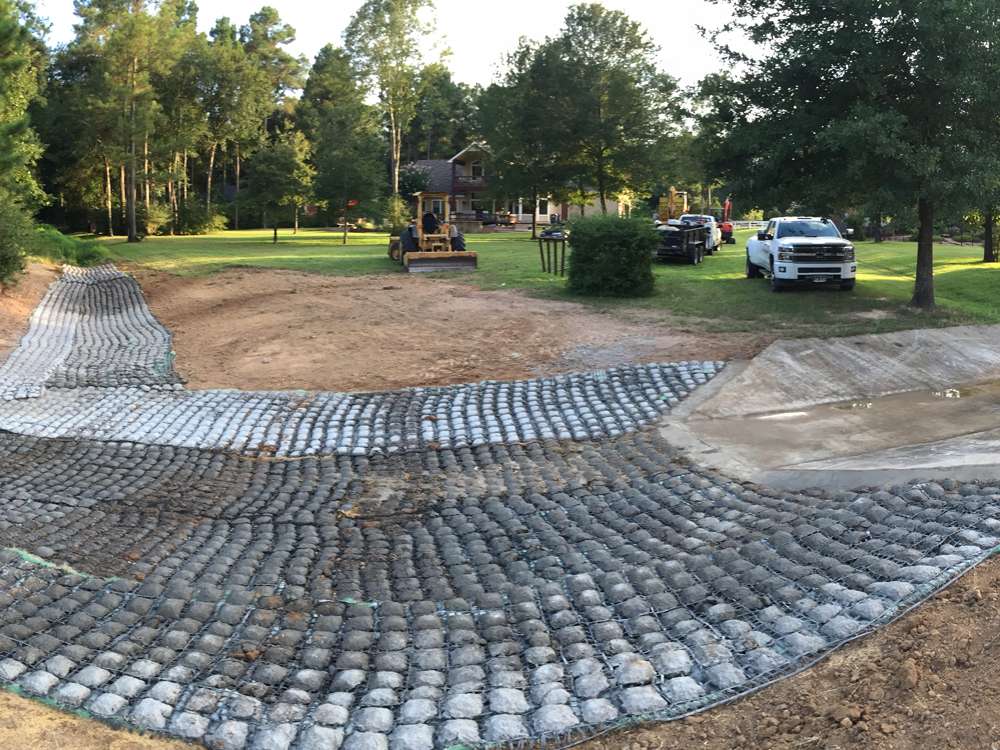
| Riprap Installation | Uses large stones to absorb water force and protect soil from erosion | Drainage paths, steep slopes, and areas with heavy runoff |
| Erosion Control Blankets | Covers soil with biodegradable mats to prevent erosion and support growth | Newly cleared land or areas waiting for vegetation to establish |
| Terracing | Creates step-like levels to slow water flow and reduce slope length | Long or steep slopes where runoff gains speed |
| Retaining Structures | Holds soil in place using engineered walls or barriers | Steep terrain or areas at risk of collapse |
| Compaction and Grading | Adjusts and strengthens soil to improve stability and drainage | After construction dirt work or land reshaping |
Each of these methods plays a specific role in strengthening the land where natural defenses are no longer enough. When combined with proper drainage, they form a complete system that protects against erosion.
Experienced erosion control contractors evaluate the land’s slope, soil condition, and water flow patterns to apply the right combination of techniques, ensuring long-term stability after clearing, grading, or construction work.
For properties that require tree clearing as part of erosion prevention, learn more about the proper approach on how to clear brush in woods to protect your land and support long-term soil stability.
Vegetation and Land Management Strategies That Actually Work in Texas
Long-term erosion control services go beyond structural solutions and focus on restoring natural systems that protect your land. Vegetation reduces the force of rainfall, improves soil absorption, and anchors soil with deep root systems, making it a critical first line of defense against erosion.
On rural Texas properties, especially after tree clearing or construction dirt work, restoring ground cover is essential to prevent exposed soil from washing away and to maintain long-term property stability.
Work with Experienced Erosion Control Contractors Like Daniel Dean
Partnering with skilled professionals ensures your land management strategy is both effective and sustainable. Erosion control contractors like Daniel Dean understand Texas soil types, rainfall patterns, and the unique challenges of rural acreage. Their expertise allows them to select and implement solutions that restore vegetation quickly, prevent further erosion, and protect your investment in the property.
The following strategies represent the most effective vegetation and land management approaches used by experts to stabilize soil and maintain healthy land conditions in Texas.
- Planting native grasses that thrive in Texas soil and develop deep root systems to hold soil in place
- Hydroseeding and reseeding to quickly restore vegetation on large or recently disturbed areas
- Applying mulch and ground cover to protect exposed soil from rainfall while retaining moisture
- Managing grazing practices to prevent overuse and maintain healthy pasture coverage
- Preserving buffer zones around creeks, drainage paths, and ponds to reduce erosion risk
Protect your land with proven erosion control services tailored for Texas conditions. Contact Daniel Dean today to implement strategies that keep your property stable, productive, and erosion-resistant.
FAQs About Erosion Control Services
What are erosion control services?
Erosion control services are professional solutions designed to prevent soil loss, protect land from water damage, and maintain long-term property stability. They often include drainage management, slope stabilization, and vegetation restoration.
What are examples of erosion control?
Common examples include installing swales, berms, riprap, erosion control blankets, terracing, and planting native vegetation to stabilize soil.
What are the 4 types of erosion?
The four main types are sheet erosion, rill erosion, gully erosion, and streambank erosion, each caused by water movement or soil disturbance.
Final Thoughts on Erosion Control Services for Rural Landowners in Texas
Erosion control is essential for protecting rural Texas properties from soil loss, water damage, and long-term land instability. Throughout this guide, we explored the key risks specific to Texas, effective drainage-first solutions like swales and berms, slope stabilization methods, and vegetation strategies that restore natural defenses. Each component works together to create a durable system that prevents costly erosion and preserves your property’s value.
For landowners dealing with challenges from tree clearing, construction dirt work, or natural terrain, the next step is to implement a tailored plan with professional guidance. Working with experienced erosion control contractors ensures the right techniques are applied for your property’s specific conditions.
If you are ready to protect your land and maintain its long-term stability, contact Daniel Dean for inquiries or questions about our comprehensive land clearing, grading, and erosion control services. Speak with our experts today through our contact page to get started.