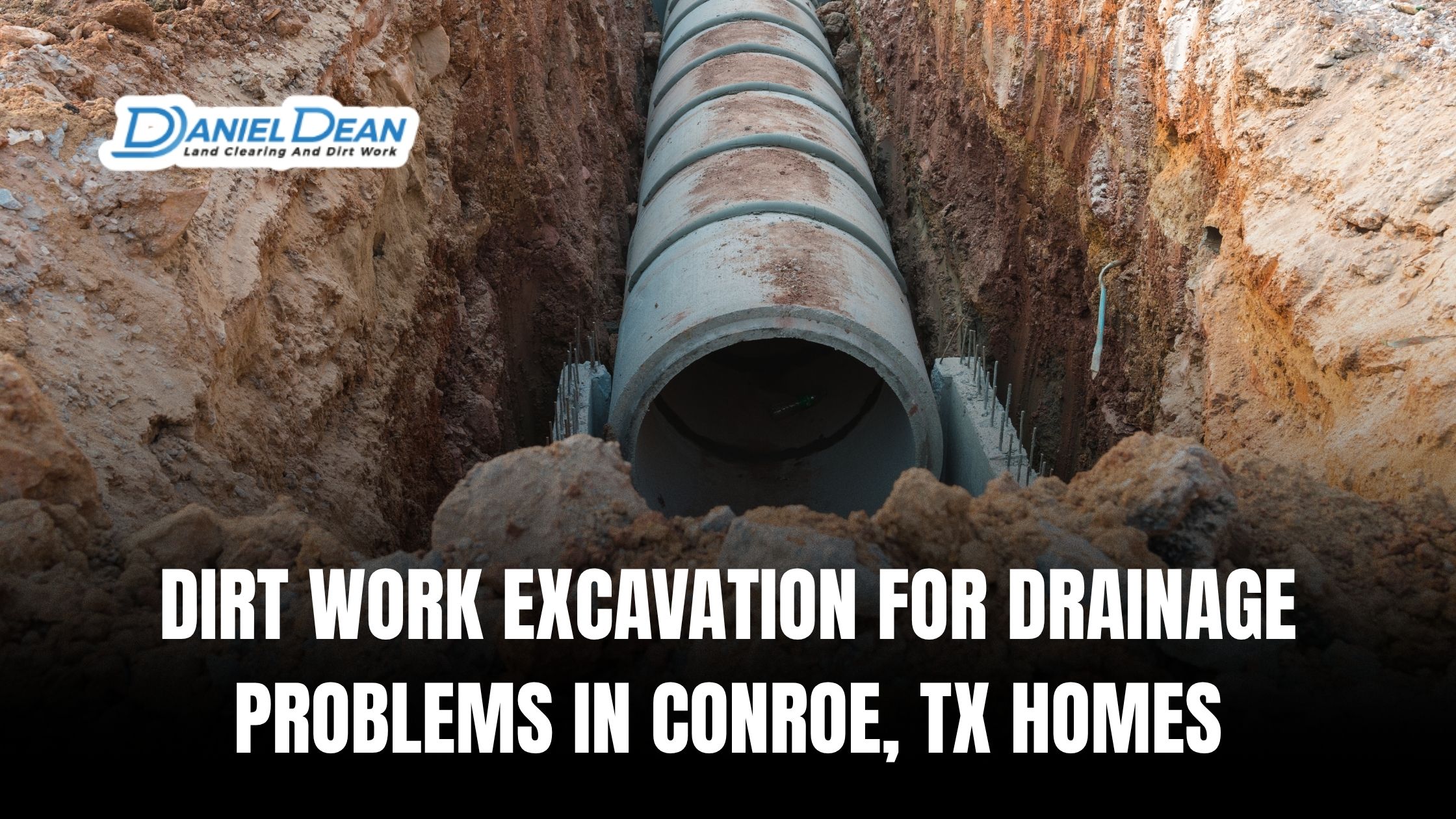
Have you noticed water sitting in your yard long after a storm, even when the rain has stopped? Dirt work excavation often becomes the key solution when homeowners in Conroe deal with persistent drainage issues that simple fixes cannot solve. This process reshapes the land to guide water away from your home instead of letting it collect around your foundation.
Heavy rainfall has become more intense in Southeast Texas over time, with extreme downpours rising significantly since the mid 20th century. Many storms now drop several inches of water within hours, which overwhelms compact clay soil and causes surface flooding. On a typical 2,000 square foot roof, just a single inch of rain can produce more than a thousand gallons of runoff, and without proper grading, that water often ends up near the foundation.
These conditions create serious challenges for homeowners trying to figure out how to improve drainage in yard areas using surface level fixes alone. This blog post explains practical dirt work solutions that correct the source of the problem and help protect your property long term.
Why Conroe Homes Struggle With Drainage and Standing Water
Drainage issues in Conroe often start below the surface. The region’s soil contains a high amount of clay, which holds water instead of allowing it to drain naturally. When heavy rain occurs, water sits on top of the ground or slowly moves toward the home’s foundation.
Here are several common causes:
- Compacted soil that prevents water absorption
- Improper grading that directs water toward structures
- Lack of drainage channels or swales
- Settled ground around older homes
- Overwatering from irrigation systems
These conditions create persistent moisture problems. Over time, standing water can damage landscaping, weaken soil stability, and increase pressure on foundations. Understanding these root causes is the first step in deciding how to improve drainage in yard spaces effectively.
How Dirt Work Excavation Fixes Yard Flooding and Foundation Drainage Issues
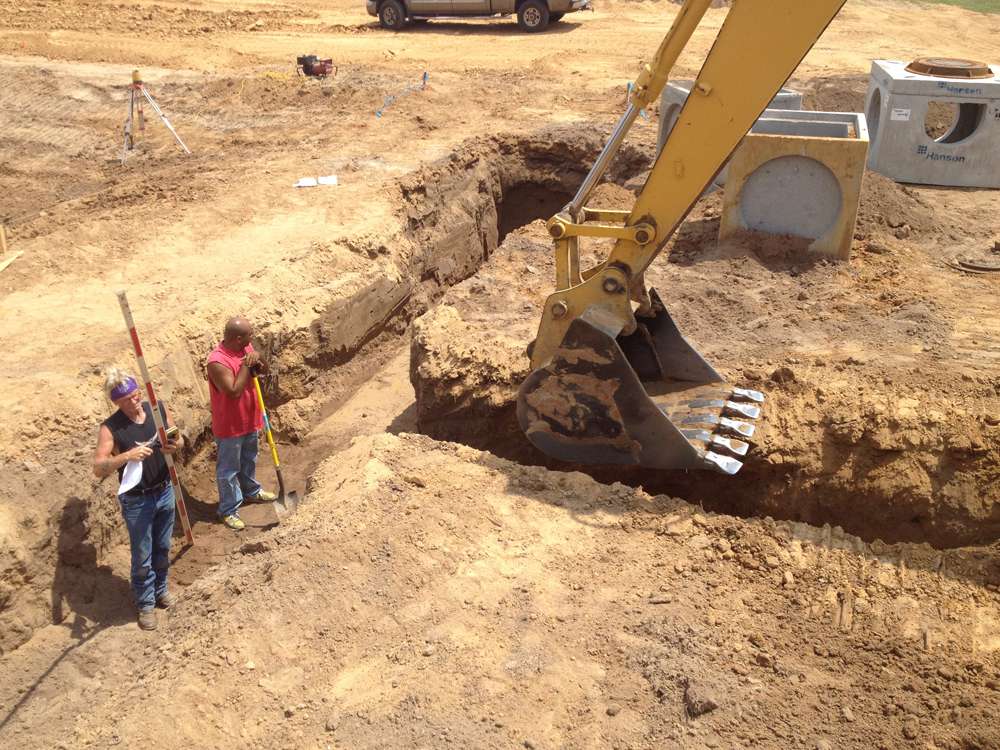
Dirt work excavation fixes drainage problems by reshaping the land so water follows a controlled path away from structures. It does not rely on temporary surface fixes like adding soil or planting grass. Instead, it corrects elevation errors, soil compaction, and natural runoff direction.
When done correctly, it creates practical dirt work solutions that address flooding at the source rather than the surface.
| Step | What actually happens on site | Why it matters for drainage | Common mistake it prevents |
| 1. Water flow mapping | Contractors observe how water moves during or after rain | Shows the real runoff direction, not assumptions | Fixing the wrong area and missing the true source of flooding |
| 2. Laser level grading check | Equipment measures slope accuracy across the yard | Identifies subtle low spots that hold water | “Looks flat” grading that still traps runoff |
| 3. Strategic cut and fill | High areas are cut down and low areas are filled using compacted soil | Creates a continuous slope away from the home | Random dirt dumping that creates new low pockets |
| 4. Compaction control testing | Soil is compacted in layers, not all at once | Prevents future sinking or uneven settling | Yard settling that recreates drainage issues after one season |
| 5. Swale and runoff channel design | Shallow drainage paths are carved into natural flow lines | Moves excess water safely toward ditch or drainage outlet | Water pooling at property edges or near foundation walls |
| 6. Final slope verification | Contractor rechecks grade after all equipment work is complete | Ensures water flows even during heavy rain events | Undetected reverse slopes that push water toward the house |
After these steps, excavation creates a landscape that actively manages water instead of reacting to it. It ensures the ground can handle runoff before it becomes a structural risk. This same principle is essential in land preparation when building a house in Texas, where proper site work sets the foundation for long-term stability.
Step-by-Step Process of Drainage-Focused Dirt Work Excavation
A structured process separates long-term results from temporary fixes. Professional dirt work excavation focuses on measuring, correcting, and verifying how water moves across your property. Each step targets a specific cause of drainage failure so the final result performs well even during heavy rain.
Step 1: Site Evaluation
Contractors start by studying how water actually behaves on your property, not how it appears on a dry day. They look at slope direction, roof runoff discharge points, soil type, and existing grading around the foundation. In many Conroe homes, they find that water flows toward the house due to subtle elevation errors that are not visible without proper tools.
They may also check downspout locations and how quickly water absorbs into the soil. This step sets the foundation for all dirt work solutions because it reveals the true cause of standing water.
Step 2: Problem Identification
After evaluation, the contractor marks problem zones with precision. These include low areas where water collects, compacted soil that blocks absorption, and runoff paths that lead toward the foundation instead of away from it.
This step often uncovers hidden issues such as:
- Buried construction debris that traps water
- Previous grading attempts that created uneven slopes
- Soil layers that prevent proper drainage
Clear identification ensures the solution targets the root problem, which is critical when figuring out how to improve drainage in yard areas effectively.
Step 3: Excavation Planning
A detailed grading plan is created based on measurements, not guesswork. Contractors calculate how much soil needs to be removed or added to achieve the correct slope. Even a small slope change can redirect thousands of gallons of water during a storm.
The plan also defines:
- Where water will be redirected
- Safe discharge areas such as ditches or lower elevations
- How to balance cut and fill to avoid unnecessary soil hauling
This step ensures the excavation work creates a controlled drainage path instead of shifting the problem elsewhere.
Step 4: Dirt Work Excavation Execution
Heavy equipment reshapes the land according to the plan. Operators cut down high spots, fill low areas, and establish a consistent slope that moves water away from structures.
This phase requires precision. Poor execution can create new drainage issues, such as reverse slopes or uneven settling. Skilled operators also manage soil compaction in layers to prevent future sinking, which is a common reason drainage problems return after a few months.
Proper execution is what turns a grading plan into a functional drainage system.
Step 5: Final Grading and Testing
Once the main excavation is complete, the surface is fine-tuned and tested. Contractors smooth the soil, compact it properly, and verify that water flows in the intended direction.
They may simulate runoff or inspect the site after rainfall to confirm performance. Adjustments are made if any areas still hold water or direct flow incorrectly.
This final step ensures the dirt work excavation performs under real conditions, not just on the surface. It verifies that grading, compaction, and runoff flow all work together during heavy rain.
The same level of planning and verification is outlined in this laydown yard setup checklist, where every step supports long-term site performance.
When to Call a Local Conroe Excavation Contractor for Permanent Solutions
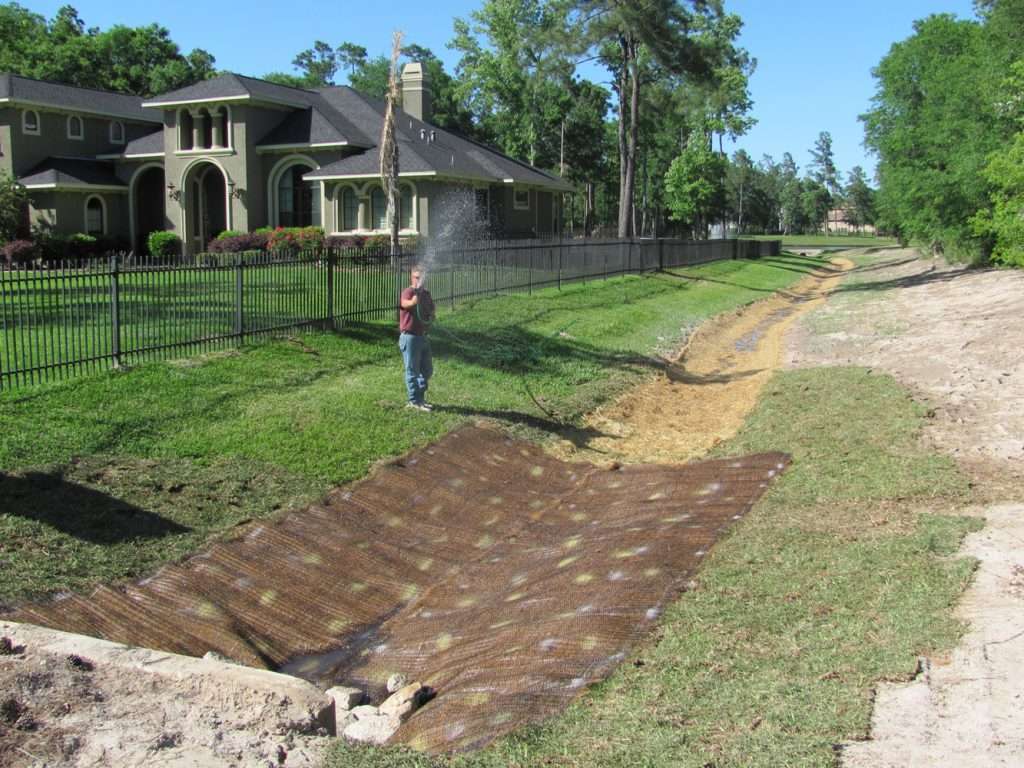
Some drainage issues go beyond simple DIY fixes. If water continues to collect around your home after rain, or if soil remains saturated for long periods, professional intervention is necessary.
You should contact a local contractor when:
- Water reaches or stays near your foundation
- DIY grading or landscaping has failed
- Large sections of the yard stay muddy year-round
- You notice soil erosion or sinking areas
- You plan new construction or landscaping improvements
Experienced teams like Daniel Dean Land Clearing and Dirt Work bring deep knowledge of local soil conditions and rainfall patterns to every dirt work excavation project. This expertise allows them to create targeted dirt work solutions that address the root cause of drainage issues, not just temporary surface problems.
FAQs
What is dirt excavation?
Dirt excavation involves removing and reshaping soil to prepare land for construction or fix drainage issues. It helps create proper elevation and stable ground conditions.
What is the meaning of dirt work?
Dirt work refers to all land preparation activities like grading, leveling, and soil compaction. These dirt work solutions help control water flow and support structures.
What are the three types of excavation?
The three main types are topsoil excavation, earth excavation, and rock excavation. Each type is used based on soil conditions and project needs within dirt work excavation.
Final Thoughts on Dirt Work Excavation for Drainage Problems in Conroe, TX Homes
Drainage problems in Conroe often come from soil conditions, grading issues, and heavy rainfall patterns that overwhelm residential yards. Dirt work excavation addresses these challenges by reshaping the land, correcting slope direction, and improving how water moves across the property. When combined with proper planning and execution, it delivers long-term dirt work solutions that reduce flooding, protect foundations, and restore usable yard space.
If you notice standing water, erosion, or ongoing drainage issues, the next step is to act before the damage worsens. A professional site evaluation can identify the exact cause and prevent costly repairs later.
If you are ready to improve drainage or prepare your land for construction, you can reach out to us through this Daniel Dean Land Clearing and Dirt Work page for questions, estimates, or service inquiries.