Texas asks a lot of a lawn. One county gets 55 inches of rain a year and thick gumbo clay, and three hours west the ground turns to caliche under 20 inches of rain and triple digit heat. That’s why the types of grass in lawn spaces across Texas can’t have one universal answer, and picking the wrong one usually shows up as bare patches, disease, or a water bill that keeps climbing every July. This guide breaks down which grasses actually hold up across Texas conditions, what they need to stay healthy, and why the ground underneath the grass often decides the outcome before a single seed goes down.
The short version, your region and your soil matter just as much as the grass variety you pick.
A couple of numbers worth knowing before we get into it.
- Grasses are one of the largest plant families on Earth, with close to 12,000 identified species worldwide, yet Texas lawns realistically draw from only about half a dozen of them (BiologyInsights).
- Outdoor irrigation, most of it lawn watering, makes up roughly 31 percent of residential water use across the state, according to Texas conservation data compiled by the USDA (NRCS Texas).
How Many Types of Grass Are There for Texas Lawns
Botanically, tens of thousands of grass species exist worldwide. Narrow that down to grasses that can actually survive as a mowed, walkable lawn in Texas heat, and the list gets short fast. Texas A&M AgriLife Extension points to five main warm season turfgrasses for home lawns statewide, Bermuda, St. Augustine, Zoysia, Buffalo, and Centipede, with a couple of niche options like Bahia and Seashore Paspalum showing up in specific coastal or low maintenance settings. Cool season grasses such as tall fescue and Kentucky bluegrass rarely survive a full Texas summer outside the far northern Panhandle, and even there they need heavy irrigation to hang on.
Best Types of Grass for Lawn in Texas
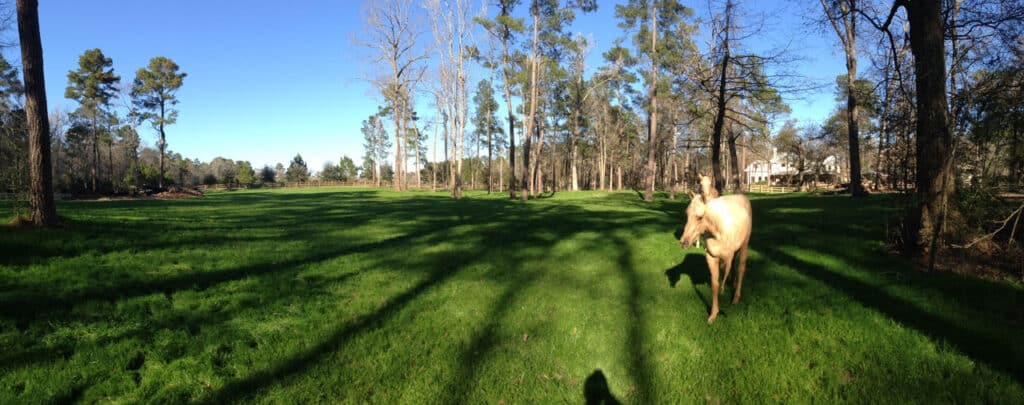
Picking from the best types of grass for lawn use in Texas starts with matching each grass’s needs to your yard’s sun, traffic, and soil. Here’s how the main options actually perform once they’re in the ground.
| Grass Type | Best For | Sun Needs | Drought Tolerance | Maintenance |
| Bermuda | Full sun, heavy foot traffic, West/Central/North TX | Full sun | High | High, frequent mowing |
| St. Augustine | Shade and humidity, Gulf Coast and Houston area | Partial to full sun | Moderate | Moderate to high, needs consistent water |
| Zoysia | Transition zone, dense turf, partial shade | Full sun to light shade | Moderate to high | Moderate, slow growth means less mowing |
| Buffalo Grass | Low water lawns, Central and West TX | Full sun | Very high | Low |
| Centipede | Low maintenance yards, East TX sandy soil | Full sun to light shade | Low to moderate | Low |
Bermuda is the workhorse of Texas lawns and the one you’ll see on most sports fields and suburban yards from Dallas to the Panhandle. It spreads fast, bounces back from damage, and tolerates low mowing, but it thins out badly in shade. St. Augustine trades some of that toughness for shade tolerance and a thicker blade, which is why it dominates in Houston and along the coast where big trees are common.
Zoysia sits in between, denser and more shade tolerant than Bermuda but slower to fill in. Buffalo grass and Centipede are the low input options, good for homeowners who want fewer chemicals and less mowing rather than a golf course look. For most homeowners, that shortlist of best types of grass for lawn success really does come down to these five.
Types of Grass in Lawn Choices by Texas Region
The types of grass for yard use along the humid Gulf Coast look nothing like the types of grass for yard choices out in the dry, alkaline soils of Central and West Texas, so it helps to think region first, grass second.
- Gulf Coast and Houston area, humid with heavy clay soil and filtered shade under large trees, St. Augustine is the default choice, with Zoysia as an alternative in partial sun.
- North Texas and the DFW Metroplex, a transition zone with occasional hard freezes, cold hardy Bermuda hybrids and Zoysia both perform well.
- Central and West Texas, arid with alkaline, rocky soil and limited rainfall, Buffalo grass and common Bermuda handle the drought best.
- East Texas, sandy, acidic soil with high humidity, Centipede grass thrives with minimal fertilizer, and St. Augustine works in shadier spots.
Picking types of grass for yard projects on large rural acreage adds another layer, since irrigation access, grazing use, and erosion control often matter as much as how the lawn looks up close.
Why the Ground Under Your Grass Matters More Than the Seed Bag
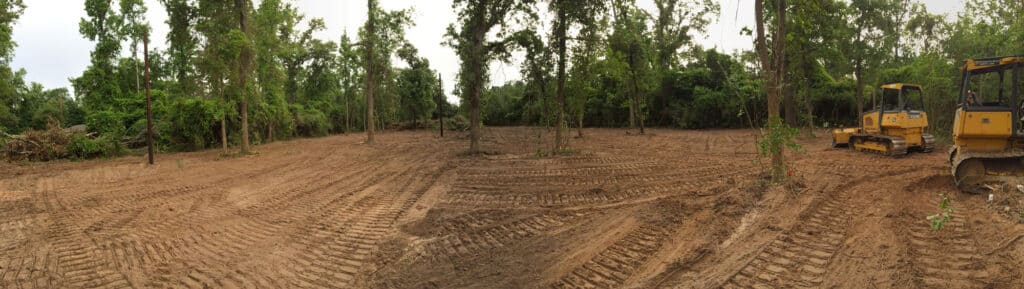
Even a well matched grass variety will struggle if the ground underneath isn’t right. New sod and grass seed need loose, properly graded soil to develop a strong root zone establishment, and that’s hard to achieve over compacted clay, buried construction debris, or low spots that hold water after every Texas storm. Soil compaction and drainage problems are two of the most common reasons a newly planted lawn fails within its first summer, even when the grass variety was a good match for the region. We’ve covered why grading and land leveling has to happen before grass goes down in our guide to land grading near me, and the same principle applies whether you’re prepping a quarter acre suburban lot or a multi acre rural property.
If you’re building a new home before landscaping even starts, site work usually needs to happen well before sod trucks show up. We break down what that looks like in our post on land preparation for building a house in Texas, and if you’re budgeting the whole project, our guide to site work costs when building a home walks through where clearing and grading costs typically land. For larger rural or wooded properties, brush and tree removal usually come first. Our Texas land clearing contractor services page covers how we handle everything from selective clearing to full site prep before grass or sod goes in.
How We Prepare Texas Properties for a Thriving Lawn
At Daniel Dean, we treat clearing and grading as one connected process rather than two separate jobs. Our crews use our own equipment to remove trees, brush, and buried debris, correct drainage, and leave the ground compacted and properly sloped, which gives new grass an actual shot at healthy root zone establishment instead of settling and dying back within a season. You can see the full range of our land clearing and dirt work services on our site.
Frequently Asked Questions
Which grass handles Texas shade the best?
St. Augustine is generally the most shade tolerant of the warm season turfgrasses grown in Texas, though it still needs four to six hours of light a day to stay healthy. Some Zoysia matrella varieties come in a close second for partially shaded yards.
Is Bermuda or St. Augustine better for a Texas lawn?
It depends on sun exposure and traffic. Bermuda is the better fit for full sun yards with kids, pets, or heavy foot traffic. St. Augustine is the better fit for yards with moderate shade and moderate traffic, though it typically needs more consistent watering.
When is the best time to plant grass seed in Texas?
Late spring into early summer, after the last frost and once soil temperatures are consistently warm, is the best window for establishing warm season grasses from seed.
Can grass grow well in Texas clay soil?
Yes, but clay compacts easily and holds water longer than sandy soil, which can suffocate new roots. Correcting drainage and grading the site properly before planting makes a much bigger difference in clay soil than the grass variety itself.
Final Thoughts on Types of Grass in Lawn
Texas doesn’t have one climate, so it doesn’t have one right answer for the types of grass in lawn spaces across the state. Bermuda and Buffalo grass carry the heat and drought out west and in Central Texas, St. Augustine and Centipede handle humidity and shade closer to the coast and in the east, and Zoysia splits the difference up north in the transition zone. None of that matters much, though, if the ground underneath is compacted, poorly graded, or holding water after every rain. Get the site work right first, and the grass actually has a shot at taking hold. If you’re planning a new lawn, a home build, or you’re just tired of patchy grass that won’t establish, contact Daniel Dean and we’ll walk your property with you before you spend a dime on seed or sod.
About the Author
Daniel Dean has spent more than 30 years clearing, grading, and preparing land across Texas, from small residential lots to large rural acreage. What started as hands on dirt work has grown into a full service land clearing and site preparation company trusted by homeowners, builders, and developers throughout the Houston region and beyond. The Daniel Dean team writes from firsthand experience getting properties ready for construction, drainage correction, and healthy, established lawns.