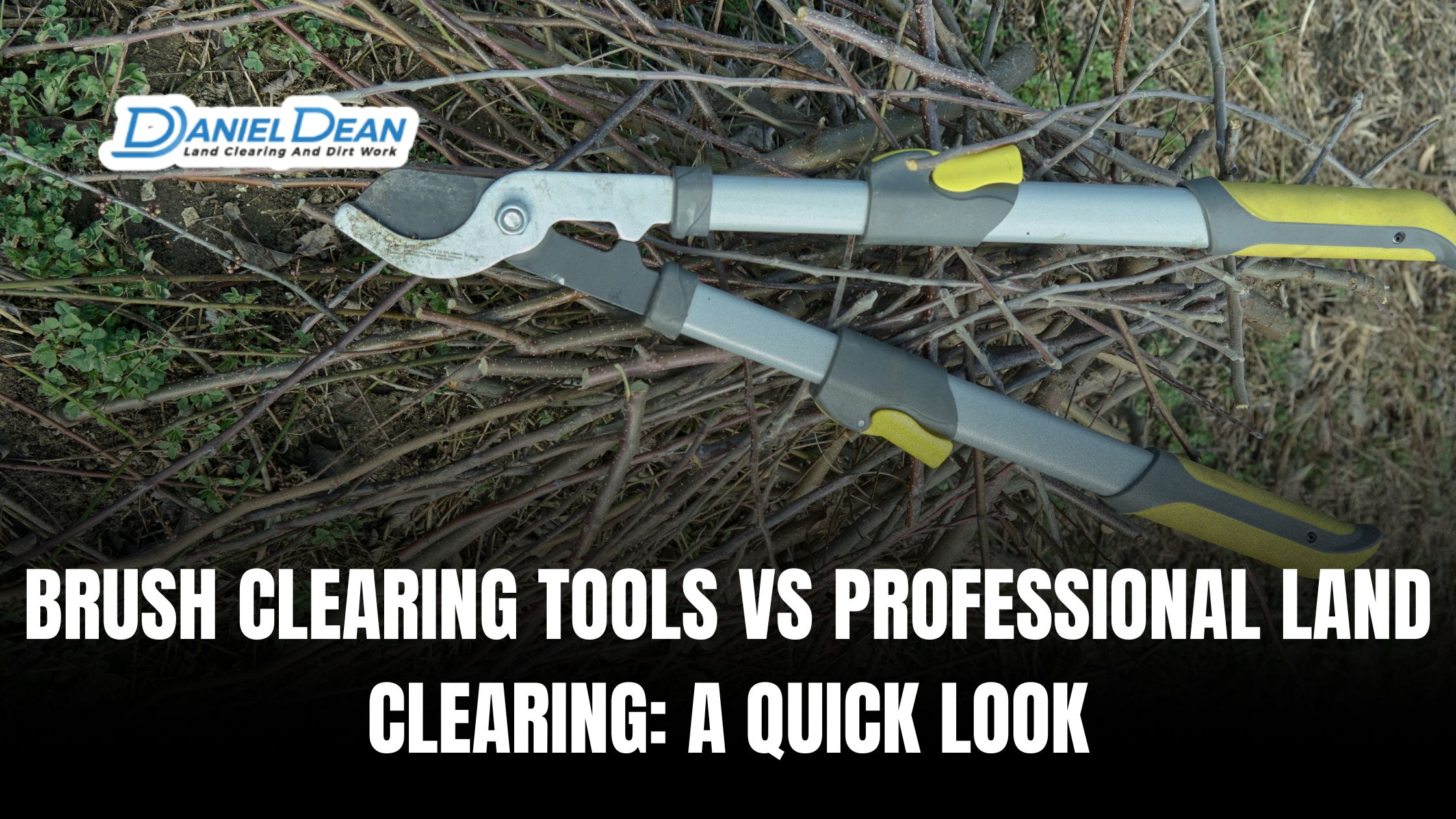
Are brush clearing tools enough for your property, or do you need professional land clearing to handle the job? Many landowners start with brush clearing tools expecting fast results, yet clearing speed varies widely. A trained crew with a forestry mulcher can clear several acres in a single day, while manual brush clearing takes far longer. Safety also matters.
Emergency rooms treat tens of thousands of chainsaw injuries each year, which highlights the risks of improper use. The real problem is not just choosing between hand tools for clearing brush or heavy equipment. It is knowing which option fits your land, time, and safety limits.
In this blog post, we will talk about how to choose the right brush clearing tools, compare them with professional site clearance, and help you decide the most practical and cost effective approach.
Field-Tested Brush Clearing Tools for Texas Land
Texas land conditions vary from rocky Hill Country terrain to dense cedar and mesquite growth, so the right brush clearing tools depend on your specific environment. Soil hardness, drought patterns, and aggressive native vegetation all affect how you approach brush clearing and site clearance.
Choosing equipment that matches Texas terrain helps you work faster, reduce wear on tools, and avoid costly mistakes.
For Light to Moderate Brush
Hand tools for clearing brush work best on smaller properties with scattered vegetation:
- Pruning shears (cost: $20-$60)
- Machetes and brush hooks ($30-$80)
- Handsaws and loppers ($40-$120)
These lightweight options provide precision control and are cost-effective for residential landscapes with brambles, vines, and low-density growth. However, they demand sustained physical effort. For detailed guidance on this approach, see our article on how to clear brush in woods.
For Dense Vegetation
Brush cutters and string trimmers handle thicker brush more efficiently than hand tools:
- Electric string trimmers (200-400 square feet/hour clearing rate)
- Gas-powered brush cutters (500-1,000 square feet/hour)
- Cost range: $200-$800 total investment
Powered equipment clears saplings, thick weeds, and tangled brush faster than manual options. They’re ideal for mid-sized properties where vegetation creates significant obstacles, though they require ongoing maintenance and fuel costs.
For Heavy-Duty Land Clearing
Woody debris, fallen trees, and dense overgrowth demand industrial-strength equipment:
- Chainsaws: $300-$800 (tree and branch removal)
- Forestry mulchers: $400-$600 daily rental (ground material to chips)
- Skid steers: $200-$400 daily rental (earthmoving and material handling)
These heavy-duty machines process substantial material volumes and are practical for properties exceeding 1 acre.
Technical Guide: Manual vs. Heavy-Duty Clearing Equipment
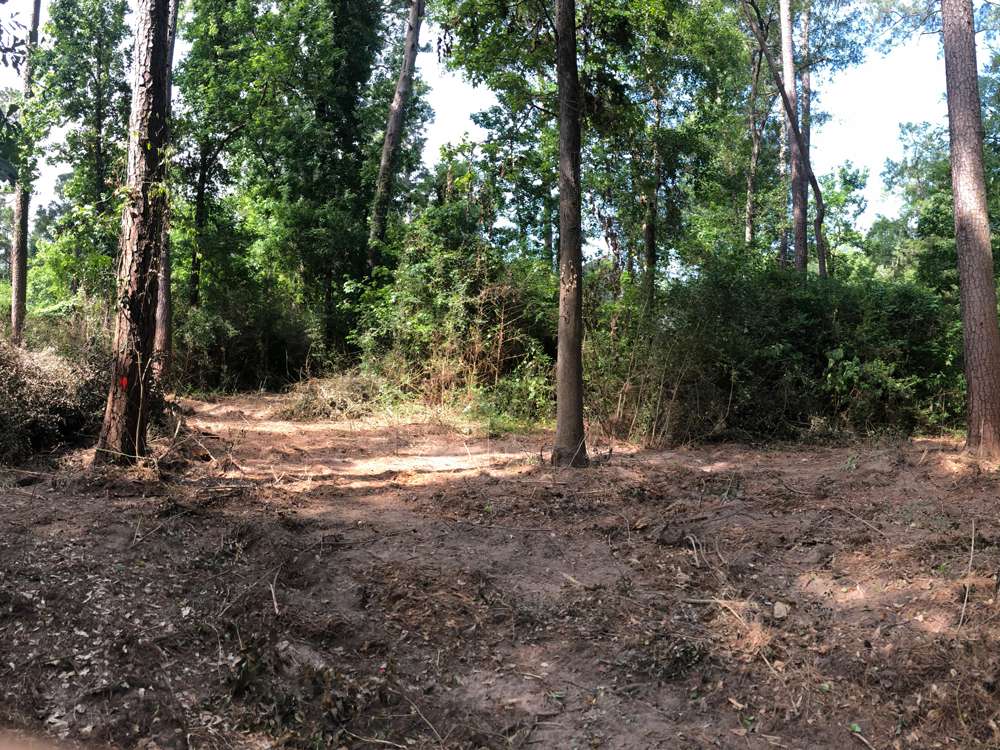
Choosing between manual and powered brush clearing tools depends on your land size, vegetation density, and how much time and effort you can invest. Each option plays a specific role in brush clearing and site clearance, from precise trimming to faster large-area coverage. Understanding how these tools perform helps you match the right equipment to your property conditions and avoid wasted effort or cost.
| Tool Type | Cost | Clearing Speed | Best Use Case | Key Notes |
| Hand tools for clearing brush (handsaws, loppers) | $30 to $150 per tool | 100 to 200 sq ft per hour | Selective clearing, tight spaces | Minimal maintenance, requires physical effort |
| Electric brush cutters and trimmers | $200 to $800 | 1,000 to 2,000 sq ft per hour | Light to moderate brush clearing | Quieter, low maintenance, limited by battery or cord |
| Gas-powered brush cutters | $200 to $800 | 1,000 to 2,000 sq ft per hour | Thicker brush and mid-sized areas | More power, higher fuel and upkeep needs |
Hand tools for clearing brush work best when precision matters or when you need to protect surrounding plants. Powered brush clearing tools increase productivity and reduce labor, which makes them a practical choice for mid-sized properties and ongoing site clearance projects.
Professional Clearing Equipment
Skid steers, excavators, and brush chippers represent industrial-grade site clearance. For Texas-based landowners managing site work, learn about professional land clearing options:
- Clearing capacity: Multiple acres daily
- Rental costs: $200-$600 daily depending on equipment
- Additional services: Material disposal, grading, site restoration
- Operator expertise: Critical. improper use damages landscape
These machines deliver speed and scale, but they require experience to avoid costly mistakes and achieve clean, efficient results.
The True Cost of Brush Clearing Tools vs Contractors
Understanding the real cost of brush clearing tools versus hiring contractors goes beyond the initial purchase price. Labor, equipment upkeep, and the time required for brush clearing and site clearance all play a major role in the final expense.
When you compare DIY work using hand tools for clearing brush with professional services, the difference often comes down to efficiency and scale.
| Category | Cost Range | Time Required | Notes |
| Basic hand tools for clearing brush | $100 to $200 | 8 to 16 hours per session | Suitable for small areas, high physical effort |
| Brush cutter | $400 to $800 | Several days for 1 to 2 acres | Faster but still labor intensive |
| Chainsaw setup | $600 to $2,000 | Multiple days per project | Needed for thicker vegetation |
| Fuel, maintenance, storage | $200 to $500 per year | Ongoing | Adds to long-term ownership cost |
| Professional land clearing (0.25 acre) | $400 to $1,200 | 1 to 3 days total | Includes labor and equipment |
| Professional land clearing (1 acre dense) | $1,500 to $5,000 | 1 to 3 days total | Faster completion with heavy machinery |
| Add-ons (grading, debris removal) | $500 to $2,000 | Varies | Site preparation and cleanup services |
DIY brush clearing tools can seem cheaper upfront, but labor and time often increase the real cost significantly. Professional site clearance delivers faster results, especially for larger or heavily overgrown properties, where efficiency becomes the main value driver.
The Break-Even Point
For properties exceeding half an acre with dense vegetation, professional contractors deliver superior value per square foot. Smaller residential plots benefit from DIY if you have time and physical ability. Once you factor in tool depreciation, ownership costs often mirror professional rates across multiple projects.
Brush Clearing Safety Standards & Landowner Liability
Safety considerations extend beyond personal injury to include property liability and legal compliance.
Personal Protective Equipment
Proper safety gear is non-negotiable:
- Basic clearing: Safety glasses, cut-resistant gloves, long pants, closed-toe boots, hearing protection
- Chainsaw operation: Helmet with face shield, safety chaps, steel-toed boots
- Missing gear leads to: Lacerations, eye injuries, permanent hearing damage
Liability and Property Damage
As a property owner managing DIY site clearance, you assume full liability:
- Hidden rocks damage equipment unexpectedly
- Falling branches strike structures or vehicles
- Disturbed wildlife creates dangerous situations
- Professional contractors carry liability insurance protecting you
- Their experience recognizes hazards you might overlook
Environmental and Utility Considerations
Legal compliance is critical before any clearing work:
- Call before you dig—unmarked utilities create serious hazards
- Protected plant species and wetlands restrict clearing activities
- Local ordinances regulate practices, disposal, and restoration
- Professional land clearing companies know regulations and secure permits
Real-World Scenarios: DIY Clearing vs. Hiring Pros

Three experienced property owners share their brush clearing experiences:
The “Once is Enough” DIYer (Sarah)
“Our quarter-acre was a total disaster zone of tangled vines and hedges. I picked up a used brush cutter for $150 and figured I would just handle it myself over a few weekends. Big mistake. My arms felt like lead after the first day. By the third Saturday, I was exhausted and honestly getting a bit dangerous with the blade because I was so tired. I saved $600, but I definitely paid for it in ibuprofen. I know my limits now.”
The Efficiency Expert (Marcus)
“We were looking at two acres of thick jungle with dead trees and brush everywhere. The quotes we got were all over the place, but we went with a contractor for $3,500. It was the best decision we made. They brought in a skid steer and a forestry mulcher and finished the entire job in a single day. You are paying for the expertise and the insurance, but that immediate transformation is worth every cent.”
The Practical Strategist (Jennifer)
“I have five acres, so I had to be realistic about what I could actually finish. I did the light trimming around the house myself using a string trimmer and some hand tools. It was about a quarter-acre of work and took two weekends. But for the heavy woods and the steep spots, I paid $1,200 for a professional crew. It saved my back and my budget at the same time. Using the right equipment for the right job is the only way to go.”
FAQs
What are clearing tools?
Clearing tools are equipment used to remove unwanted vegetation, shrubs, and small trees from a property. They range from basic hand tools for clearing brush like loppers and saws to powered machines used for larger brush clearing and site clearance.
What is brush clearing?
Brush clearing is the process of removing overgrown vegetation such as weeds, vines, bushes, and small trees to prepare or maintain land. It helps improve safety, usability, and visibility on residential, agricultural, or construction sites.
What is the best attachment to clear brush?
The best attachment depends on the density of vegetation. A brush cutter blade or heavy-duty clearing saw works well for thick growth, while a flail mower or forestry mulcher attachment is better for large-scale site clearance and dense overgrowth.
Final Thoughts on Brush Clearing Tools vs Professional Land Clearing
Choosing between brush clearing tools and professional land clearing comes down to property size, terrain, budget, and how much time and effort you can commit. Hand tools for clearing brush work well for small, manageable areas, while powered equipment improves speed for mid-sized projects. For larger or heavily overgrown land, professional site clearance delivers faster results, safer execution, and more complete cleanup. The right choice is not about which option is better overall, but which one fits your situation.
Next, assess your land honestly. Look at the density of vegetation, estimate the time required, and factor in safety risks before you commit to DIY work or hiring a contractor. Many property owners find that combining both approaches creates the best balance of cost and efficiency.
If you need help planning your project or want expert guidance, reach out to the team at Daniel Dean. Contact us for questions, quotes, or land clearing services tailored to your property.