
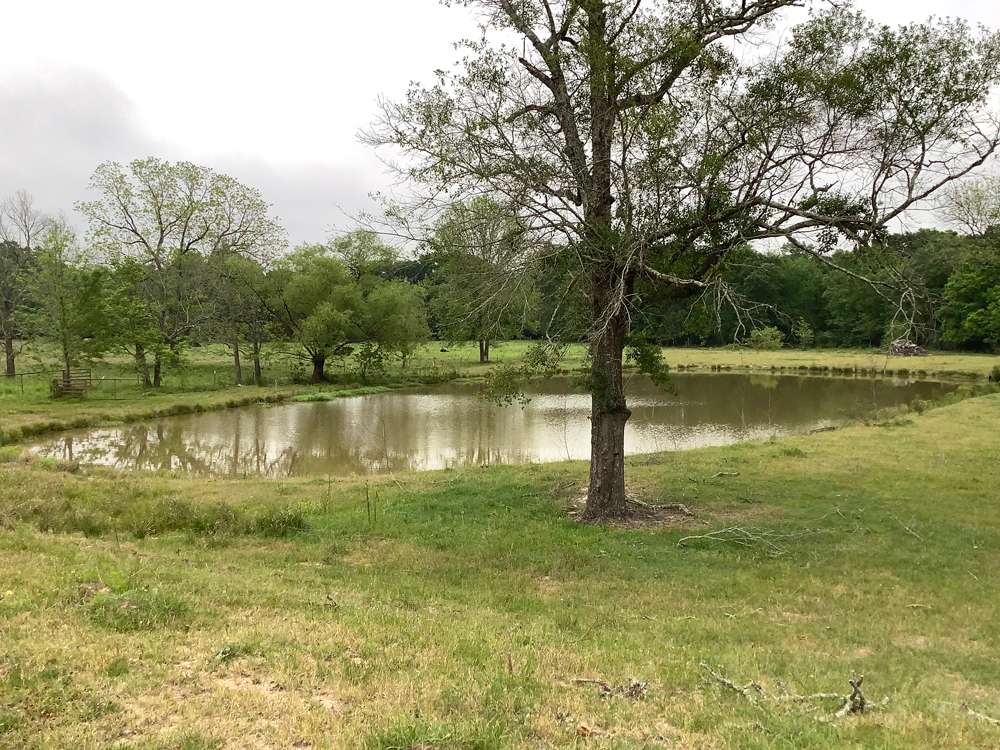
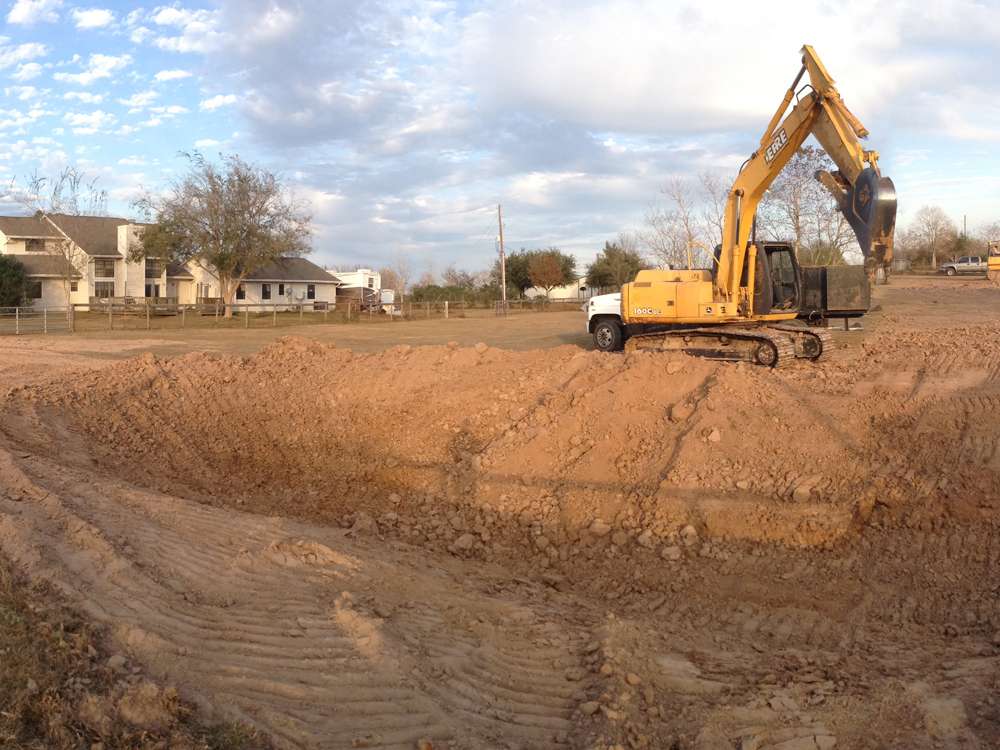
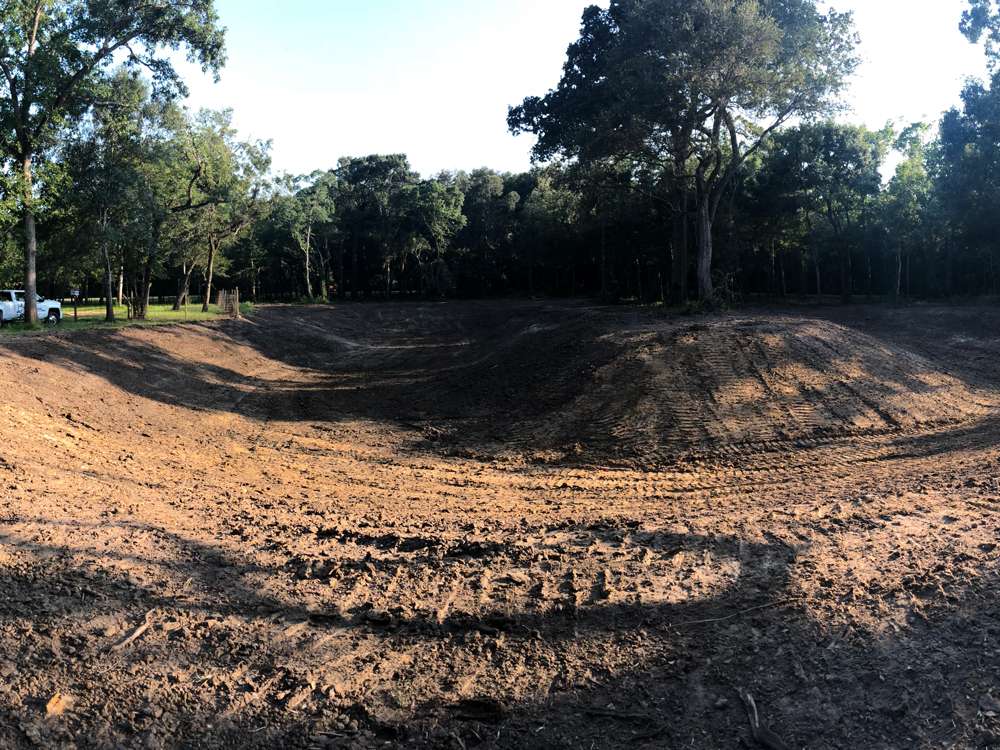
Ponds built on private property and acreage across Southeast Texas — for fishing, livestock, irrigation or simply the view. We start with what the pond is for, check that your soil will hold water, and put a firm number in writing before anything is dug.
Residential Pond Construction in Houston, TX
Ponds built on private property and acreage across Southeast Texas — for fishing, livestock, irrigation or simply the view. We start with what the pond is for, check that your soil will hold water, and put a firm number in writing before anything is dug.
- 33 years in businessSoutheast Texas since the start
- 1,000's of projectsResidential and commercial
- Fully insuredCertificate available on request
- Free on-site estimatesPriced from your actual property
- 11 counties servedHarris · Montgomery · Waller · Washington · Fort Bend and beyond
How much does it cost to build a pond?
A small pond of an eighth to a quarter acre runs about $25,000, a half-acre pond $35,000 to $40,000, and a one-acre pond $60,000 to $70,000 — for residential pond construction, and assuming there is somewhere on your property to place the dirt we dig out. Size is the starting point, but what the soil turns out to be and where the spoil can go are what actually move a pond within, or outside, those ranges.
What the price covers
- Soil checked for suitable clay before the dig is priced
- Topsoil stripped and stockpiled on site where it can be saved
- Pond dug and the bottom, slopes and dam shaped to the agreed depths and limits
- Excavated material placed on your property as a dam, pad or raised mounds
The usual size for a fishing or recreational pond on a residential lot or a small acreage tract. It is the least material to move, so it is the least expensive pond we build.
What the price covers
- Soil checked for suitable clay before the dig is priced
- Topsoil stripped and stockpiled on site where it can be saved
- Pond dug and the bottom, slopes and dam shaped to the agreed depths and limits
- Excavated material placed on your property as a dam, pad or raised mounds
Roughly double the water of a quarter-acre pond, and enough surface area to hold a stocked fish population comfortably or water livestock without drawing down quickly.
What the price covers
- Soil checked for suitable clay before the dig is priced
- Topsoil stripped and stockpiled on site where it can be saved
- Pond dug and the bottom, slopes and dam shaped to the agreed depths and limits
- Excavated material placed on your property as a dam, pad or raised mounds
A full acre of water. This is where the volume of dirt coming out of the hole becomes the main driver of the price, which is why where that dirt goes matters as much as the size of the pond.
These ranges assume there is somewhere on your property to place the dirt we dig out. Hauling excavated material off site is priced separately and can move the total significantly. Every pond is quoted in writing after we walk the property, at no charge.
What moves the price of a pond
- What the pond is for
- Fishing, livestock, irrigation and recreation do not want the same pond. Purpose sets the depth, the shoreline shape and how much shallow water is worth keeping, and those decide how much dirt actually has to move.
- Whether the soil will hold water
- This is the first thing we check and the one that can stop a project. A pond dug in sandy material will not hold water no matter how well it is shaped. We look for good clay to line the pond with before the dig is priced.
- Where the excavated dirt goes
- Everything dug out of the hole has to end up somewhere. Using it on site to build the dam, a pad or raised mounds is part of the price. Trucking it off the property is not, and it is the single biggest thing that moves a pond out of the ranges above.
- Size and depth
- Surface area and depth together set the volume of material to move, and volume is what the machine time is spent on. Depth matters as much as width, particularly on a pond meant to hold fish through summer.
- Access for equipment
- Gates, fences, trees, soft ground and the distance from solid ground to the pond site all decide which machines can reach the work and how long they take to get set up.
- Extras beyond the hole itself
- Aeration, fountains, docks and shoreline stabilisation are quoted separately from the dig. They are added to a pond, not included in building one.
These figures cover ponds built to hold water on private property. Stormwater detention and retention ponds are a different kind of job — engineer-designed and built to approved civil plans — and cannot be quoted from a size table at all; see detention & retention ponds for that work. For repairs, dredging and de-silting on a pond you already have, the pond & lake services page covers what those involve.
Get my free estimateStart With What the Pond Is For
The first question on every pond we build is what you want it to do. A pond stocked for fish, a pond watering cattle, a pond feeding irrigation and a pond you want to look at from the porch are not the same pond, and the difference shows up in depth, shoreline shape and where on the property it goes.
Getting that settled first is what keeps a pond from being rebuilt later. It costs nothing to decide up front and it is expensive to change once the dirt has moved.
- Fishing — A pond stocked for fish needs enough depth to keep water cool through a Texas summer, along with shallower shelves and structure near the edges where fish hold. Depth and shoreline shape are planned around that from the start rather than added later.
- Livestock and cattle — A stock pond is judged on dependable water and safe access. That means a firm approach where animals drink, banks that will not cut away under hoof traffic, and enough depth to carry through a dry stretch.
- Recreation and property value — A pond built to swim beside, sit beside, or simply look at is shaped around where you will actually stand. Beach areas, gentle entry slopes and the view from the house drive the layout more than raw capacity does.
- Irrigation and water storage — A pond kept for watering is sized against what you expect to draw and what the watershed above it can refill, so it does not run down faster than the property can replace it.
Will Your Soil Hold Water?
This is the question that decides whether a pond is possible where you want it, and it gets answered before the dig is priced. A pond needs good clay to seal against. Dug into sandy material it will not hold water no matter how well it is shaped — you end up with a hole in the ground rather than a pond.
We check the soil on the front end to find suitable clay to line the pond with. Where the native ground will not seal on its own, clay is placed and compacted to build that liner. We do not warranty that a pond will hold water, because soil is a natural material and no contractor can honestly guarantee it. That is why the soil comes first rather than last.
- Soil checked for suitable clay content before pricing the dig
- Sandy ground identified early, before money is spent on excavation
- Clay placed and compacted where a liner is needed
- No water-holding warranty — soil is natural material, and we say so up front
Where the Dirt Goes
A one-acre pond is a large volume of material that has to end up somewhere, and where it ends up is one of the biggest things separating a pond that lands in the ranges below from one that does not.
Wherever possible the spoil stays on your property and does something useful — building the dam, raising a pad, or forming mounds and contours. When there is nowhere on site to put it, it has to be trucked off, and that is priced separately.
- Topsoil stripped and stockpiled where it can be saved and reused
- Excavated material used on site for the dam, a pad or raised mounds
- Haul-off priced separately when the property has nowhere to take it
- Spoil placement settled during the estimate, not improvised mid-job
Pond building questions we get asked
For residential pond construction, a small pond of roughly an eighth to a quarter acre runs about $25,000. A half-acre pond is usually in the $35,000 to $40,000 range, and a one-acre pond generally falls between $60,000 and $70,000. Those ranges assume there is somewhere on your property to place the dirt we dig out — hauling it off site is priced separately. We walk the property and put a firm number in writing before anything starts, at no charge.
If you are weighing us against another contractor, the work our customers describe is a better read on what we are like to deal with than anything we could write here.
Worth reading before you hire
Guides on this work
What it costs, how it is done, and what to ask before hiring.
Ready to Transform Your Property?
Get an estimate for your land clearing, dirt work, or property development project. We serve Houston and surrounding areas.