
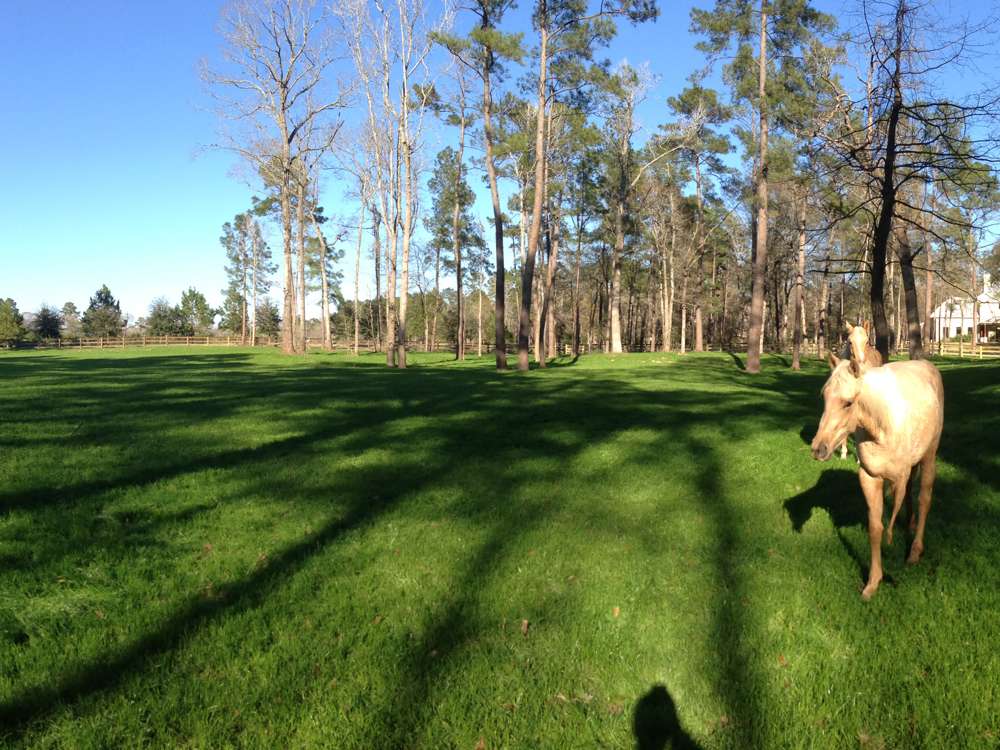
We do not mow yards. We mow acres — pasture, fields, right-of-way and road frontage, with a tractor and a rotary cutter. And if your land has grown past what a mower can cut, which on Southeast Texas property happens faster than most people expect, we will tell you that before you pay for a pass that will not finish the job.
Brush Hogging in Houston, TX
We do not mow yards. We mow acres — pasture, fields, right-of-way and road frontage, with a tractor and a rotary cutter. And if your land has grown past what a mower can cut, which on Southeast Texas property happens faster than most people expect, we will tell you that before you pay for a pass that will not finish the job.
- 33 years in businessSoutheast Texas since the start
- 1,000's of projectsResidential and commercial
- Fully insuredCertificate available on request
- Free on-site estimatesPriced from your actual property
- 11 counties servedHarris · Montgomery · Waller · Washington · Fort Bend and beyond
How much does brush hogging cost, and when do you need more than a mower?
Acreage mowing is quoted per job rather than off a rate table — on open ground it is by far the cheapest thing that can be done to an acre, and what moves it is how rough the ground is and what is hidden in the grass. The reason there is a ladder below rather than a single number is that most Southeast Texas property that gets searched for brush hogging has grown past a mower. If yours has, forestry mulching runs $2,700 to $3,500 per acre and dozer clearing with the debris bladed off runs $4,250 to $5,800 per acre, both for brush and small trees up to 5 inches across. We will tell you which one you are before you spend anything, including when the answer is the cheap one.
What the price covers
- Standing grass, weeds and light brush a rotary cutter can cut
- Cut material left lying where it falls, not collected
- Roots stay alive and untouched — this is maintenance, not clearing
- Acreage only. We do not mow yards
A tractor and a rotary cutter, cutting everything off at mower height. It is the cheapest thing that can be done to an acre and it is the right answer more often than people expect — but only on ground that is already open, or open enough. There is no published per-acre rate for this because it depends almost entirely on how rough the ground is and how much of it there is, so it gets quoted after we look at it.
What the price covers
- Grind standing brush, vines, saplings and small trees up to 5 inches across
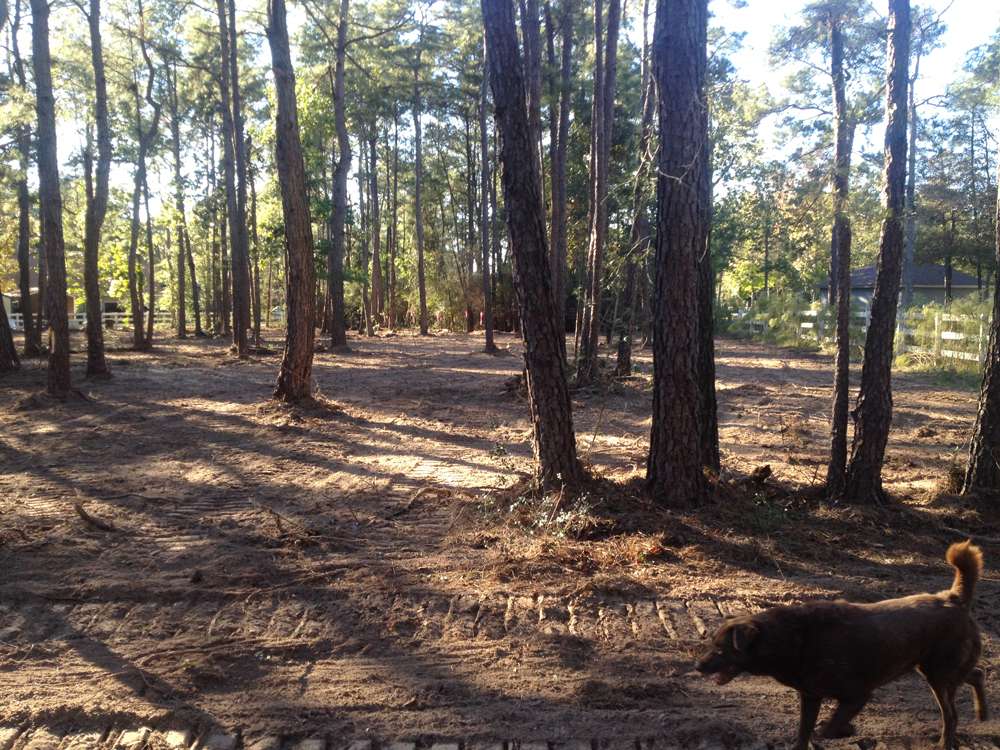
- Material ground into mulch and left covering the ground
- Nothing stacked, burned, or hauled off the property
- Stumps and root systems stay in the ground
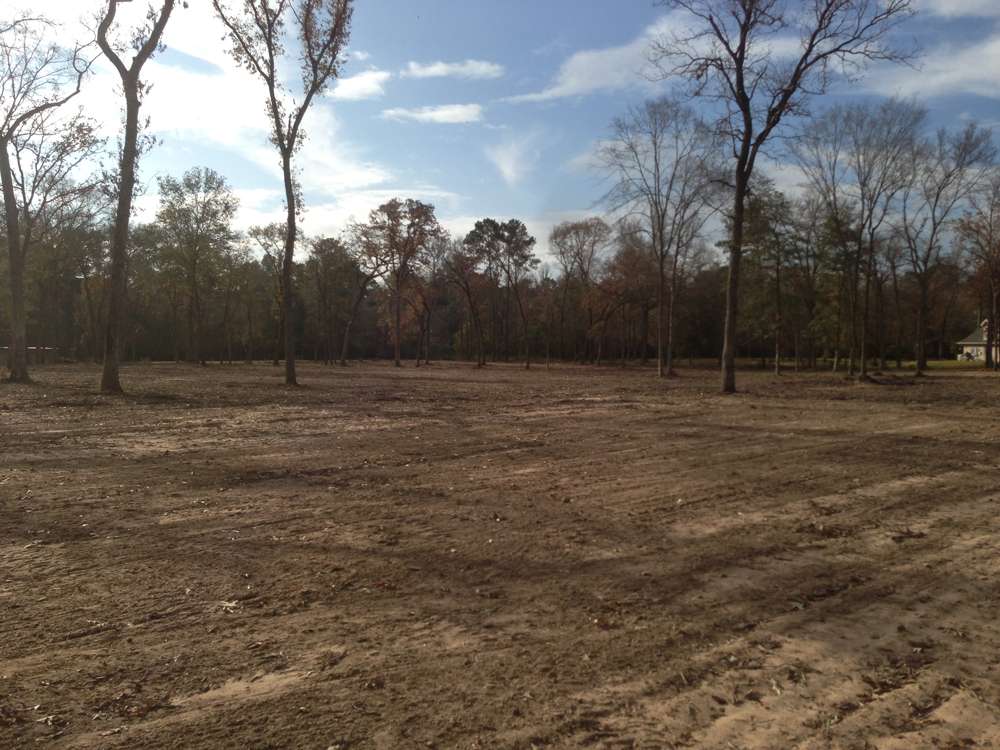
Where most people who searched for brush hogging actually land. A mulcher grinds standing material rather than mowing over it, so it takes brush a rotary cutter cannot cut and leaves ground that reads as cleared rather than mowed. Per acre, and the same size limit applies to the whole range.
What the price covers
- Knock over, rake and stack brush and small trees up to 5 inches across
- Debris bladed off to the edge of the work area
- Root systems come out of the ground with the plant
- Grinding or hauling that debris is a separate line
The only one of the three that removes the roots, which is what makes it the right call under a house pad, a barn, a road or a pond. Per acre with the debris bladed off; grinding it on site or trucking it away costs more again. Covered in full on the land clearing page.
Per acre for the two priced rows, and the low end of each is the 5-or-more-acre rate while the high end is the single-acre rate; the volume discount stops at five acres and holds flat past it. Both of those figures cover brush and small trees up to 5 inches across. Mowing is quoted per job instead of off a table, because on open ground it is a fraction of either number and on rough ground it is not the right tool at all. Heavy timber sits outside all three: a stand of mature pine or hardwood makes far more debris and takes far longer, so we quote it after walking the property. Neither a mower nor a mulcher takes stumps out; that is excavator work and its own line.
Which one is your property
- How thick the stems are
- This is the whole decision, and it is measurable rather than a matter of opinion. A rotary cutter is built to cut standing grass, weeds and stems up to roughly two to three inches; the manufacturers rate individual models from about one inch to five, and the wide field mowers used on acreage sit at the low end of that. Past that the machine stops cutting and starts riding over, bending, or getting wrapped. A mulcher grinds instead of cutting and handles brush and small trees up to five inches across.
- Whether the ground is already open
- Mowing maintains ground that is open. It does not open ground that has closed. Pasture that has been mowed for years and needs another pass is a mowing job. A field that has been sitting for five years and has yaupon and saplings standing in it is not, no matter what it was the last time you looked at it — and the honest answer on the phone is usually that it has moved up a rung since the last time it was cut.
- What you want the ground to look like afterward
- A mowed field looks mowed: cut material lying in rows on stubble, and the plants still alive underneath. A mulched field looks cleared: a layer of chip on the dirt and nothing standing. Those are different products and people usually know which one they pictured, they just have not been asked.
- Whether the roots have to be gone
- Neither mowing nor mulching removes a root system. If the ground is going under a house pad, a barn, a shop, a driveway or a road, the whole plant has to come out and that is dozer and excavator work. This is the one question where the cheap answer is genuinely the wrong answer, and we will say so on site rather than sell you a pass you have to pay for twice.
- How often it has been kept up
- Land that is cut every year stays a mowing job and stays cheap. Land that is cut once and then left comes back, because a rotary cutter leaves every root crown alive — and the second visit is more expensive than the first would have been if it had happened on schedule. The cheapest long-run plan on acreage is almost always clearing it properly once and mowing it after.
- Access, terrain and what is hiding in the grass
- Slope, wet ground, stumps, old fence wire, pipe, and debris buried in tall grass all slow a mower down and can stop it. On property that has been sitting a while, what is under the growth is a real unknown, and it is the main reason mowing gets quoted after a look rather than off a rate table.
Tell us roughly how many acres and how long it has been since it was last cut. Daniel walks the property, the estimate is free, and the number comes to you in writing before any equipment rolls. If the growth has gone past mowing, the forestry mulching page covers what that costs and what it leaves behind.
Get my free estimateWhat a brush hog actually is
A rotary cutter pulled behind a tractor — blades spinning flat, like an oversized mower built for pasture rather than a lawn. It cuts standing grass, weeds and light brush off at mower height and leaves the material lying where it fell. Bush hogging, brush hogging, rotary cutting and field mowing are all the same job; Bush Hog is a brand name that turned into the word everybody uses. It is the cheapest thing that can be done to an acre, and on ground that is already open it is usually the right thing.
- Cuts standing grass, weeds and light brush off at mower height
- Material left lying where it falls — nothing collected or hauled
- Fast and cheap per acre on open, maintained ground
- Maintenance for land that is already open, not a way to open it
The size limit is the whole decision
Everything about which machine your property needs comes down to how thick the stems are, and it is a number rather than a matter of opinion. Rotary cutters are rated by their makers from about one inch up to five, and the wide field mowers actually used on acreage sit at the low end of that — figure two to three inches as the honest working limit. Past that the machine stops cutting and starts riding over growth, bending it, or wrapping on vines. A forestry mulcher grinds rather than cuts and takes brush and small trees up to 5 inches across.
- Rotary cutter: standing grass, weeds and stems to roughly two to three inches
- Forestry mulcher: brush, vines, saplings and small trees to 5 inches
- Past the limit a mower rides over growth or wraps rather than cutting it
- Neither machine removes a root system — that is dozer and excavator work
Acres, not yards
There are plenty of good lawn companies, and for a yard one of them is the cheaper answer — we will say so rather than quote you. Where a tractor is worth calling out is when the acreage itself is the problem: pasture and hay fields, pipeline and utility right-of-way, road frontage and ditch banks, access lanes and property lines, and land that has been sitting long enough that a regular mowing outfit will not touch it. That is the work this equipment is set up for.
- Pasture, hay fields and grazing ground kept cut
- Pipeline, utility and access right-of-way maintained
- Road frontage, ditch banks and driveway approaches kept back
- Property lines, survey lines and access lanes opened up
When mowing is the wrong tool
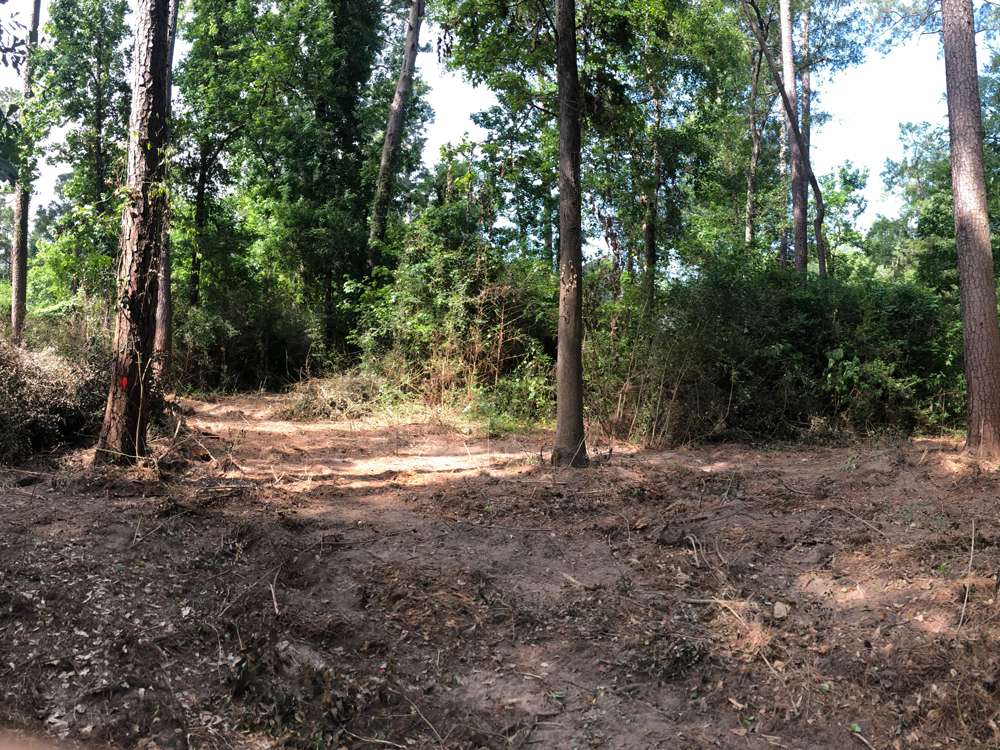
Most people who call asking to have acreage brush hogged in Southeast Texas have land that has moved past it, and they have no particular reason to know that — it looked like a field the last time they walked it. Once yaupon, privet, chinese tallow and saplings are standing in the grass with any size on them, a rotary cutter rides over the thick ones and wraps on the vines, and you have paid for a pass that left the property looking beaten down rather than cut. That is what a forestry mulcher is for, and it is the honest recommendation more often than not.
- Yaupon, privet, chinese tallow and saplings past two to three inches
- Ground that has been sitting for more than two or three seasons
- Vines and briar that wrap a mower rather than cutting
- Anywhere you want the ground to read as cleared rather than mowed
It grows back — and on kept land that is fine
A rotary cutter takes the top off and leaves the root crown alive, so everything woody comes back, and on the Gulf Coast the season is long enough and wet enough to make that fast. On land you intend to keep mowing, that does not matter in the slightest — that is what mowing is, and cutting it once or twice a season keeps it cheap indefinitely. It only becomes a problem on land that gets cut once and then left, because the next visit is no longer a mowing job. The cheapest long-run plan on acreage is almost always to clear it properly one time and mow it after.
- Root crowns survive a mower, so woody growth resprouts
- Once or twice a season keeps kept pasture cheap to maintain
- Two or three years of growth turns a mowing job into a clearing job
- Clear once, then mow: the cheapest way to hold ground long term
Brush hogging questions we get asked
Brush hogging is mowing acreage with a rotary cutter pulled behind a tractor. The blades spin flat, like an oversized lawn mower built for pasture, and they cut standing grass, weeds and light brush off at mower height and leave the material lying where it fell. Bush hogging, brush hogging, rotary cutting and field mowing all describe the same job — Bush Hog is a brand name that became the word people use. It is maintenance for ground that is already open, not a way to clear ground that has closed in.
If you are weighing us against another contractor, the work our customers describe is a better read on what we are like to deal with than anything we could write here.
Worth reading before you hire
Related guides
What it costs, how it is done, and what to ask before hiring.
Brush Clearing Tools vs Professional Land Clearing: A Quick Look
Brush Removal Prices: Cost Factors That Impact Your Quote

Brush Tree Removal and Wildfire Risk Reduction in Texas
Clear Land Cost vs. DIY Land Clearing: Which Saves More Money

Do It Yourself Land Clearing: Why It's Best Left to Experts
Tree cutting service near me: Houston Commercial Site Prep
Ready to Transform Your Property?
Get an estimate for your land clearing, dirt work, or property development project. We serve Houston and surrounding areas.