
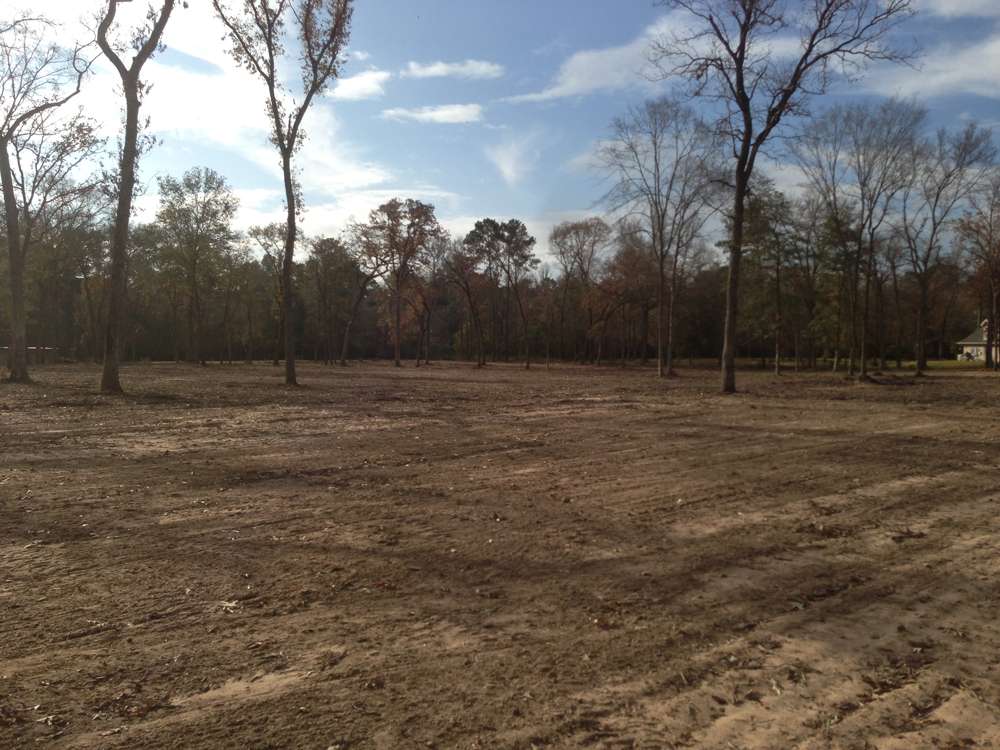
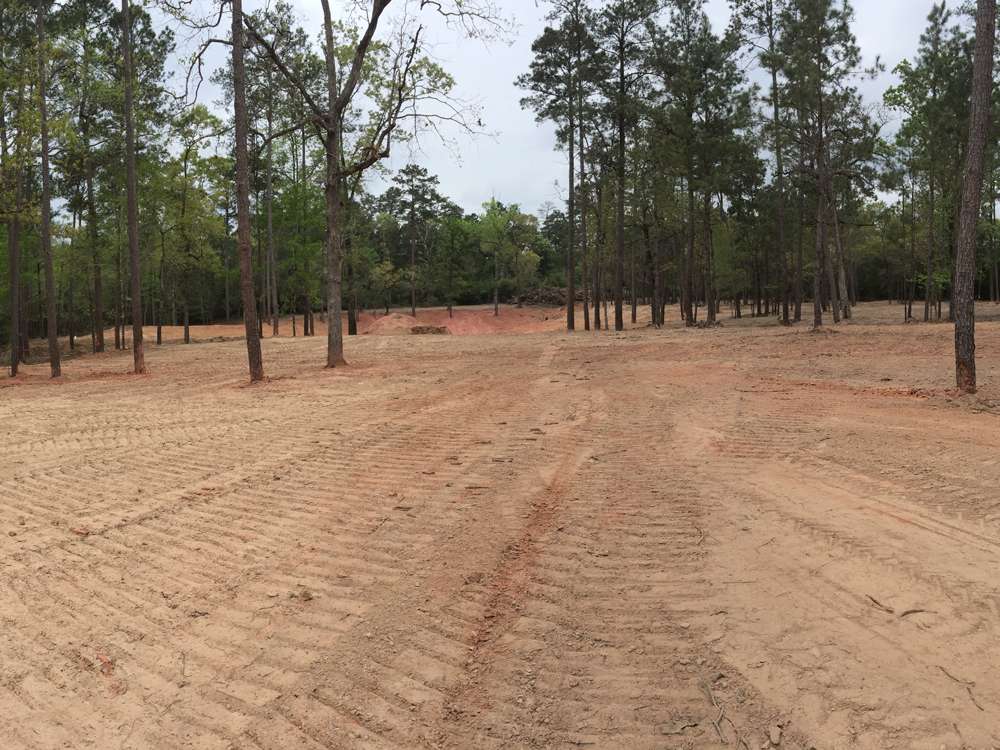
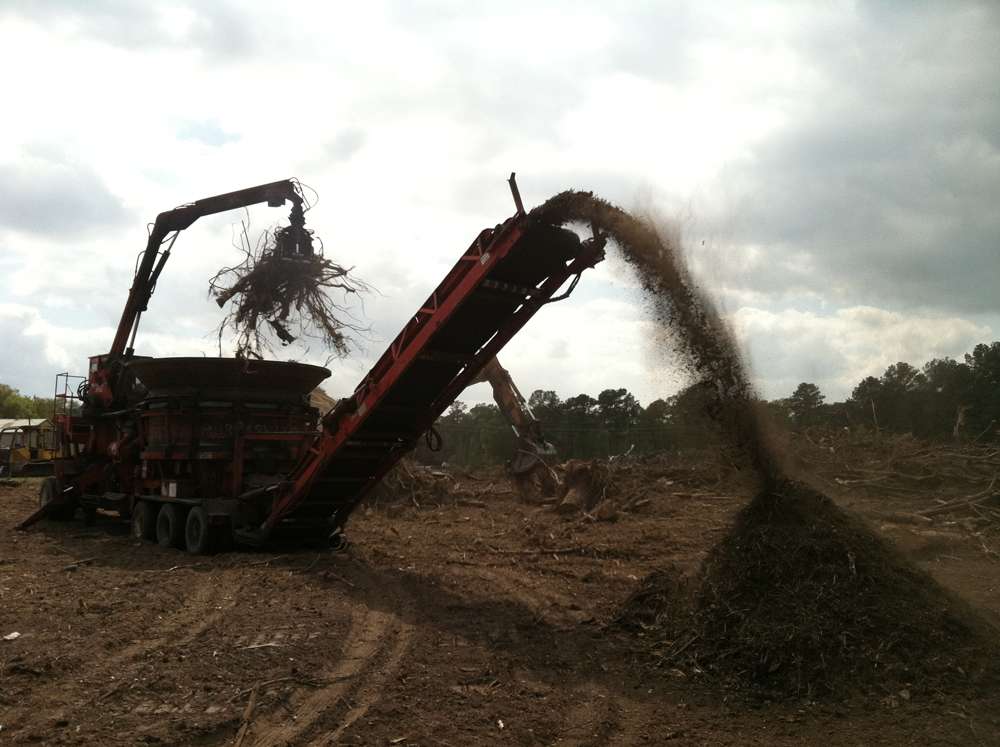
Locally it is still called hydro axing. One tracked machine grinds standing brush and small trees down where they stand and leaves the material on the ground as mulch — so there is no pile to stack, burn, grind or haul. That is the whole reason it is the cheapest way to clear land.
Forestry Mulching in Houston, TX
Locally it is still called hydro axing. One tracked machine grinds standing brush and small trees down where they stand and leaves the material on the ground as mulch — so there is no pile to stack, burn, grind or haul. That is the whole reason it is the cheapest way to clear land.
- 33 years in businessSoutheast Texas since the start
- 1,000's of projectsResidential and commercial
- Fully insuredCertificate available on request
- Free on-site estimatesPriced from your actual property
- 11 counties servedHarris · Montgomery · Waller · Washington · Fort Bend and beyond
How much does forestry mulching cost per acre for brush and small trees up to 5 inches?
Forestry mulching runs $2,700 to $3,500 per acre in Southeast Texas for brush and small trees up to 5 inches across — the cheapest per-acre clearing the business does, because the brush is ground where it stands and nothing leaves the property. A second pass with the DD Crusher for a finer finish runs $4,700 to $6,000 per acre for the same size material. What moves a quote inside those bands is density, access and how much of the property has to stay standing.
What the price covers
- Grind standing brush, vines, saplings and small trees up to 5 inches across
- Mulch left scattered where it falls, covering the ground
- Nothing stacked, burned, or hauled off the property
- Stumps and root systems stay in the ground
One machine, one pass, no pile. This is the cheapest per-acre work the business does, and the reason is that the debris never becomes debris — it is ground where it stands and left as ground cover. The trade is regrowth, because the roots are still down there.
What the price covers
- The same mulching pass over brush and small trees up to 5 inches across
- A second pass with the DD Crusher to grind the material down finer
- A covered, mulched finish rather than a rough one
- Everything still stays on the property
The DD Crusher is a smaller mulching head that works the ground over again and grinds the debris down. You end up with a mulched surface you can walk, mow or run stock on sooner, instead of a mat of coarse chip and stobs — still without a pile to deal with.
Per acre. The low end of each range is the 5-or-more-acre rate and the high end is the single-acre rate; the volume discount stops at five acres and holds flat past it. Both figures cover brush and small trees up to 5 inches across. A mulcher does not pull stumps — it grinds at ground level and leaves the roots in the soil. Taking those out is excavator work, and so is heavy timber: we clear it every week, it just does not come off a table, because a stand of mature pine or hardwood makes far more debris and takes far longer. Those jobs are quoted after we walk the property.
What moves a mulching quote
- How thick the growth actually is
- An acre of scattered yaupon and an acre of solid tangled understory take the same machine and very different amounts of time. Density is the single biggest thing moving a mulching number, and it is the one thing an aerial photograph consistently understates.
- How big the standing material is
- The published rate is for brush and small trees up to 5 inches across. Above that the head still cuts, but it slows down sharply — it takes several passes per stem instead of driving through, and time is what you are paying for. So a property with real timber standing on it is a different job priced a different way, quoted after a site visit rather than as the same job with a surcharge.
- How many acres
- The rate falls as acreage rises, up to five acres. One acre pays the top of the range, five or more pays the bottom, and past five the per-acre rate holds flat — a twenty-acre job is priced at the five-acre rate, not lower.
- What the ground and the access are like
- Wet bottoms, steep banks, deep gullies, old fence wire and hidden trash all slow a machine down or stop it. So does a gate the equipment will not fit through. Anything that limits where the mulcher can put its tracks costs time.
- How fine you want the finish
- A single mulching pass leaves a rough, chippy surface that is fine for pasture, access and knocking brush back. If you want something closer to a walkable, mowable surface, that is the second pass with the DD Crusher, and it is the difference between the two tiers above.
- What has to stay standing
- Underbrushing around mature trees you are keeping, working around a fence line, a septic field, sprinkler heads or a marked tree list is slower than taking everything. It is also usually what people actually want on wooded property, so it is worth saying out loud before we quote.
Tell us roughly how many acres, how thick it is, and whether the trees are staying. Daniel walks the property, the estimate is free, and the number comes to you in writing before any equipment rolls. If the growth is light enough that it only needs cutting rather than grinding, acreage mowing is the cheaper job and we will say so.
Get my free estimateWhat a forestry mulcher actually does
A forestry mulcher is a tracked carrier with a rotating drum of cutting teeth on the front. It drives into standing growth and grinds it down in place, throwing the material to the ground as chip. Nothing is knocked over and dragged into a stack, because nothing becomes a stack — the brush ends up as a layer of mulch covering the dirt it grew out of. One machine, one pass, and the property is walkable when it leaves.
- Grinds standing brush, vines, saplings and small trees up to 5 inches across
- Material stays on site as ground cover — no burning, no trucking
- Mulch layer holds soil and slows erosion instead of leaving bare dirt
- Works in tight ground a dozer and a debris pile cannot
Underbrushing — clear the scrub, keep the trees
This is what a mulcher is best at, and on wooded acreage it is usually what people actually want. Underbrushing takes out the yaupon, privet, saplings, briar and vines and leaves the mature trees standing, so the property opens up for access, grazing, hunting or a view without turning into bare dirt. Specific trees you want kept get walked and marked before anything starts.
- Scrub, saplings, vines and low growth out; mature trees left standing
- Trails, shooting lanes, survey lines and property boundaries opened up
- Overgrown fence lines cut back so a fence can be worked on
- Marked-tree lists walked with you before the machine moves
Pasture, right-of-way and reclaiming ground
Land that has been sitting goes back to brush faster than anyone expects, and a mulcher is the practical way to take it back. Old pasture, fields grown up in scrub, pipeline and utility corridors, ditch banks and road frontage all clear in a single pass with nothing to dispose of afterwards. On grazing land the mulch layer breaks down into the soil rather than sitting in a pile somebody has to deal with.
- Overgrown pasture and hay fields put back into use
- Pipeline, utility and access right-of-way maintained
- Road frontage, ditch banks and driveway approaches opened up
- Mulch left as ground cover, so the soil is not exposed to the next rain
When a dozer is the right answer instead
A mulcher grinds at and just below ground level, which means the stumps and root systems stay in the soil. That is the trade that makes the price what it is — but it also means mulching is the wrong tool anywhere the roots have to be gone. Under a house pad, a barn, a shop, a driveway or a road, the whole plant has to come out, and that is dozer and excavator work. We will tell you which one your job is before you spend anything, because selling you the cheap pass on ground that needs the expensive one helps nobody.
- Building pads, barns, shops, driveways and roads need the roots out
- Mulched ground has roots and organic material in it, so it settles — it will not compact and is not a surface to build on
- A dozer uproots the whole plant — and leaves a pile that has to be dealt with
- Debris handling is the single biggest number in a dozer clearing quote
- Straight recommendation on site rather than a default to one method
Regrowth, and what to expect from it
The roots are still down there, so some of it comes back. Yaupon, privet, chinese tallow, briar and most vines regrow from the root crown, and how fast depends on the species and the season. On pasture and grazing ground that rarely matters, because mowing and stock keep the shoots knocked down. On a property you intend to leave alone, plan on going back over it in two to four years — or clear it with the roots out the first time and pay for it once.
- Root-crown species regrow; mowing or grazing keeps them in check
- Typically two to four years before wooded ground needs another pass
- Maintenance passes are cheaper and faster than the first one
- If your property is a poor fit for mulching, we will say so before quoting
Forestry mulching questions we get asked
A forestry mulcher is a tracked machine with a rotating drum of cutting teeth on the front. It drives into standing brush and small trees and grinds them down where they stand, throwing the material to the ground as mulch. Nothing gets knocked over and dragged into a pile, because there is no pile — the brush becomes a layer of chip covering the dirt it grew out of. That single fact is what makes it the cheapest way to clear land: no stacking, no burning, no grinding a pile afterwards, and no trucks hauling debris off your property.
Before work starts
Burning cleared brush is regulated statewide and further restricted by county burn bans that change with drought conditions -- mulching produces no pile to burn, so the debris plan stops being a permitting question. You can read the current rules straight from TCEQ outdoor burning rules, and we confirm what applies to your property during the site visit rather than guessing at it from an address.
If you are weighing us against another contractor, the work our customers describe is a better read on what we are like to deal with than anything we could write here.
Worth reading before you hire
Related guides
What it costs, how it is done, and what to ask before hiring.
Brush Clearing Tools vs Professional Land Clearing: A Quick Look
Brush Removal Prices: Cost Factors That Impact Your Quote
Brush Tree Removal and Wildfire Risk Reduction in Texas
Clear Land Cost vs. DIY Land Clearing: Which Saves More Money
Do It Yourself Land Clearing: Why It's Best Left to Experts
Tree cutting service near me: Houston Commercial Site Prep
Ready to Transform Your Property?
Get an estimate for your land clearing, dirt work, or property development project. We serve Houston and surrounding areas.