
Bare dirt does not stay where you put it. Hydroseeding lays seed, mulch, fertilizer and a tackifier down in one pass — so the ground is holding while the grass comes in, instead of washing into the ditch with the first hard rain.
Hydroseeding in Houston, TX
Bare dirt does not stay where you put it. Hydroseeding lays seed, mulch, fertilizer and a tackifier down in one pass — so the ground is holding while the grass comes in, instead of washing into the ditch with the first hard rain.
- 33 years in businessSoutheast Texas since the start
- 1,000's of projectsResidential and commercial
- Fully insuredCertificate available on request
- Free on-site estimatesPriced from your actual property
- 11 counties servedHarris · Montgomery · Waller · Washington · Fort Bend and beyond
How much does hydroseeding cost?
Hydroseeding is priced by the square foot or by the acre, not at a flat rate. How much ground you are covering is the base number; the shape the soil is in, the slope, the seed the site calls for, and whether the truck and water can reach it are what move it from there. Below is what actually swings a quote — we walk the site and put a firm number in writing at no charge.
What moves the price
- How much ground you are covering
- Hydroseeding is priced by the square foot or by the acre, so the treated area is the base number everything else is built on. It is the one figure worth having before you call.
- What the ground is when we get there
- Slurry sprayed onto compacted clay, rutted ground or construction debris does not establish. If the surface has to be raked, ripped or graded first, that preparation is part of the job and part of the number.
- Slope, and how hard it is to hold
- A flat pad and a steep pond bank take the same seed and very different tackifier. Steeper ground needs a heavier bonded mulch, and sometimes a blanket over the top of it, to keep the seed where it was sprayed until it roots.
- Which seed the site actually calls for
- Bermuda, bahia, rye and a permanent pasture mix are not interchangeable, and the season decides as much as the site does. A specified mix on a commercial job, or a temporary cover crop to hold a slope through winter, is a different material cost than a common lawn mix.
- Whether water and equipment can reach it
- The hydroseeder has to get to the area and it has to be filled. Long hose pulls, a gate too narrow for the truck, no water source on site, or ground too wet to drive all add time that is invisible on an aerial photograph.
- Repair, new establishment, or a permit requirement
- Patching a washed-out area, establishing turf on a brand-new pad, and installing seeding as a site BMP to satisfy an inspector are three different scopes on the same piece of dirt.
Tell us roughly how much ground you need covered and what it looks like now. The estimate is free, and the number comes to you in writing before any equipment rolls.
Get my free estimateWhat hydroseeding actually is
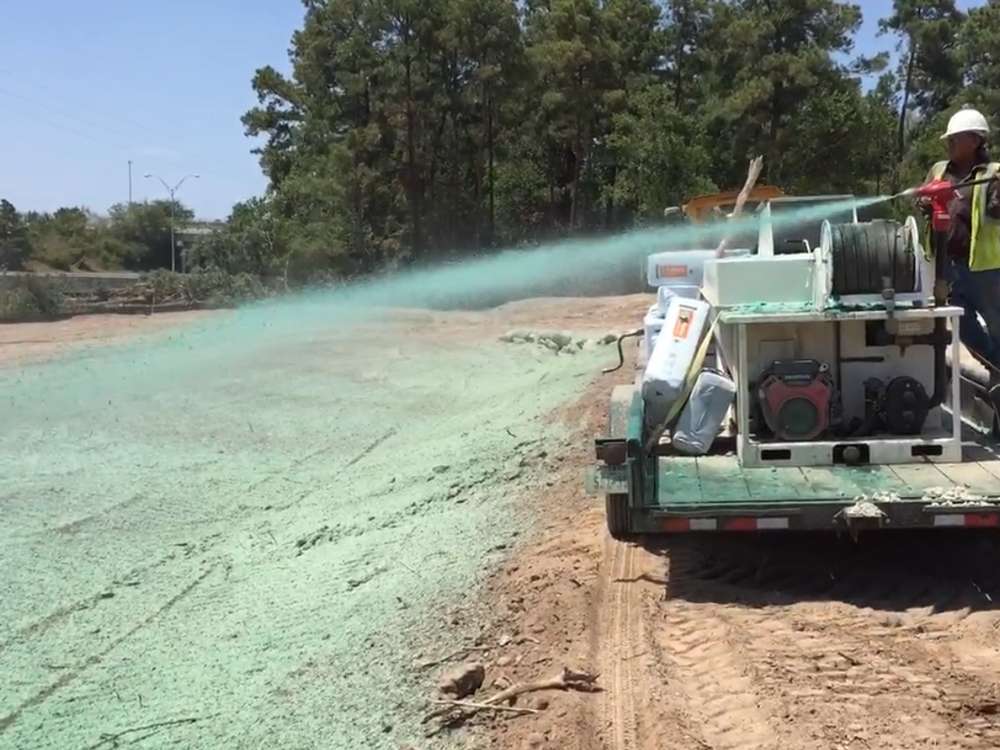
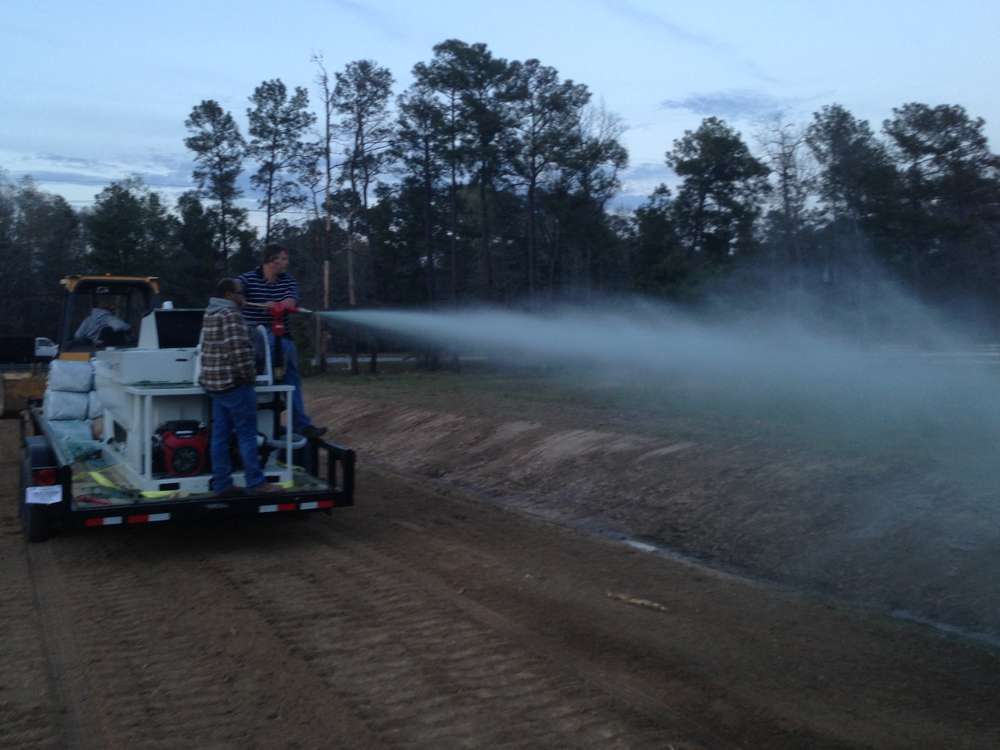
A hydroseeder mixes grass seed, wood or paper mulch, fertilizer and a tackifier into a slurry and sprays it through a hose onto bare soil. The mulch holds moisture against the seed, the tackifier glues the whole layer to the ground, and the dye makes it obvious what has been covered. Seed, growing medium and erosion protection all go down in one pass, which is why it beats broadcasting on anything larger than a yard.
- Seed, mulch, fertilizer and tackifier applied in a single pass
- Mulch holds moisture against the seed instead of letting it dry out
- Tackifier keeps the seed on a slope through the first rains
- Dyed slurry shows the operator exactly what has been covered
Slopes, pond banks and detention ponds
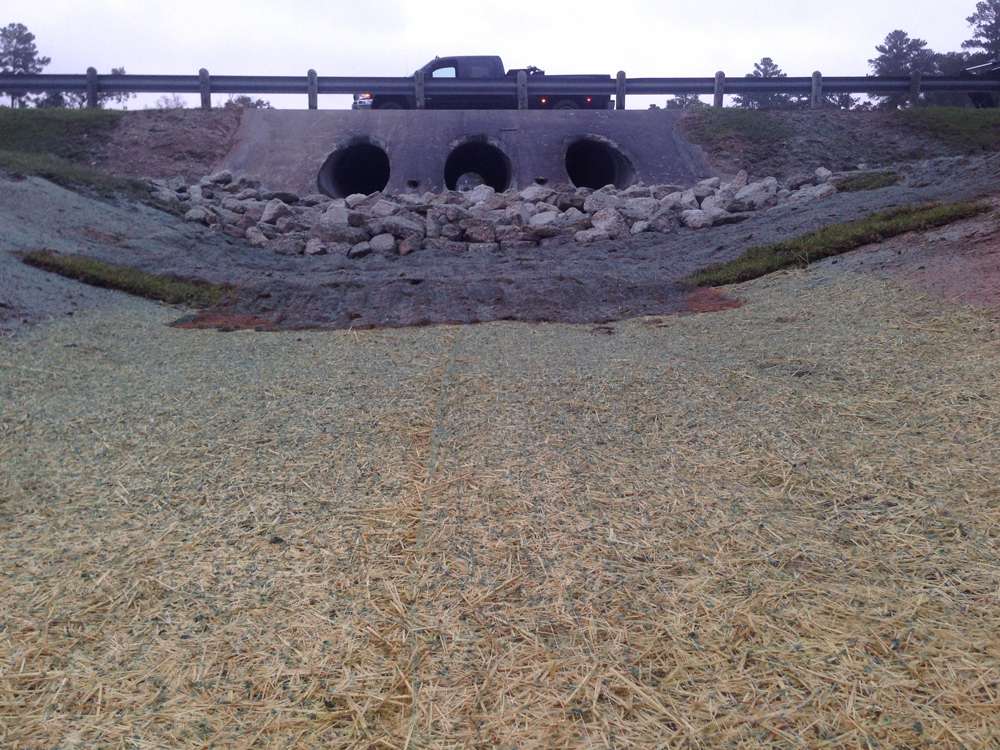
Steep ground is where hydroseeding earns its keep. A detention pond side slope, a newly cut pond bank or a regraded ditch is bare clay with water heading straight down it, and loose seed will not survive the first storm. Bonded mulch holds it in place long enough to root, and where the slope is too steep for mulch alone, an erosion blanket goes over the top and is anchored.
- Detention and retention pond side slopes
- Pond and lake banks after excavation or repair
- Regraded ditches, swales and berms
- Erosion blanket or fabric over the slurry where a slope needs it
New pads, lots and commercial sites
On a finished pad or a cleared lot, the dirt work is only done when something is holding the topsoil. Hydroseeding covers acreage quickly, which matters when a site has been stripped and the next forecast is the thing standing between you and a washout. On commercial work it also does double duty as a site BMP where seeding is what the inspector is looking for.
- House pads, building pads and cleared residential lots
- Commercial sites and laydown yards after grading
- Right-of-way, road shoulders and fence lines
- Seeding as a site BMP where a permit calls for stabilisation
Broadcast seeding, when that is the right call
Not every job needs a hydroseeder. Broadcast seeding scatters seed mechanically or by hand and is the simpler, quicker option on flat ground that is already in decent shape and going to get watered. We will tell you which one your site wants rather than selling you the bigger machine by default — the honest answer on a flat, prepared back pasture is often the spreader.
- Flat, prepared ground that does not need mulch to hold seed
- Overseeding an existing stand rather than starting from bare dirt
- Faster and simpler where the site does not call for slurry
- Straight recommendation on which method your site actually needs
Hydroseeding questions we get asked
Hydroseeding sprays a slurry of grass seed, mulch, fertilizer and a tackifier that holds it all together onto bare soil through a hose. The green colour is dye in the mulch, so the operator can see exactly what has already been covered. It puts seed, growing medium and erosion protection down in a single pass, which is what makes it the practical way to seed anything bigger than a yard.
Before work starts
Disturbed ground on a permitted construction site has to be stabilised, and seeding is the usual way that requirement gets met. You can read the current rules straight from TCEQ construction stormwater permit, and we confirm what applies to your property during the site visit rather than guessing at it from an address.
If you are weighing us against another contractor, the work our customers describe is a better read on what we are like to deal with than anything we could write here.
Related guides
What it costs, how it is done, and what to ask before hiring.
Durable Pond Edges Ideas: Preventing Texas Shoreline Erosion
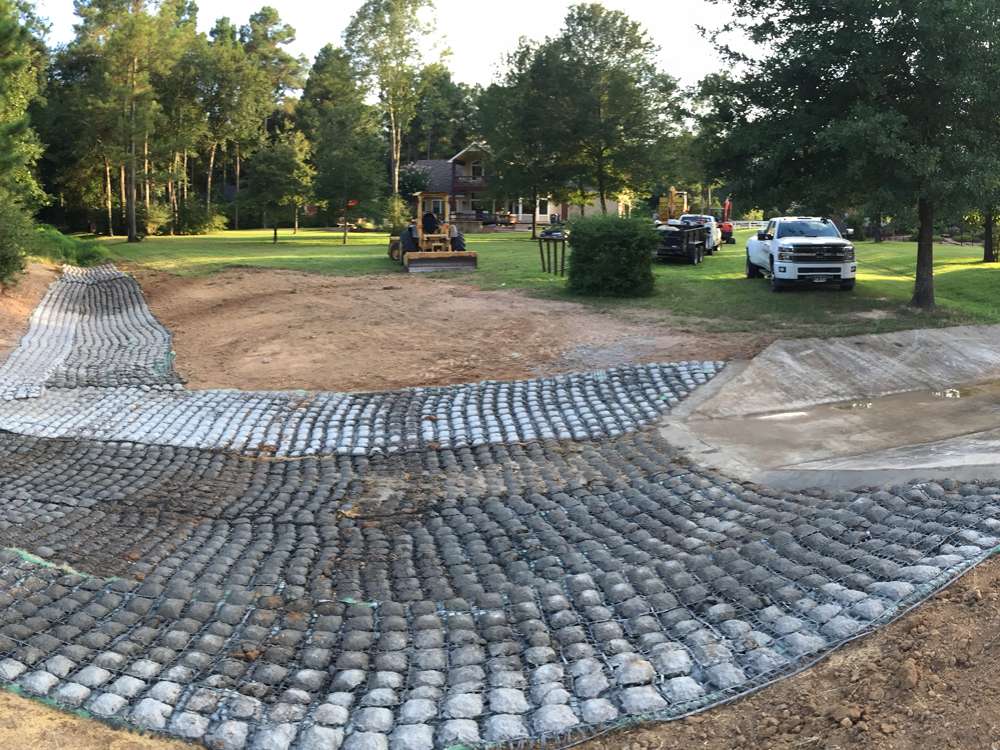
Erosion Control Services for Rural Landowners in Texas
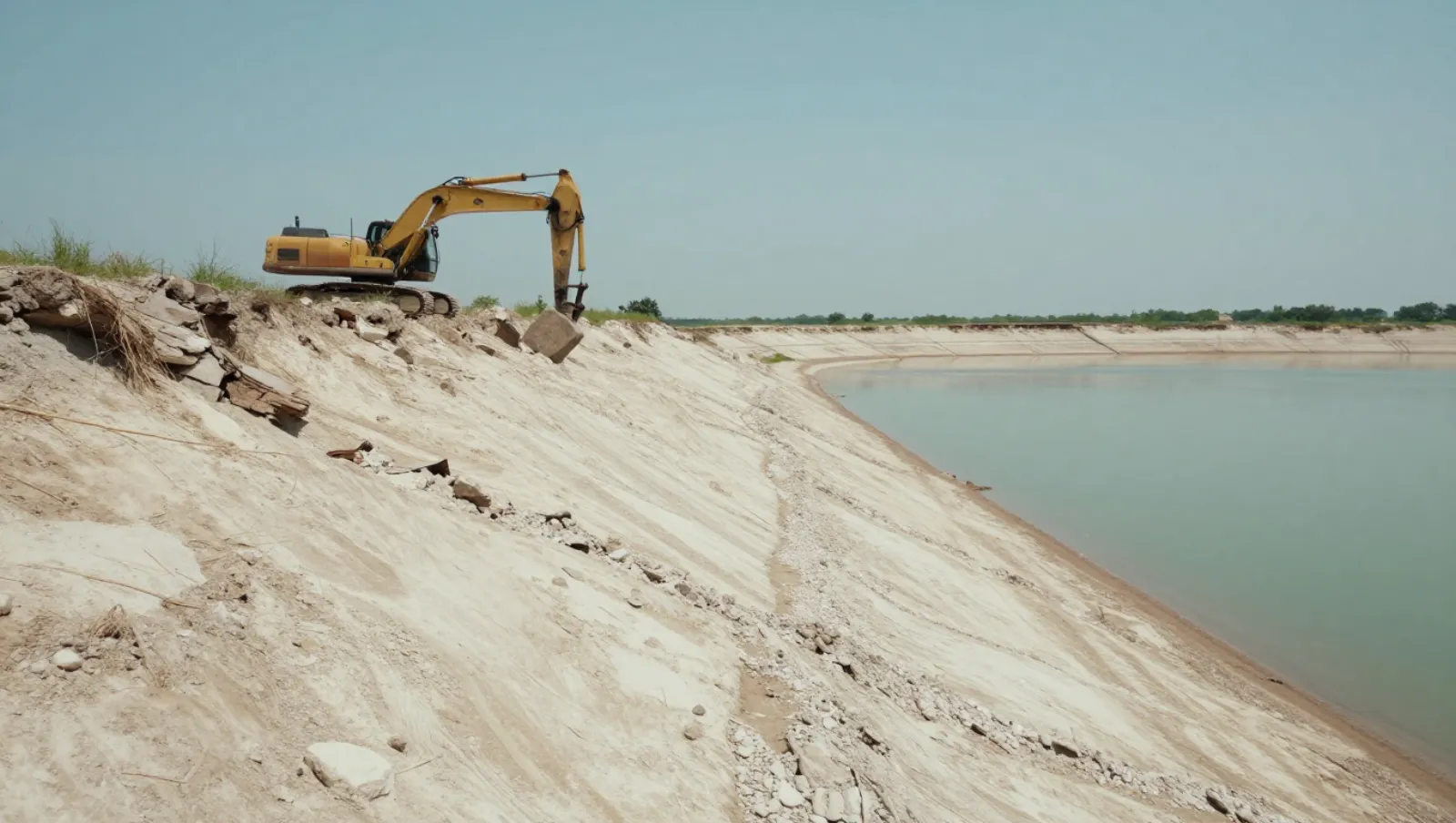
Pond Erosion Control: Best Practices for Sustainable Landscaping
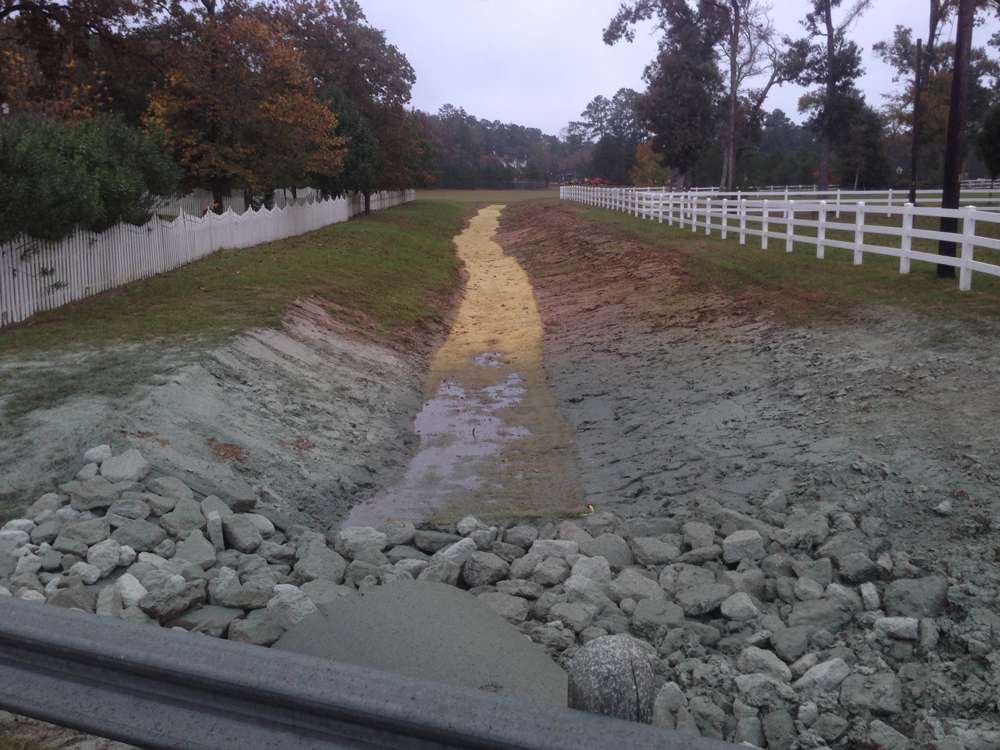
Professional Excavation and Erosion Control: Protect Your Land
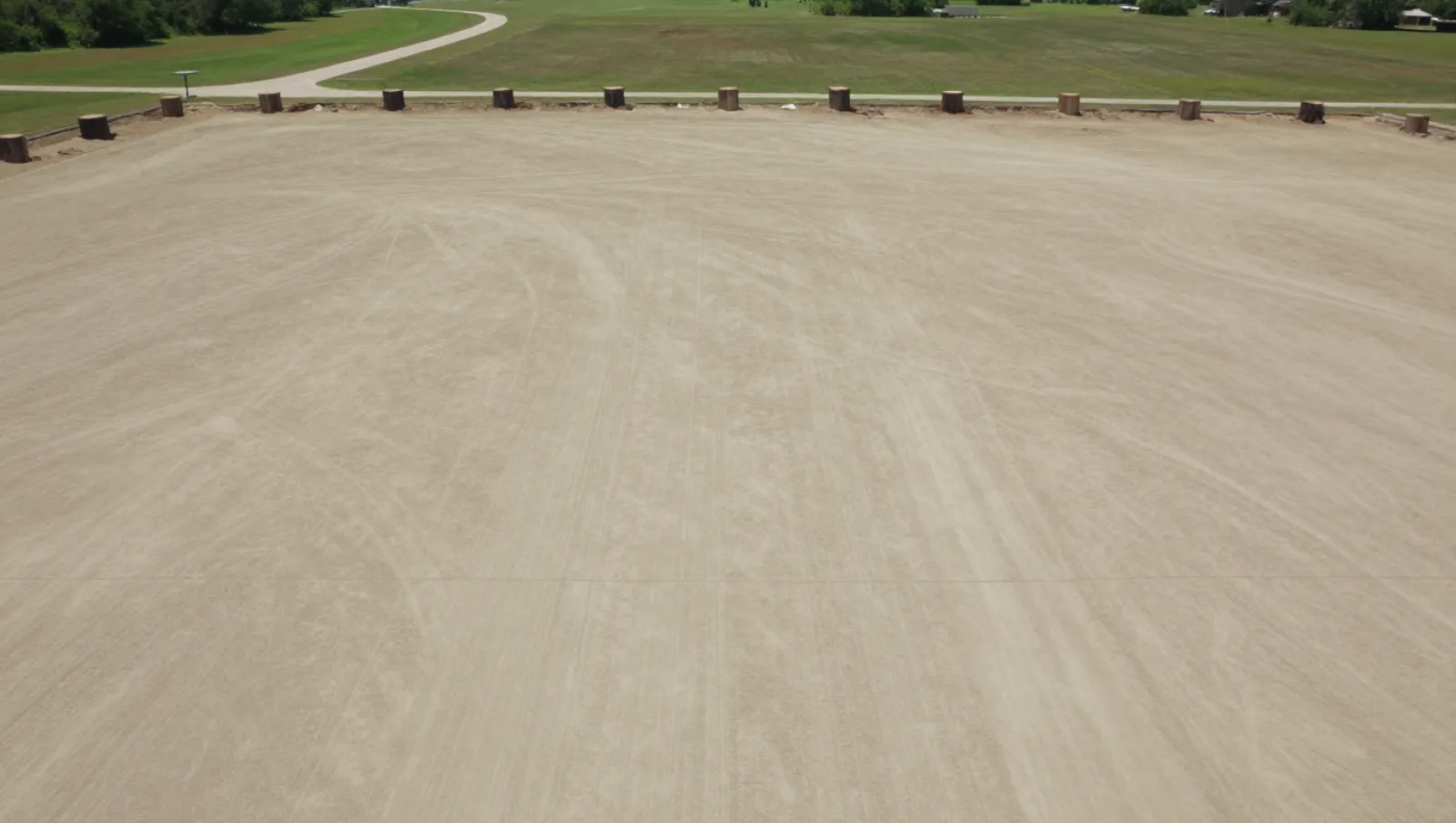
Riprap for Erosion Control: Land Clearing & Site Prep Basics
Sediment Control and How to Stop Soil Loss Before It Gets Worse
Ready to Transform Your Property?
Get an estimate for your land clearing, dirt work, or property development project. We serve Houston and surrounding areas.