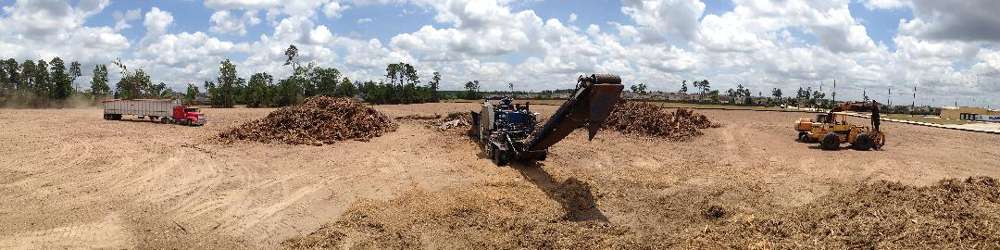
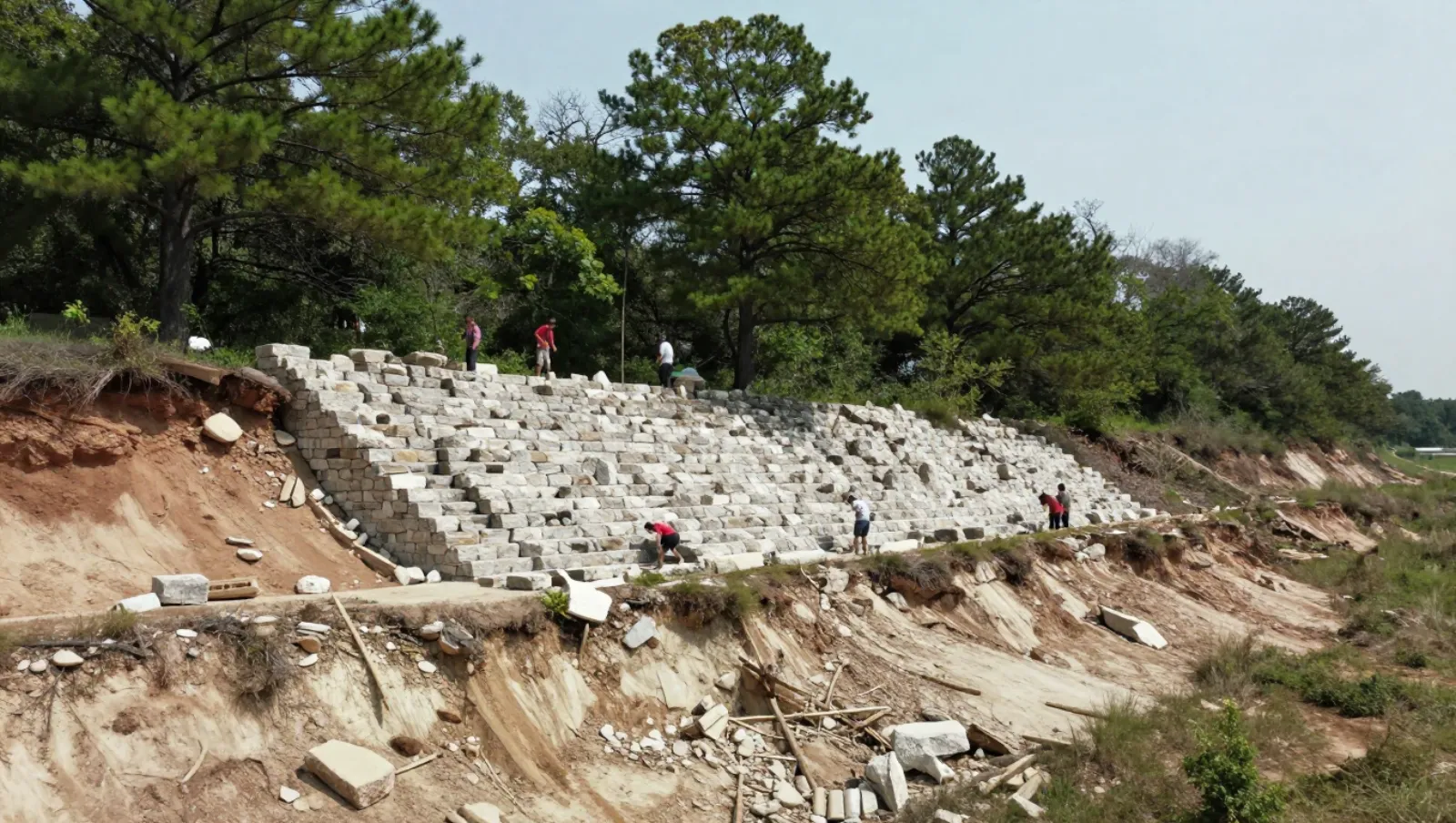
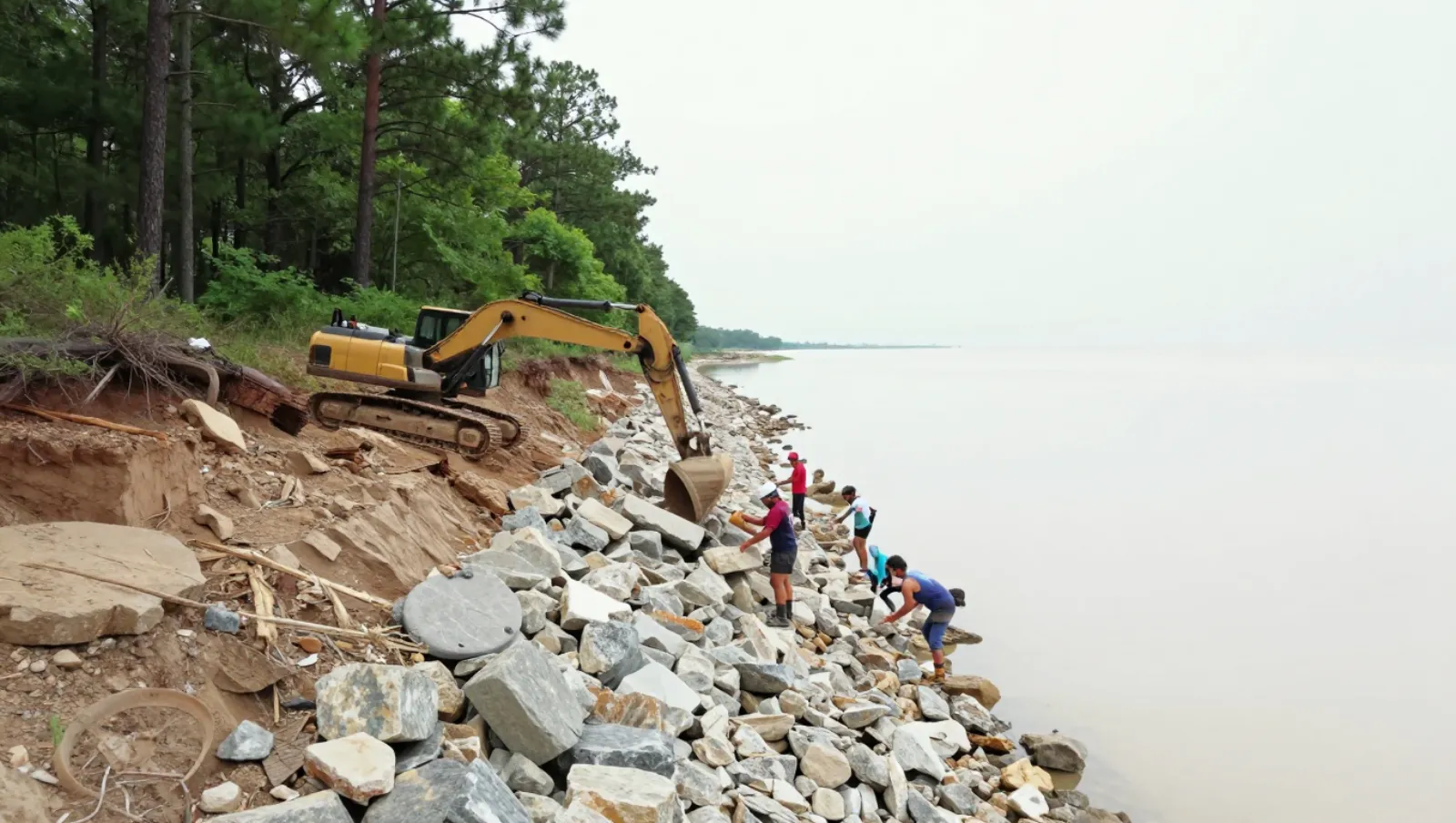
Erosion around Conroe concentrates on two things: Lake Conroe shoreline and the creeks and ditches that feed it. Both fail the same way — water gets a bit faster than the bank can handle, takes the toe out, and the ground above then slides into the gap.
The first job is identifying what is actually washing out and what water is doing it. A slope, a ditch, a bank, a shoreline, and an outlet are five different failures, and armouring the wrong one is money spent watching the same problem continue.
Getting equipment and material to an eroded bank is often the real cost. Wet ground, a steep approach, or a narrow lakeside lot can add expense that is not visible until the site is walked, which is why we walk it before quoting rather than after.
What this covers in Conroe
- Shoreline stabilisation on Lake Conroe frontage
- Riprap and rock armouring at the toe of failing banks
- Retaining walls where grade has to be held rather than sloped
- Creek and drainage ditch bank repair
- Regrading and revegetation on slopes that are still moving
How the work runs in Conroe
Identify what is failing and why
A slope, a ditch, a bank, a shoreline, and an outlet are five different failures. Armouring the wrong one is money spent watching the same problem continue.
Deal with the water first
Erosion is a symptom of water moving faster than the ground can take. If the flow is not slowed or redirected, the armour becomes the next thing to fail.
Rebuild the toe, then the face
Repair starts at the bottom of the failure. Rock or structure goes in at the toe, then the face above is shaped back and protected.
Establish permanent cover
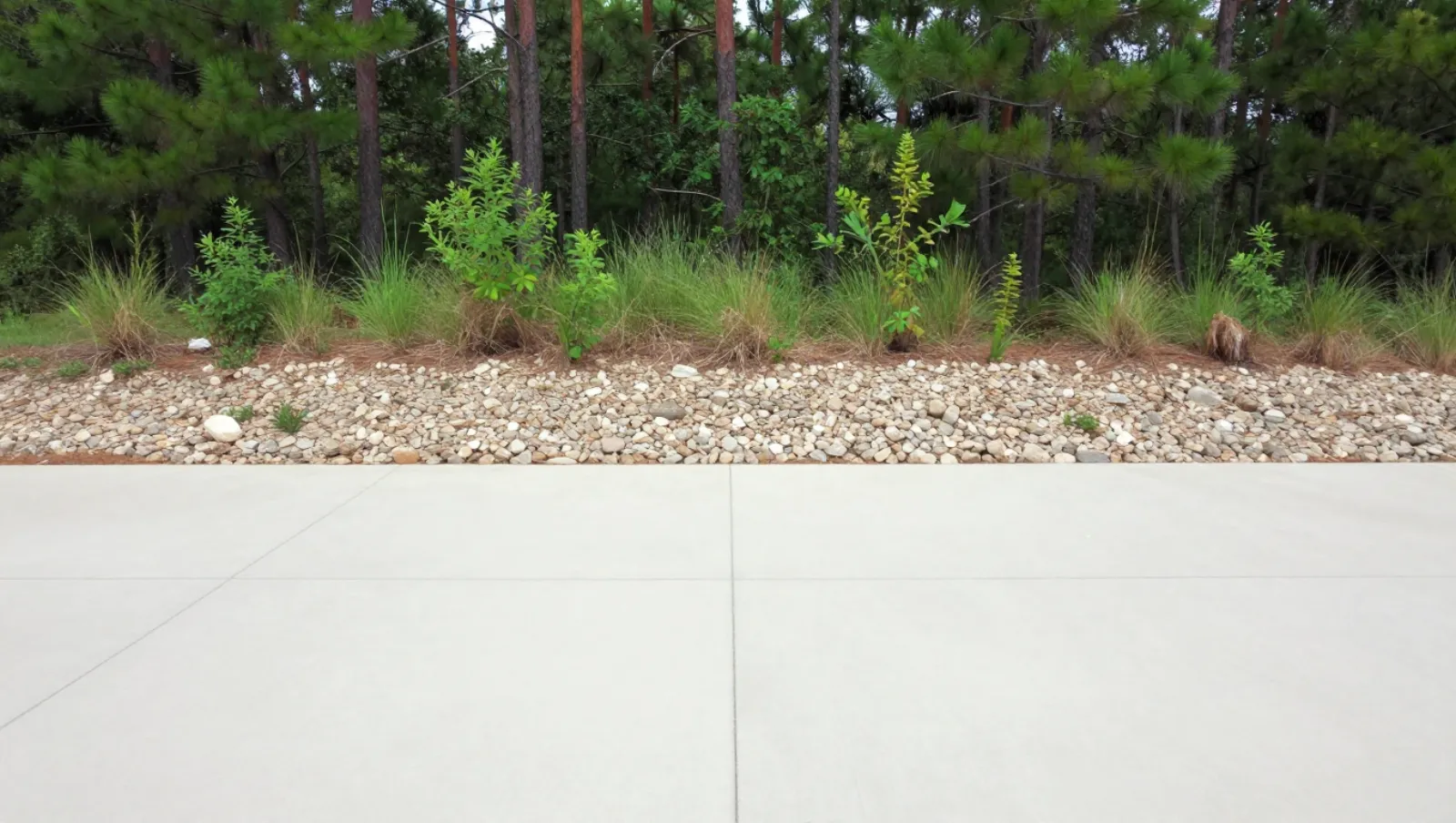
Riprap, matting, or vegetation depending on the slope and the flow. Bare soil is a temporary condition either way.
Erosion Control & Retaining Walls in Conroe — common questions
- What causes the erosion on my property?
- Water moving faster than the ground can take. The specific cause is usually one of five: a slope with no cover, a ditch carrying more than it was shaped for, a bank undercut at the toe, a shoreline taking wave action, or an outlet discharging onto bare soil. Each is a different repair, and armouring the wrong one changes nothing.
- Is riprap the right answer?
- Sometimes. Rock is the right tool where flow is fast enough to strip anything softer, and at the toe of a bank that is being undercut. On a gentler slope, regrading and establishing cover costs less and looks better. Deciding by the water rather than by the product is the point.
- Do I need a retaining wall?
- A wall holds grade where there is not room to lay a slope back. If there is room, shaping the slope is usually cheaper and needs less maintenance than a structure. Where a wall is genuinely needed, the drainage behind it matters as much as the wall itself — most failures are water pressure, not weight.
- Can you repair a bank that is still moving?
- Yes, but the water has to be dealt with first or the repair becomes the next thing to fail. That normally means slowing or redirecting flow, rebuilding from the toe upward, and then establishing permanent cover on the face.
Areas we serve around Conroe
Lake Conroe · Willis · Montgomery · Woodforest · Panorama Village · Montgomery County