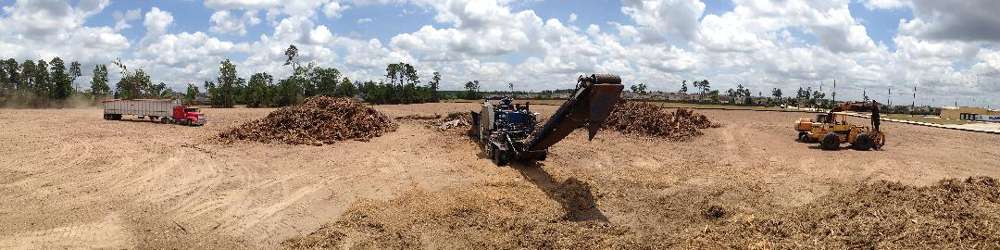
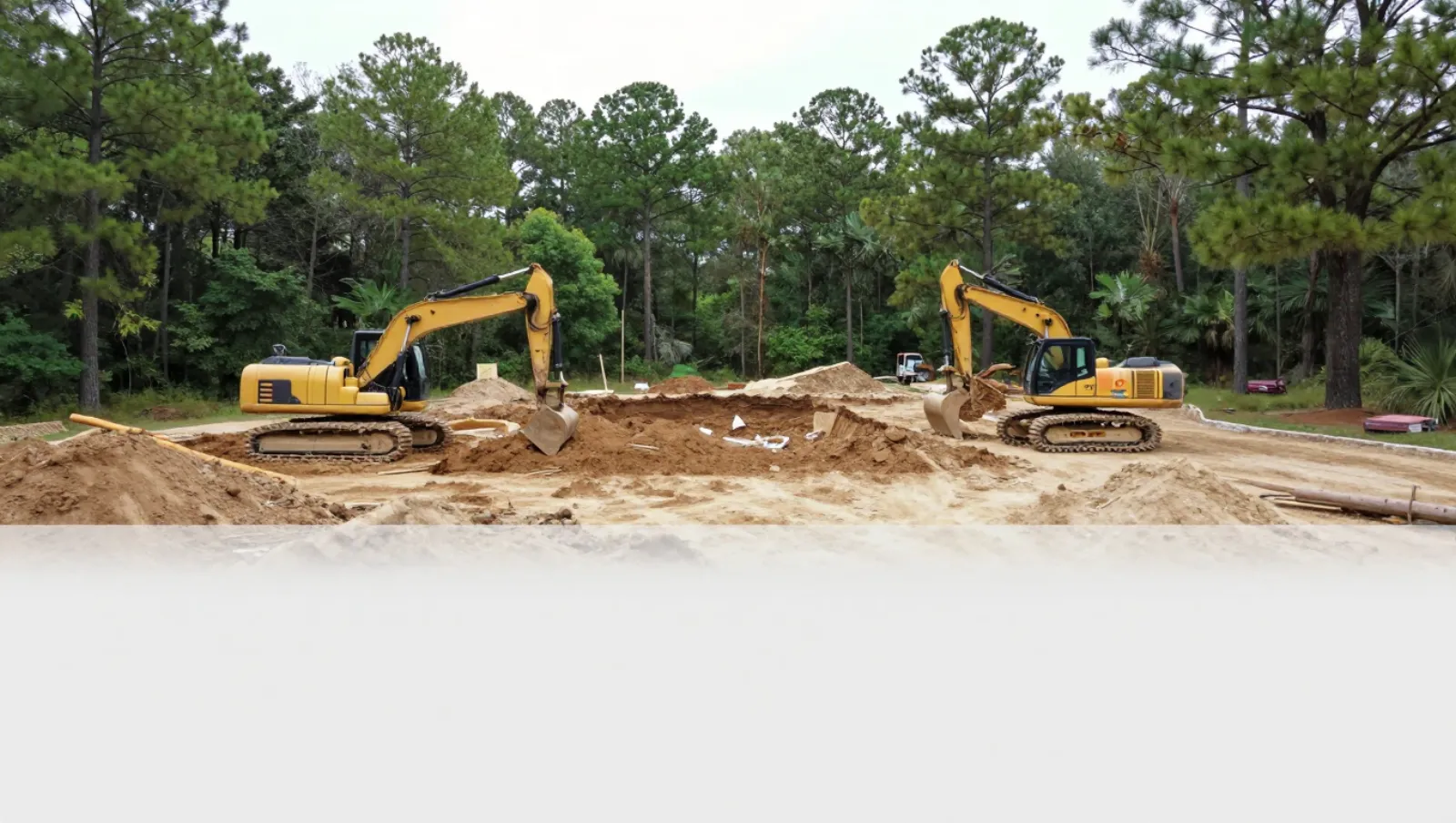
Site work in The Woodlands happens inside an existing, mature, tree-covered community, which makes it as much a protection job as an excavation job. What has to survive is usually specified before what has to be moved.
That means tree protection fencing, keeping equipment off root zones, and hand-work where a machine would do damage. It is slower than greenfield excavation and the quote reflects that, because the alternative is replacing trees that took forty years to grow.
The work itself is pads, drives, drainage, and utility connections on infill lots and commercial parcels. Access is generally the constraint — established streets and mature landscaping decide which machine can reach the work.
What this covers in The Woodlands
- Infill lot excavation with tree protection in place
- Building pads and driveway construction
- Utility connections on established services
- Drainage tied into village easements
- Machine selection driven by access, not horsepower
How the work runs in The Woodlands
Survey, stake, and confirm the plan
Work starts from the engineer's drawing and the staked elevations, not from an approximation of them.
Clear and grub the footprint
Root mass has to come out of anything that will carry structure or pavement. Leaving it is how a pad settles unevenly.
Utilities, then subgrade
Trenching happens before the surface is finished, in the order the utilities will accept. Deep runs in wet ground need shoring and dewatering.
Pads and drives to spec, with testing
Building pads are compacted and density-tested. On anything carrying a slab, that test is the record that it was done right.
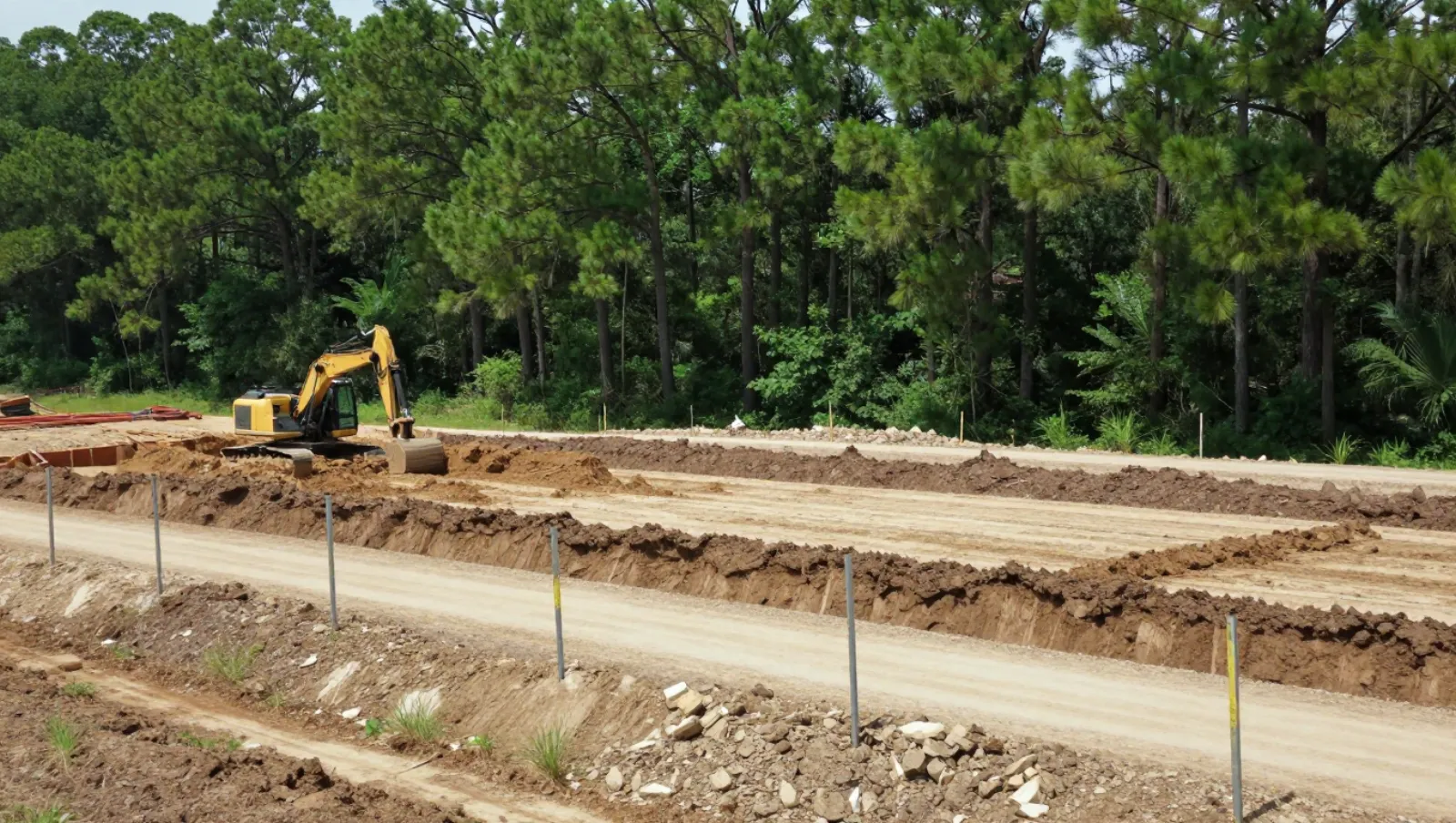
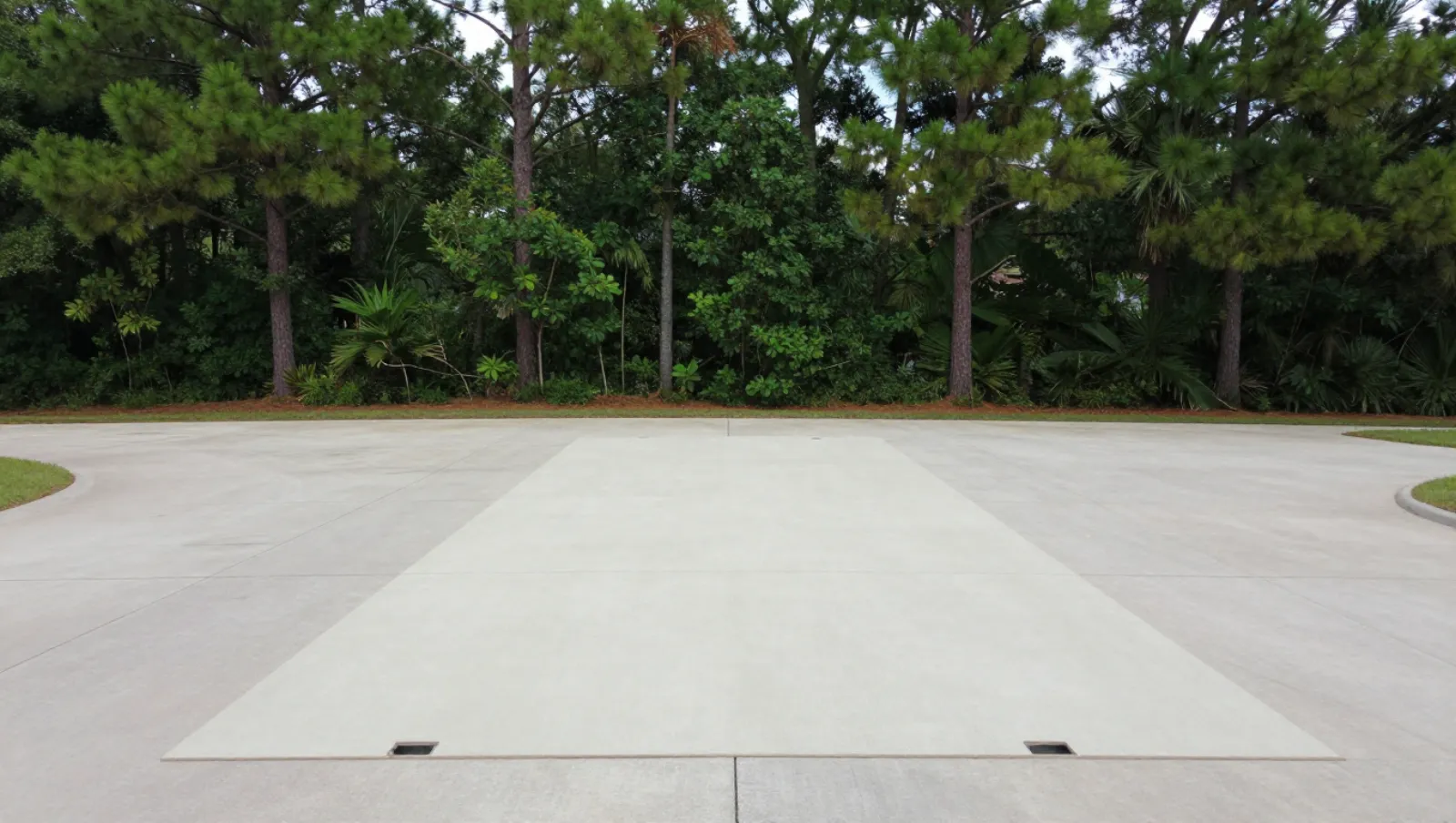
Excavation & Site Work in The Woodlands — common questions
- What does site development include?
- Everything between raw ground and a site a builder can start on: clearing and grubbing, cut and fill, utility trenching, storm drainage, road subgrade, and building pads compacted to spec. On a commercial tract it usually also means detention, because the site has to hold its own stormwater.
- How long does site work take?
- The dirt is rarely the constraint. Utility coordination, inspections, and weather set the calendar, and deep trench in wet ground needs shoring and dewatering that a shallow run does not. A realistic schedule is set after the site walk, not from acreage alone.
- Do you work from engineered drawings?
- Yes — the elevations, the detention volume, and the utility depths come from the drawing and are worked to it. Where something on the ground does not match the plan, that gets raised before it is buried, not after.
- Can you handle the whole site or only part?
- Either. Some clients want clearing through finished pads in one contract; others have a grading contractor and need the excavation and utility work. Both are normal.
Areas we serve around The Woodlands
Grogan's Mill · Panther Creek · Sterling Ridge · Creekside Park · Spring · Conroe · Montgomery County