Montgomery County
Detention & Retention Pond Construction in Montgomery County, TX
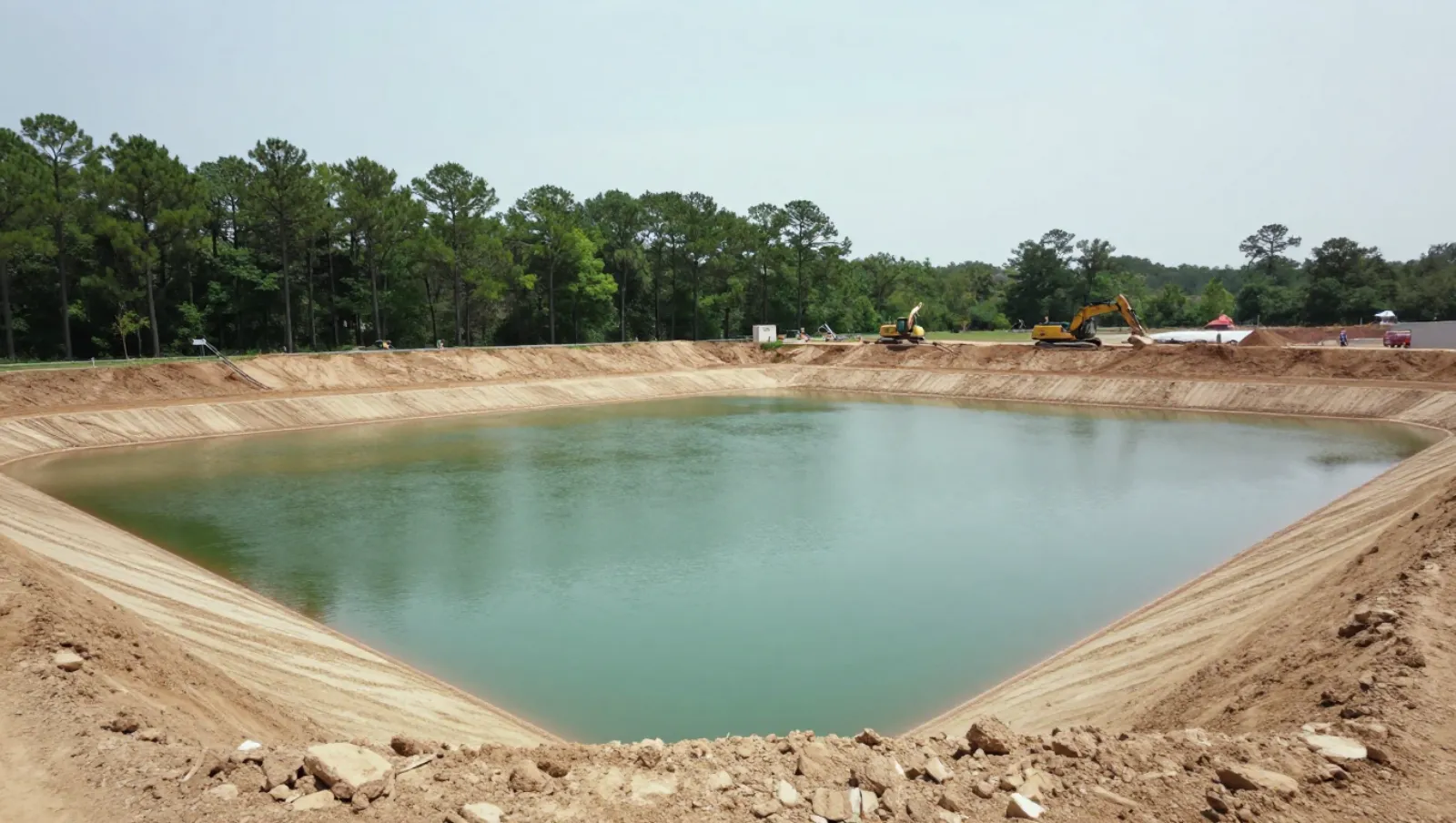
Much of the new development around Montgomery, Conroe, and Magnolia is going in on wooded land. When a tract like that is developed, it generally has to offset the extra runoff its roofs and paving create, and the detention basin is laid out on the plans before the building pads are.
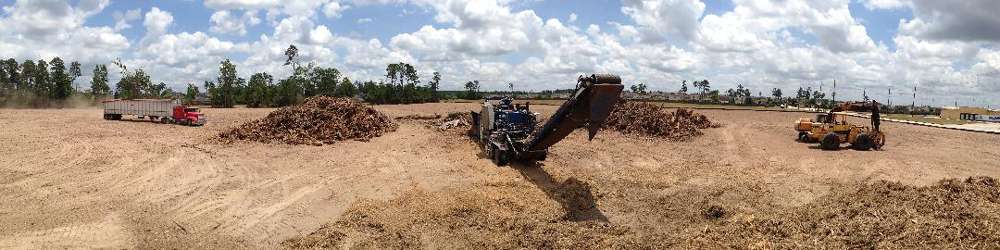
Building a pond on a wooded site is two jobs in sequence. The pond footprint is cleared and grubbed so the stumps and root mass are out, then the basin is excavated to the elevations on the approved plans. Daniel Dean runs both with his own equipment out of Magnolia, so there is no handoff between a clearing crew and an excavation crew.
The way the storage is provided, whether a detention pond that drains between storms, a retention pond with a permanent pool, or another approved method, comes from the engineer's drainage plan and the agency reviewing it. Montgomery County, the cities, and the drainage districts each set their own rules. We build what the approved plan shows.
What this covers in Montgomery
- Clearing and grubbing the pond footprint
- Detention and retention pond excavation to the approved plans
- Slopes, forebays, and pilot channels cut to plan elevations
- Outfall structures, spillways, and emergency overflows
- Erosion control and seeding to stabilize the slopes
How the work runs in Montgomery
Clear and grub the footprint
Trees, stumps, and roots come out of the pond footprint first, so the excavation reaches the plan elevations in clean ground instead of fighting root mass.
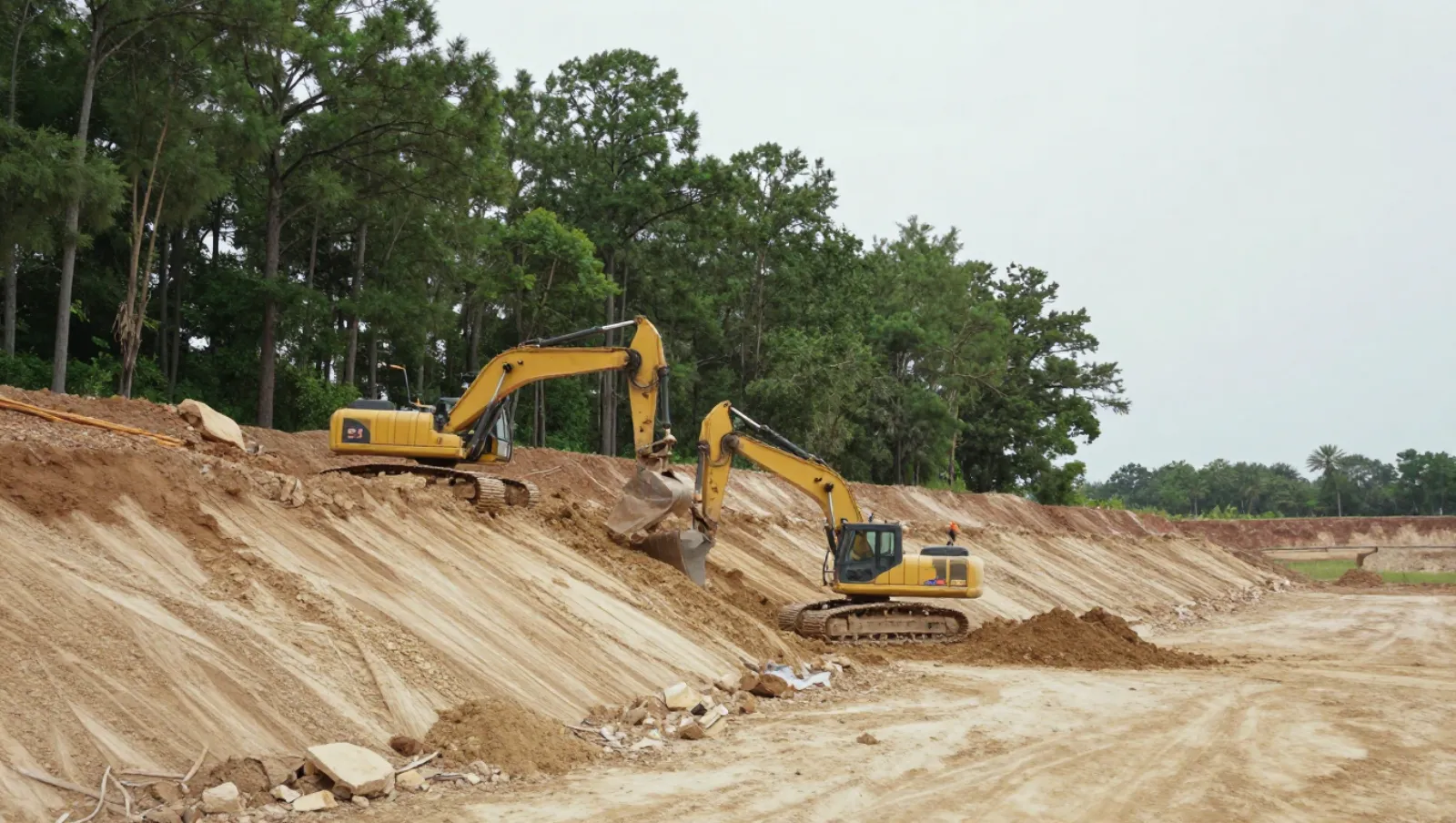
Excavate to the plans
The basin is cut to the limits and elevations on the approved plans, with the slopes, forebay, and pilot channel shaped as the drawing shows, and checked as the work goes.
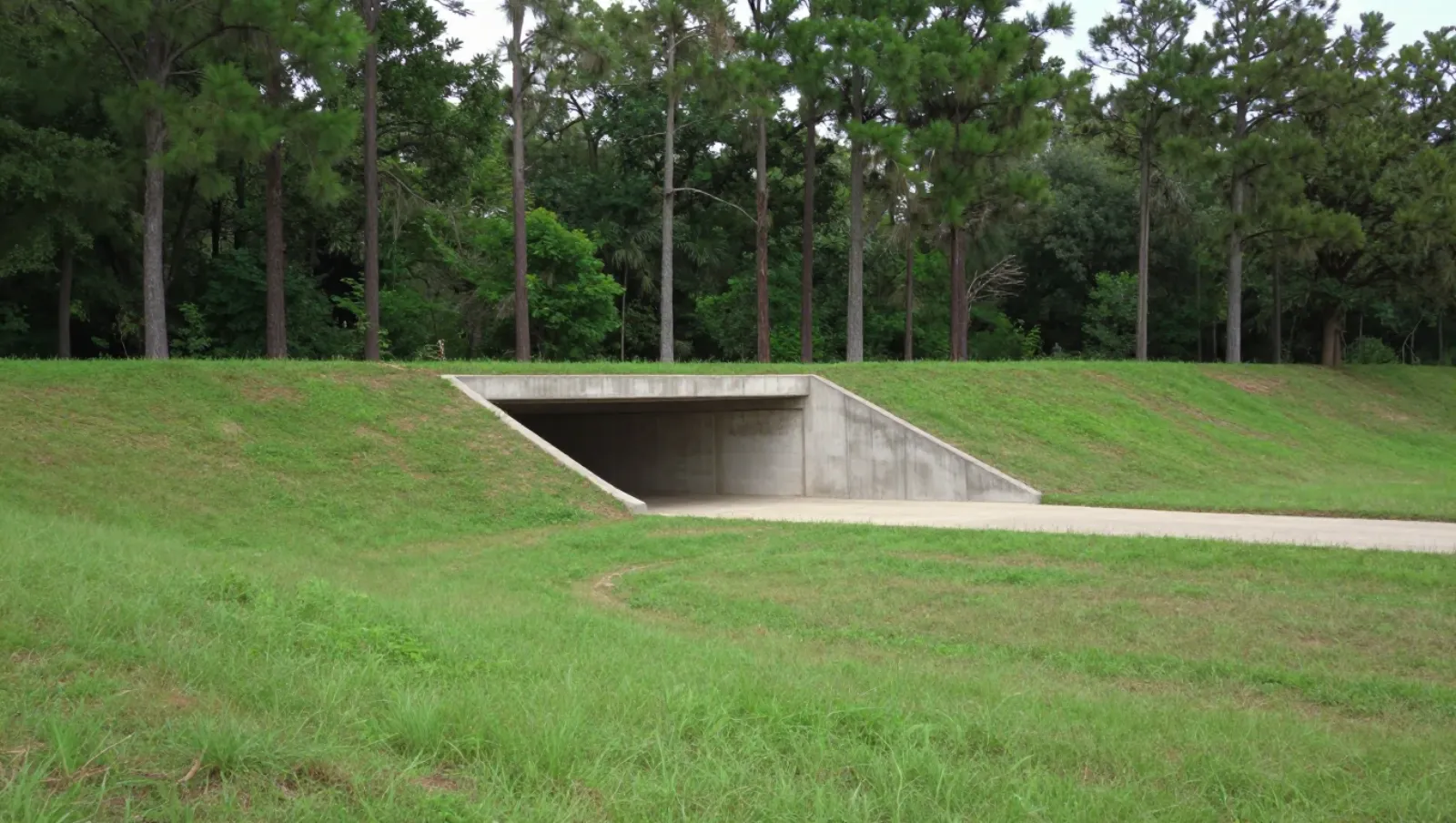
Build the outfall and overflow
The outfall structure and the emergency overflow are built to the details on the plans. Together they set how the pond releases water during and after a storm.
Stabilize and seed
Cleared and cut slopes are protected with erosion control and seeded, so vegetation holds the soil and the pond stays mowable.
Detention & Retention Pond Construction in Montgomery — common questions
- What is the difference between detention and retention?
- A detention pond stores stormwater temporarily and lets it out slowly through a controlled outfall. Many drain dry between storms, though some are built with a wet bottom. A retention pond is built to hold a permanent pool. The drainage plan decides which one a site gets.
- Does a development in Montgomery County need detention?
- New development generally has to offset the runoff it adds, but the requirement and the method depend on whether the county, a city, or a drainage district reviews the site, and some small sites are exempt. The engineer's drainage plan sets the storage, and the reviewing agency approves it.
- Can you clear the land and build the pond?
- Yes. Clearing, grubbing, and pond excavation are all done with our own equipment, so the footprint is cleared and dug in one sequence rather than by two contractors.
- Do you repair or maintain existing ponds?
- Yes. Sediment removal, mowing, slope repair, and outfall repair are covered on our detention pond maintenance page. This page is about building new ponds.
- Do you provide the engineering?
- No. The pond size, elevations, and outfall design come from your civil engineer and the approved plans. We build to them.
Areas we serve around Montgomery
Conroe · Willis · Magnolia · The Woodlands · Montgomery · Montgomery County