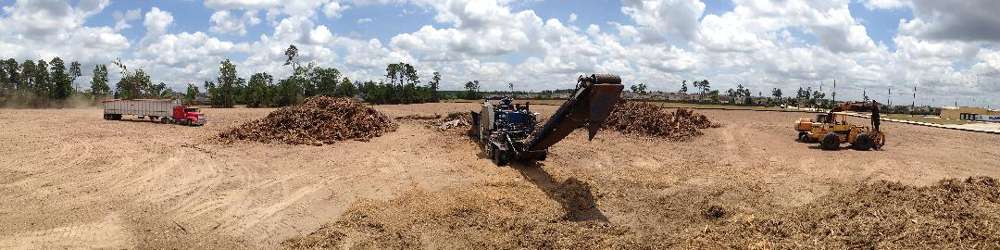
Yard Flooding: Why Water Stays After Every Rain | Daniel Dean
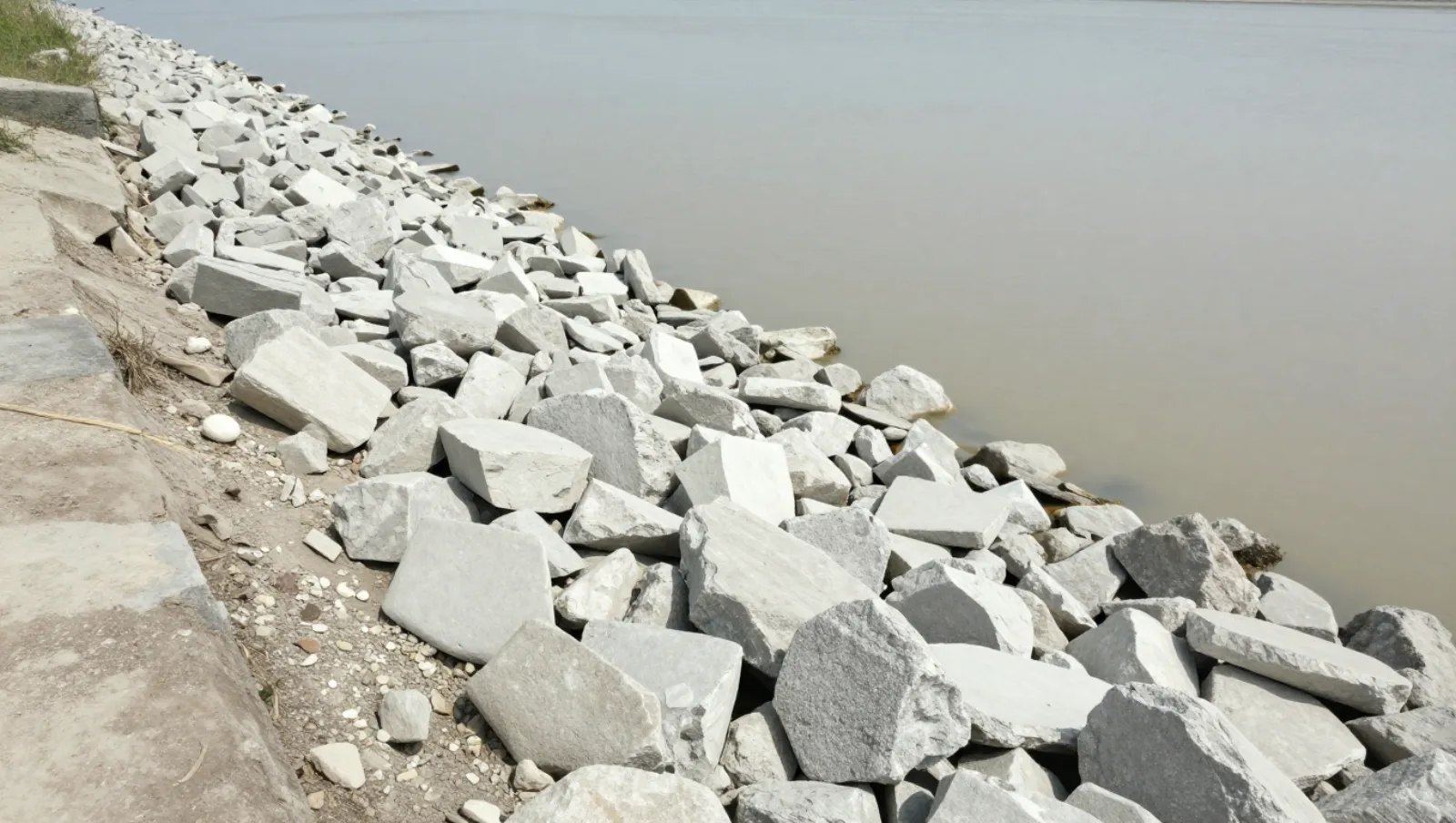
If you've walked outside after a storm in the Houston or Conroe area and found water still sitting in your yard hours later, you already know the frustration. A little standing water after heavy rain is normal. But when it keeps coming back in the same spots, that's yard flooding, and it's telling you something. The rain isn't always the main problem. Nine times out of ten, the real issue is already in the ground before the first drop falls.
Here's what most Texas homeowners don't know: yard flooding is usually a symptom, not the problem itself.
- Houston is one of the most flood-prone cities in the United States, with an estimated 136,000 structures flooded during Hurricane Harvey alone, according toHarris County Flood Control District records.
- The Houston Black clay soil that covers much of the region has a clay content of 46–60%, making water permeability extremely slow, as documented by theUSDA soil series.
Why Your Yard Keeps Flooding After Every Rain
The first thing we hear from property owners is some version of "it only floods when we get a big storm." That's understandable. But when the same low spots in your yard stay wet for 24 to 48 hours after rainfall, or water is consistently pooling near your foundation or fence line, that's not a rain problem. That's a drainage problem.
Yard flooding in this region almost always comes down to one or more of these root causes.
The Soil Itself Is Working Against You
Clay soil drainage is one of the biggest challenges for property owners across the Houston metro, Conroe, and surrounding areas. Texas's native clay, especially the Houston Black series, swells when it gets wet and sheds water sideways instead of letting it soak down. When that clay layer is compacted, which happens naturally over time from foot traffic, mowing equipment, and repeated wet-dry cycles, it becomes nearly impermeable.
What that means practically: even a yard with decent slope can't move water fast enough during a heavy downpour. That water has nowhere to go, and it just sits.
Your Property's Grade Is Off
Grading is the slope of your land, and it determines where water flows. When the grade directs water toward the house, toward a fence line, or into a low pocket with no exit point, that area floods every time. This happens more than people realize, especially on properties that have had construction or landscaping work done over the years.
Small changes in grade from fill dirt, added garden beds, or even settled soil can completely redirect how water moves across a property. You can read more about the warning signs of grading issues in our post ontop signs your property needs yard grading services.
We see this often on lots in the Conroe and Magnolia area where the land is mostly flat. Without a deliberate slope built into the grade, standing water in yard areas is almost guaranteed during heavy rain.
Drainage Infrastructure That's Failing or Missing
A lot of properties out here were built without any underground drainage at all. Others have systems that have clogged, shifted, or collapsed over the years. Tree roots, soil movement, and simple age all work on buried pipes and catch basins.
When drainage infrastructure fails, water that would have moved off the property now has nowhere to go. It backs up, spreads, and sits. Downspouts are another frequent culprit. A standard roof sheds an enormous volume of water during a storm, and if that discharge point is only two or three feet from the foundation and dropping into a low area, you're concentrating a large flow of water directly into your worst drainage spot.
Why Temporary Fixes Usually Don't Work
When people deal with standing water in yard areas year after year, the first instinct is often to throw some topsoil or gravel at the problem. We get it, it's fast and it's cheap. But those solutions rarely address what's actually happening below the surface.
Adding fill dirt to a low spot without correcting the grade or improving drainage just relocates the problem. The water pooling will shift to a new low point, usually somewhere worse. Seeding over a wet area doesn't fix poor drainage, it just means you'll have dead or struggling grass on top of the same wet soil.
Sand is another common attempt at a fix on clay soils. The idea is that sand improves drainage, but when you mix small amounts of sand into heavy clay, you can actually make drainage worse by creating a concrete-like layer. The ratios and methods have to be right, and most DIY attempts miss that.
Real yard drainage solutions address the cause, not the symptom. That means looking at soil conditions, correcting grade, and building a path for water to actually leave the property. Most of the effective yard drainage solutions we install aren't complicated, but they do require the right assessment upfront.
What Actually Solves Yard Flooding in Texas
There's no universal fix. What works depends on the specific combination of problems on your property. That said, here are the approaches that hold up long-term in this part of Texas.
Regrading the Property
When the slope is directing water the wrong way, the land needs to be regraded. This involves moving soil to create the right fall away from the house, away from low spots, and toward an appropriate outlet. A minimum slope of about 6 inches of drop over the first 10 feet away from any structure is a standard starting point, but every property is different.
Regrading on its own works well when the soil can actually accept water at the discharge point. On heavy clay, it often needs to be paired with drainage improvements. Ourland grading services are built around the terrain and soil conditions specific to this region.
Surface Drainage Systems: Swales and Berms
A swale is a shallow, sloped channel that moves surface water from one area to another, typically to a safe discharge point like a ditch or retention area. A berm is a raised strip of soil that blocks or redirects water flow.
These are effective, cost-efficient solutions for properties with yard drainage problems that don't require underground pipe. They work with the natural movement of water rather than trying to fight it. Ourdrainage services page covers both surface and underground options in detail.
Underground Drainage
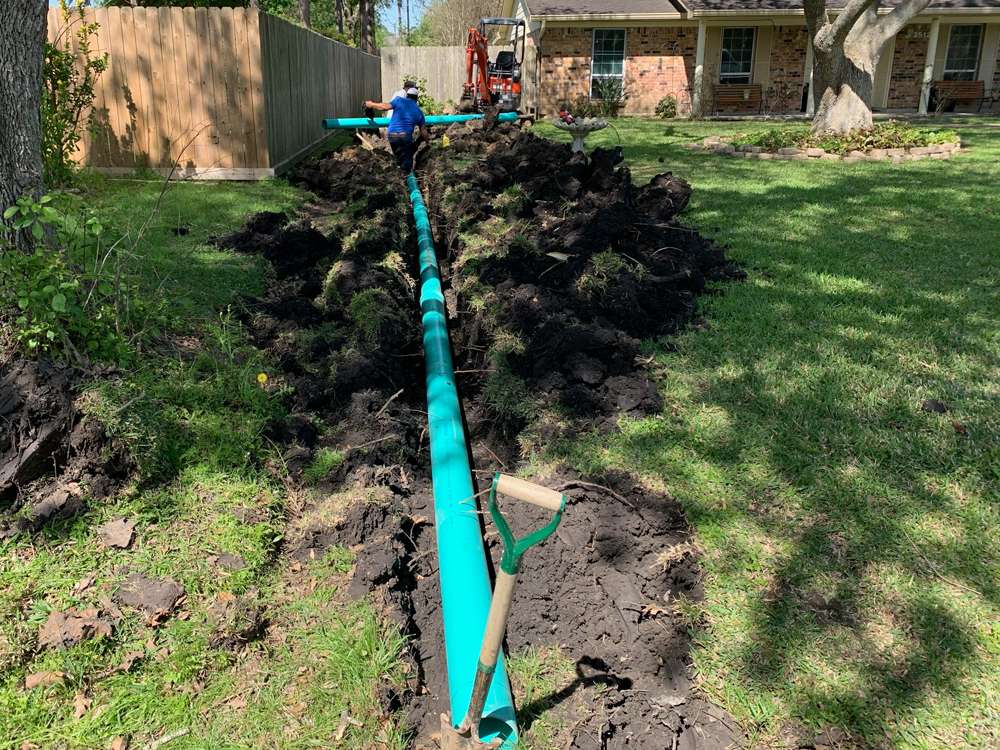
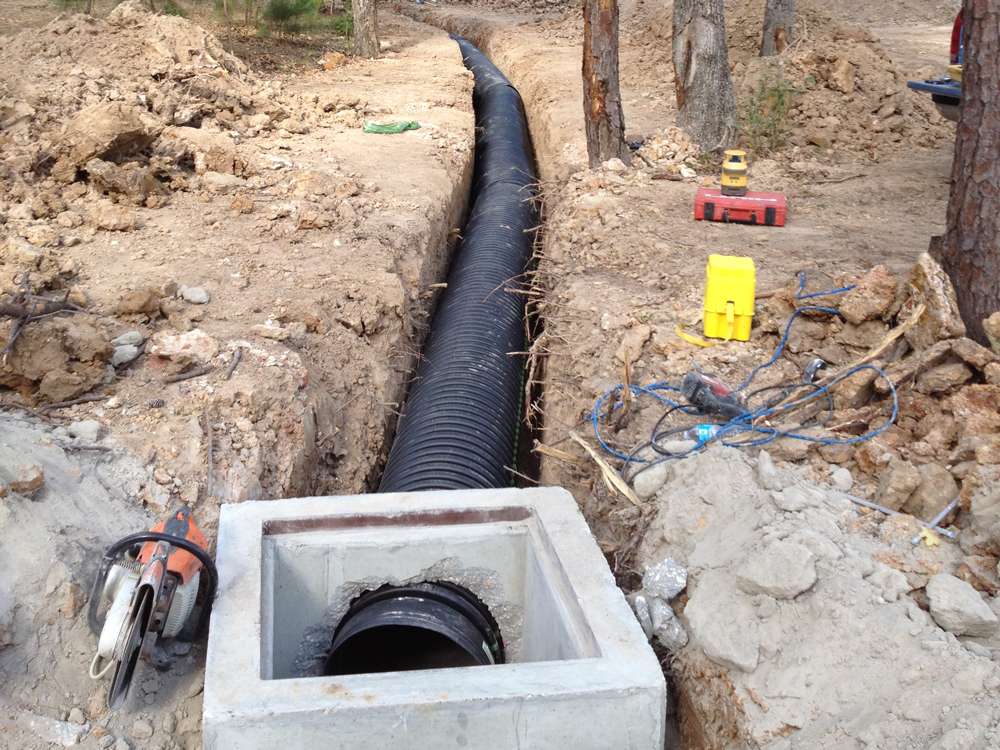
When the volume of runoff is too high for surface-level solutions, underground pipe systems, including French drains and catch basin setups, intercept water before water pooling turns into a standing water problem. A perforated pipe buried in gravel collects subsurface flow and routes it away from the problem area.
These systems work well in areas with poor drainage and recurring water issues, but they need to be sized and sloped correctly. An undersized or poorly designed system will back up under heavy load, which is exactly what you don't want.
Excavation for Retention and Detention
On larger properties, especially those with recurring, widespread yard flooding that can't be corrected by regrading alone, excavation for a retention or detention pond is often the best long-term solution. A properly positioned pond accepts runoff during storms and holds or slowly releases it, keeping the rest of the property dry. In Harris County, the Flood Control District sets the drainage and detention criteria a plan has to meet.
We handle this kind of work regularly across the Houston and Conroe area. If you're dealing with a property where drainage failure is a persistent, multi-area issue, it's worth having someone walk the land and look at the full picture.
For laydown yards and job sites dealing with drainage issues, ourlaydown yard setup checklist covers what needs to be addressed during initial site prep to avoid bigger problems later.
When to Call a Professional
Yard drainage problems that keep coming back after every rain aren't going to resolve on their own. If you're seeing any of the following, it's time to get a professional assessment.
- Water still standing 24 to 48 hours after rainfall ends
- Water pooling against your foundation or near the base of a structure
- The same low spots flood repeatedly, every time it rains
- You've tried surface fixes more than once with no lasting improvement
- Erosion is getting worse along fence lines or berms
We've been doing this work in the Houston and Conroe area for over 30 years. Poor drainage is one of the most common calls we get, and we know how Texas soil and terrain behave. Yard flooding is fixable when you address the right problem.
Final Thoughts on Yard Flooding
Yard flooding in Texas almost never fixes itself. The soil won't suddenly start draining better, and the grade won't correct on its own. What changes is how much damage accumulates in the meantime, from foundation pressure, pest problems, erosion, and dead landscape. The sooner the underlying cause gets addressed, the less it costs to fix.
If you're dealing with recurring yard flooding on your property in Houston, Conroe, Magnolia, or anywhere in the surrounding area, we'd like to take a look.Reach out to our team at Daniel Dean and let's talk through what's happening on your property. We offer land clearing, grading, drainage solutions, excavation, and more. We'll give you a straight answer on what it's going to take to fix it.
About the Author
Daniel Dean has spent over 30 years working land across the Houston and Conroe area. He founded Daniel Dean Land Clearing and Dirt Work in 1993, and has since built a reputation for solving the kind of drainage, grading, and site preparation problems that other crews walk away from. Every project he takes on gets the same approach: look at the land, understand what the water is doing, and fix the right problem.
Frequently Asked Questions
- What should I do if my yard is flooded?
- Start by identifying where the water is coming from and where it's pooling. Avoid high-traffic in saturated areas until the water recedes, then have the site evaluated for grading and drainage issues before the next storm hits.
- What are the 5 types of flooding?
- The five main types are fluvial (river), pluvial (surface runoff), groundwater, coastal, and flash flooding. Yard flooding in Texas is most often pluvial, driven by surface water that can't drain fast enough.
- How do I deal with a flooded lawn?
- Let it drain and dry before attempting any work on the soil. Once it's dry enough to walk on without sinking, assess the low spots and determine whether the cause is grading, soil composition, or failed drainage infrastructure.
- How do I fix drainage issues in my backyard?
- The fix depends on the cause. Minor grading corrections, swales, and berms handle many surface issues. Persistent or severe yard drainage problems typically need underground drainage solutions or regrading with professional equipment.