Gravel Driveway Installation Cost: A Texas Homeowner's Guide
Gravel driveways are one of the most practical investments a Texas property owner can make, but the price range is wide enough to cause confusion before a single shovelful of material moves. According to HomeAdvisor, the average gravel driveway costs around $1,800, with most projects landing between $500 and $3,500. Per HomeGuide, professional installation in Texas runs $4 to $10 per square foot once labor and materials are combined.
Understanding what moves that number up or down is the difference between an accurate budget and an unpleasant surprise on invoice day.
This guide covers gravel driveway installation cost and gravel driveway price across every major variable: materials, labor, site prep, and long-term upkeep.
What Drives Cost To Install Gravel Driveway
No two driveways price out the same way. These are the variables that matter most on a Texas property.
- Driveway size is the biggest line item. More square footage means more material, more labor hours, and more equipment time. Most residential driveways fall between 400 and 2,000 square feet, but rural Texas properties with longer runs to the road push well above that.
- Gravel type shifts material costs significantly. Budget options like road base and recycled asphalt run $25 to $40 per cubic yard in Texas, while decomposed granite and premium crushed stone run $40 to $65 per cubic yard.
- Site preparation is where Texas soil creates extra costs. Clay-heavy ground common in Southeast Texas and the Houston area requires more grading before any gravel goes down. Grading alone costs $1 to $3 per square foot, and sites with significant slope or drainage issues can push labor costs up by 20 to 50 percent.
- Labor rates in Texas run 20 to 30 percent below national averages, which is one reason gravel driveways are so popular here compared to higher-cost markets on the coasts.
Gravel Driveway Cost Per Square Foot
For Texas homeowners comparing options, here is how gravel stacks up against the alternatives.
| Driveway Type | Cost Per Square Foot |
|---|---|
| Gravel | $1 to $5 |
| Asphalt | $6 to $10 |
| Concrete | $6 to $15 |
Gravel wins on upfront cost in almost every comparison. A standard two-car gravel driveway at 800 square feet typically costs $960 to $4,800 installed in the Texas market, while the same footprint in concrete runs nearly three times that.
Cost to Install Gravel Driveway by Size
| Driveway Size | Estimated Total Cost |
|---|---|
| Small (400 sq ft) | $500 to $2,000 |
| Standard two-car (640 to 800 sq ft) | $960 to $4,800 |
| Large residential (1,500+ sq ft) | $3,500 to $8,000+ |
| Private road (100 ft x 10 ft) | $2,600 to $5,000 |
Larger projects benefit from lower per-square-foot rates as equipment setup costs spread across more ground. If you are installing a long rural driveway or a private road on a larger tract, the per-square-foot rate drops meaningfully compared to a small residential job.
Best Gravel Types for Texas Driveways
Texas heat, clay soil, and heavy rain events all affect how different gravel types perform over time.
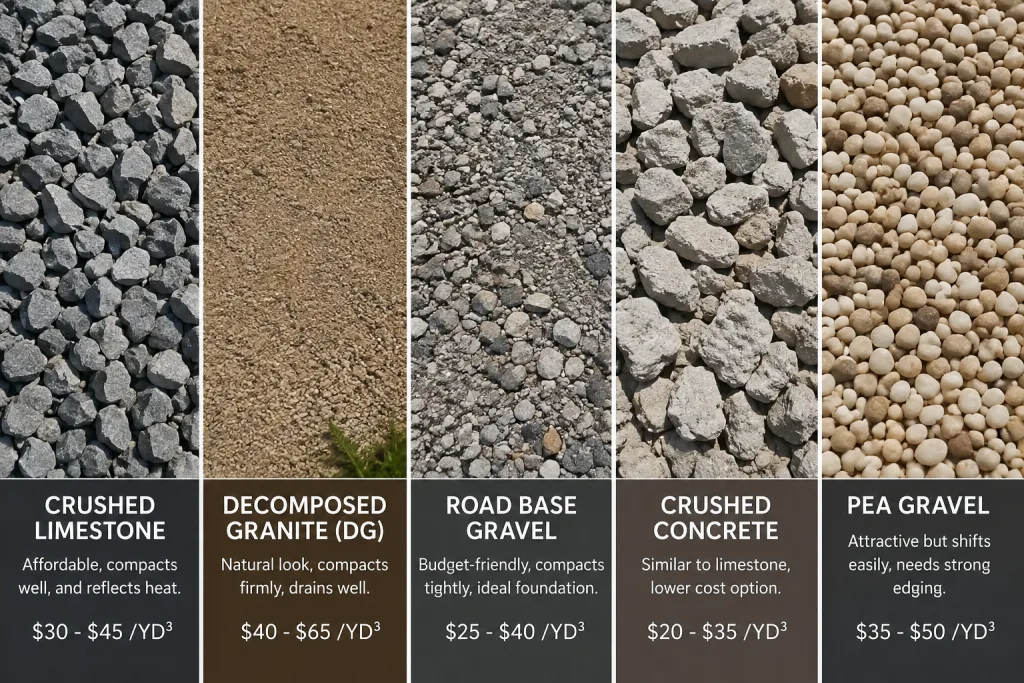
- Crushed Limestone is the most common choice across Texas. Affordable at $30 to $45 per cubic yard, it compacts well in the heat and holds up under daily vehicle traffic. The lighter color reflects heat rather than absorbing it, a real advantage in Southeast Texas summers.
- Decomposed Granite (DG) runs $40 to $65 per cubic yard and works well on properties where curb appeal matters. It compacts into a firm, natural-looking surface and drains well. Best used as a top layer over a crushed stone base.
- Road Base Gravel is the most budget-friendly option at $25 to $40 per cubic yard. It is a mix of crushed stone and fine particles that compacts tightly, making it the standard foundation layer for most Texas driveway builds.
- Crushed Concrete performs similarly to limestone at a lower cost and works well for long driveways and rural roads where budget is the primary concern.
- Pea Gravel looks attractive but shifts under vehicle weight and migrates into lawn areas without strong edging. Best used as a decorative accent, not a standalone surface.
Gravel Driveway Base: Why It Matters More Than the Surface
Most homeowners focus on the top layer, but the base is where a driveway either holds up or fails. A properly built Texas gravel driveway uses three layers.
- Base layer: 4 to 6 inches of compacted road base or crushed stone #3 for drainage and load distribution
- Middle layer: 3 to 4 inches of crush and run or angular stone that locks together under compaction
- Top layer: 2 to 3 inches of finish gravel, typically crushed limestone or decomposed granite
Texas clay soil shifts seasonally, and without a compacted foundation beneath the surface gravel, ruts and soft spots appear fast. If your site has drainage issues, proper grading before layering is non-negotiable. Our site grading and pond preparation guide explains how grading decisions affect water flow across the entire property.
Gravel Driveway Installation: What the Process Looks Like
- Site clearing. Vegetation, debris, and old surface material get removed. If trees are coming out near the driveway path, factor that in early. Our Texas tree removal cost guide covers what to budget for that phase.
- Grading and shaping. Ground is cut and shaped to move water off the surface. Poor grading leads to standing water, erosion, and early failure.
- Base layer installation. Road base goes down first and gets compacted with heavy equipment. This step cannot be skipped.
- Middle and top layers. Additional gravel layers go down in sequence with compaction between each one.
- Edging. Metal, timber, stone, or brick borders keep gravel contained and off the surrounding lawn.
On properties with slopes or washout risk, erosion control alongside the driveway is worth budgeting. Our riprap erosion control guide covers how to protect driveway edges and drainage channels from heavy rain.
Gravel Driveway Maintenance and Long-Term Costs
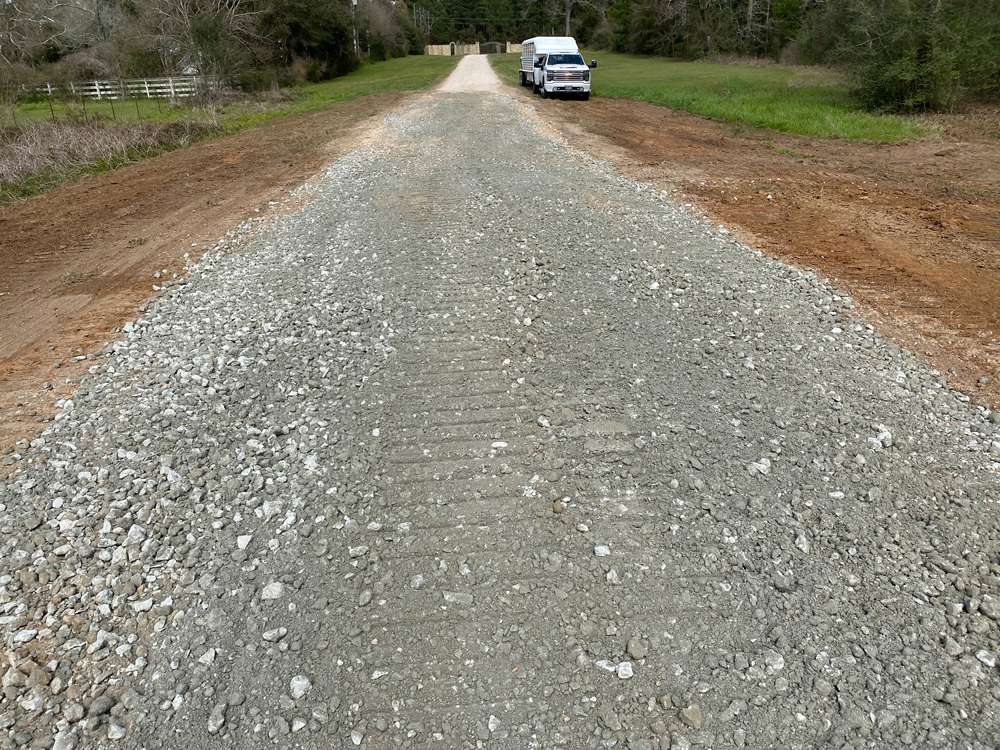
Gravel is low maintenance, not no maintenance. Texas weather creates specific upkeep needs.
- Regrading is typically needed every one to three years. Budget $200 to $600 for a standard residential regrade.
- Topping off with fresh gravel restores the surface after material migrates or compacts down. Plan on adding material every two to five years.
- Pothole repair is straightforward: fill, compact, done. No specialized equipment or curing time required like asphalt or concrete.
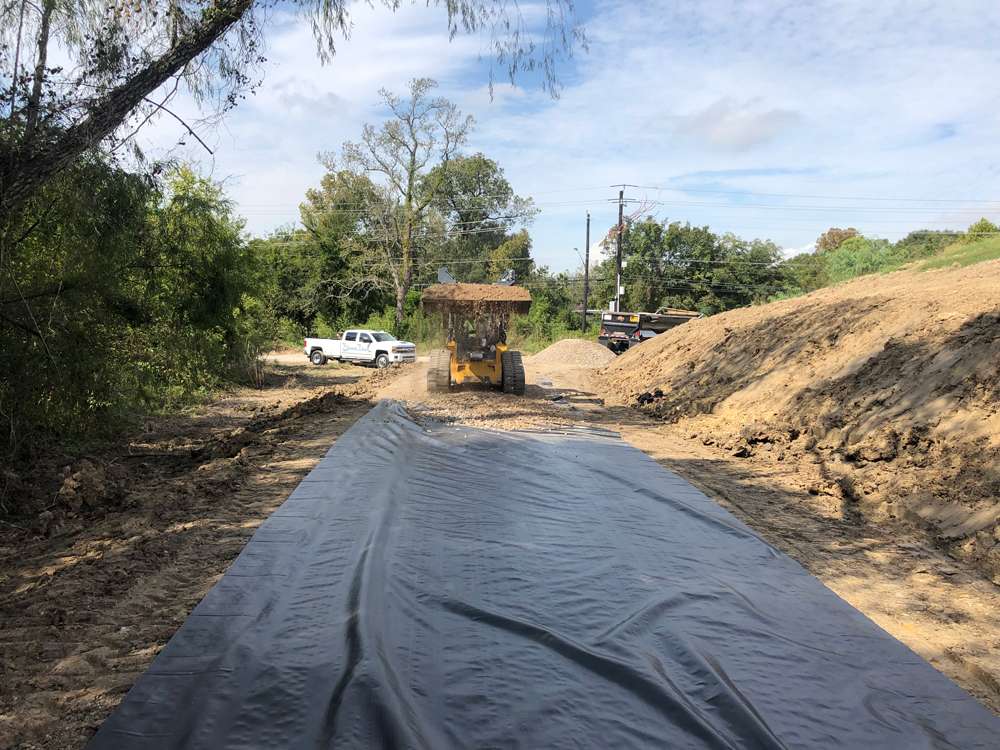
- Weed control is easier with geotextile fabric installed under the base layer. Spot-treat what breaks through with a gravel-safe herbicide.
Why Texas Property Owners Choose Daniel Dean
At Daniel Dean, we handle the full scope of site preparation work that gravel driveway projects demand. From land clearing and tree removal to grading, drainage, and gravel installation, our crew brings the equipment and experience to get the ground ready right the first time.
We serve residential, rural, and commercial properties across the Houston and Southeast Texas region. Whether you need a simple driveway refresh or full site prep for a new build, we keep pricing straightforward and show up when we say we will. If your project involves more than just the driveway, we coordinate clearing, grading, and installation as a single job so nothing falls through the cracks.
Final Thoughts on Gravel Driveway Installation Cost
Gravel driveway installation cost in Texas is manageable compared to concrete or asphalt, but only when the base is done right. The right gravel type, proper layering, and solid grading work upfront determine how long that driveway holds up through Texas heat and heavy rain. Skipping steps on any of those three points is where projects run into problems.
Ready to get your driveway or site prep done right? Contact Daniel Dean for a no-hassle quote on gravel driveway installation, land clearing, grading, and other services across Houston and Southeast Texas. We are happy to answer questions and walk you through what your property actually needs.
About the Author
Daniel Dean is a Texas-based contractor specializing in land clearing, dirt work, site grading, and driveway installation across the Houston and Southeast Texas region. With years of hands-on experience preparing residential and rural properties for long-term use, Daniel and his crew bring practical knowledge to every project, from the base layer up.
Frequently Asked Questions
- How much does it cost to install a gravel driveway in Texas?
- Most Texas homeowners pay $1 to $5 per square foot. A standard two-car driveway at 800 square feet typically runs $960 to $4,800 installed. Texas labor rates run 20 to 30 percent below national averages, making gravel installation here more affordable than in most other states.
- What is the best gravel for a Texas driveway?
- Crushed limestone is the most popular and practical choice for most Texas properties. It is affordable, compacts well in the heat, and holds up under heavy vehicles. Decomposed granite works well as a finish layer when appearance matters.
- How thick should a gravel driveway be in Texas?
- A properly built driveway totals 9 to 13 inches across three layers: 4 to 6 inches of compacted road base, 3 to 4 inches of mid-grade stone, and 2 to 3 inches of finish gravel. Skimping on depth, especially on Texas clay soil, leads to early rutting.
- How long does a gravel driveway last in Texas?
- A properly installed gravel driveway with a compacted base can last 20 to 100 years with regular maintenance. Surface gravel needs replenishing every two to five years, and regrading every one to three years depending on rainfall and traffic.