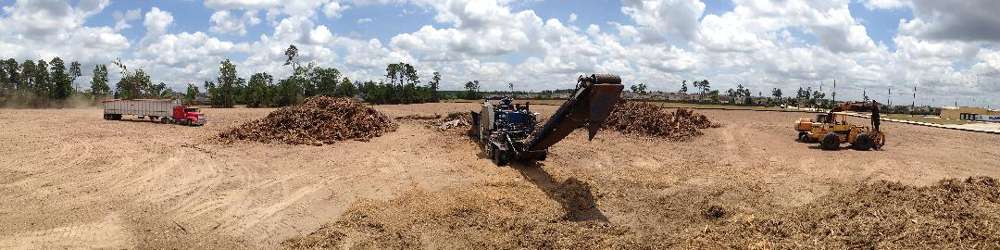
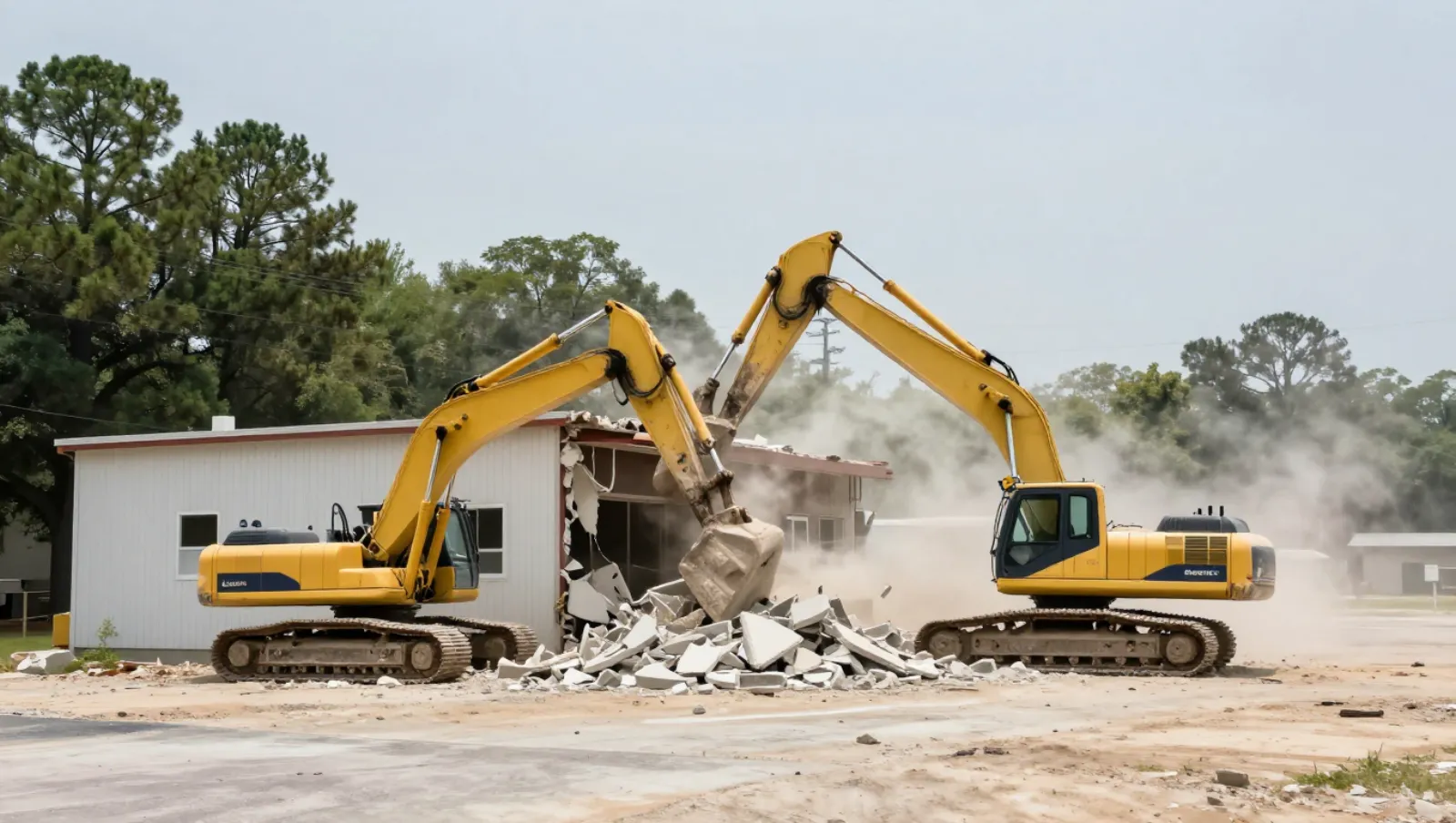
Demolition around Conroe runs from small commercial buildings and shops to concrete slabs, foundations, and outbuildings on rural property. On acreage the constraint is rarely space — it is what happens to the debris once the structure is down.
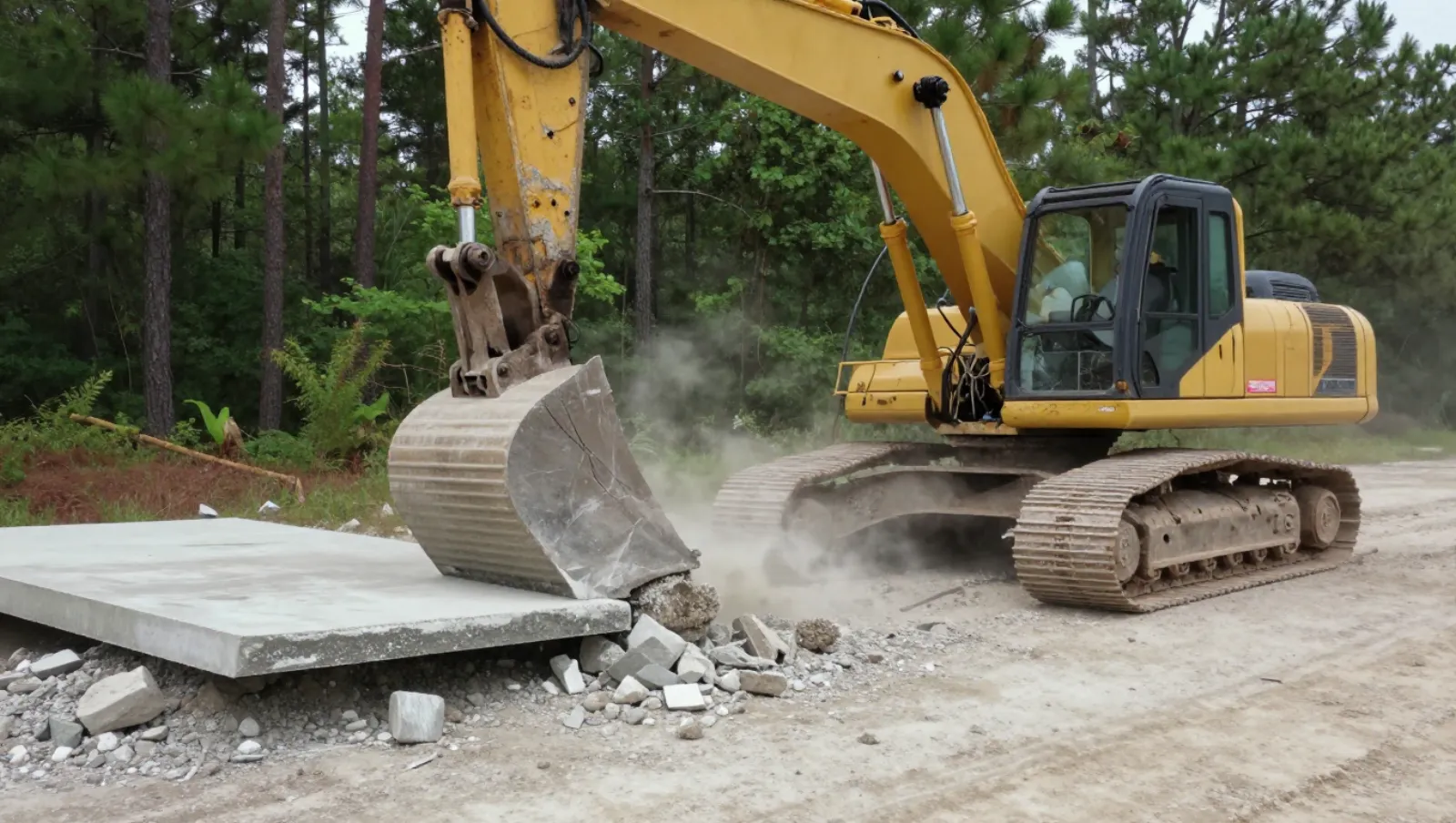
Concrete is the expensive part of most of these jobs. Broken slab and foundation material is heavy, it prices by weight at disposal, and the volume is usually larger than people expect from looking at the building.
Utility disconnects have to be confirmed before anything starts, and on older Montgomery County properties there is sometimes a septic system or a well that needs handling as part of the job rather than as a surprise afterward.
What this covers in Conroe
- Commercial building and shop demolition
- Concrete slab and foundation removal
- Outbuilding, barn, and mobile home teardown
- Debris haul-off and site cleanup to grade
- Septic and well handling on older rural properties
How the work runs in Conroe
Confirm utility disconnects in writing
Electric, gas, water, and sewer all have to be confirmed disconnected before anything starts. This is the single most common reason a demolition date slips.
Protect what stays
Neighbouring structures, fences, driveways, and trees are protected before the machine starts. On a tight lot this decides which equipment is used.
Take it down and separate
The structure comes down and material is separated as it goes — concrete, metal, and general debris price very differently at disposal.
Haul off and leave it at grade
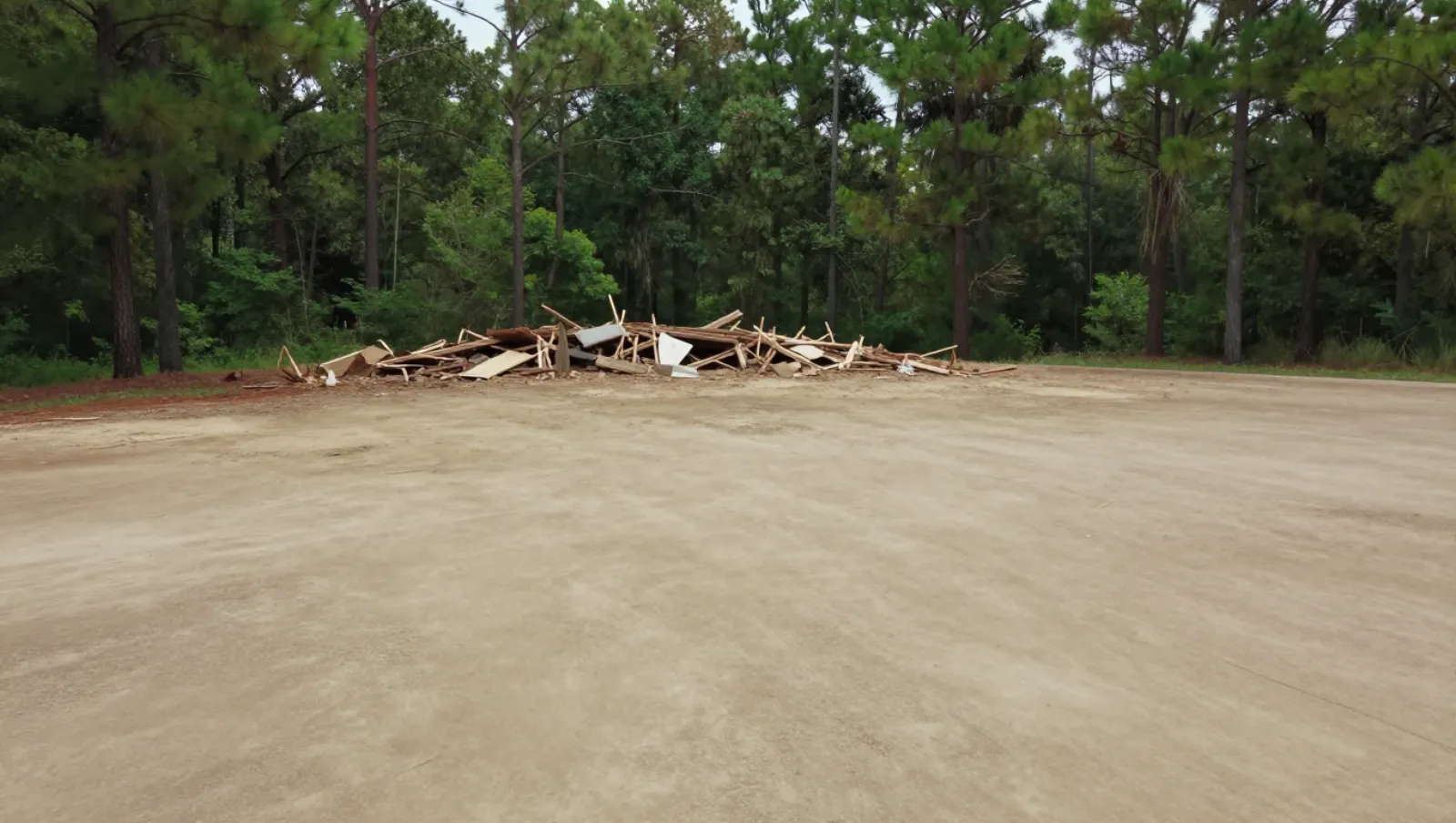
The lot is left cleared and graded rather than with rubble stacked on it, so the next trade can start.
Demolition Contractors in Conroe — common questions
- Do I need a permit to demolish in Conroe?
- Usually yes, and it is confirmed before we start rather than discovered midway. Requirements vary by jurisdiction and by what is coming down — a residential accessory building, a house, a pool, and a commercial structure are treated differently. Utility disconnects generally have to be documented as part of it.
- How much does demolition cost?
- The structure itself is rarely the expensive part. Cost is driven by disposal — concrete and masonry price by weight and the volume is usually larger than people expect — plus access, utility disconnects, and anything hazardous that has to be handled separately. A site walk gives a real number.
- What is the difference between partial and full pool removal?
- A partial removal breaks up the shell, punches the bottom so it drains, and backfills. It is faster and cheaper but has to be disclosed when the property sells. A full removal takes out every piece of concrete and rebar and backfills with compacted select fill, which leaves ground that can carry a structure later.
- Will the lot be usable when you finish?
- That is the intent. Debris is hauled off rather than stacked, and the site is left graded so the next trade can start. On a rebuild, leaving the pad at the right elevation saves a separate mobilisation later.
Areas we serve around Conroe
Willis · Montgomery · Woodforest · Lake Conroe · Magnolia · Montgomery County