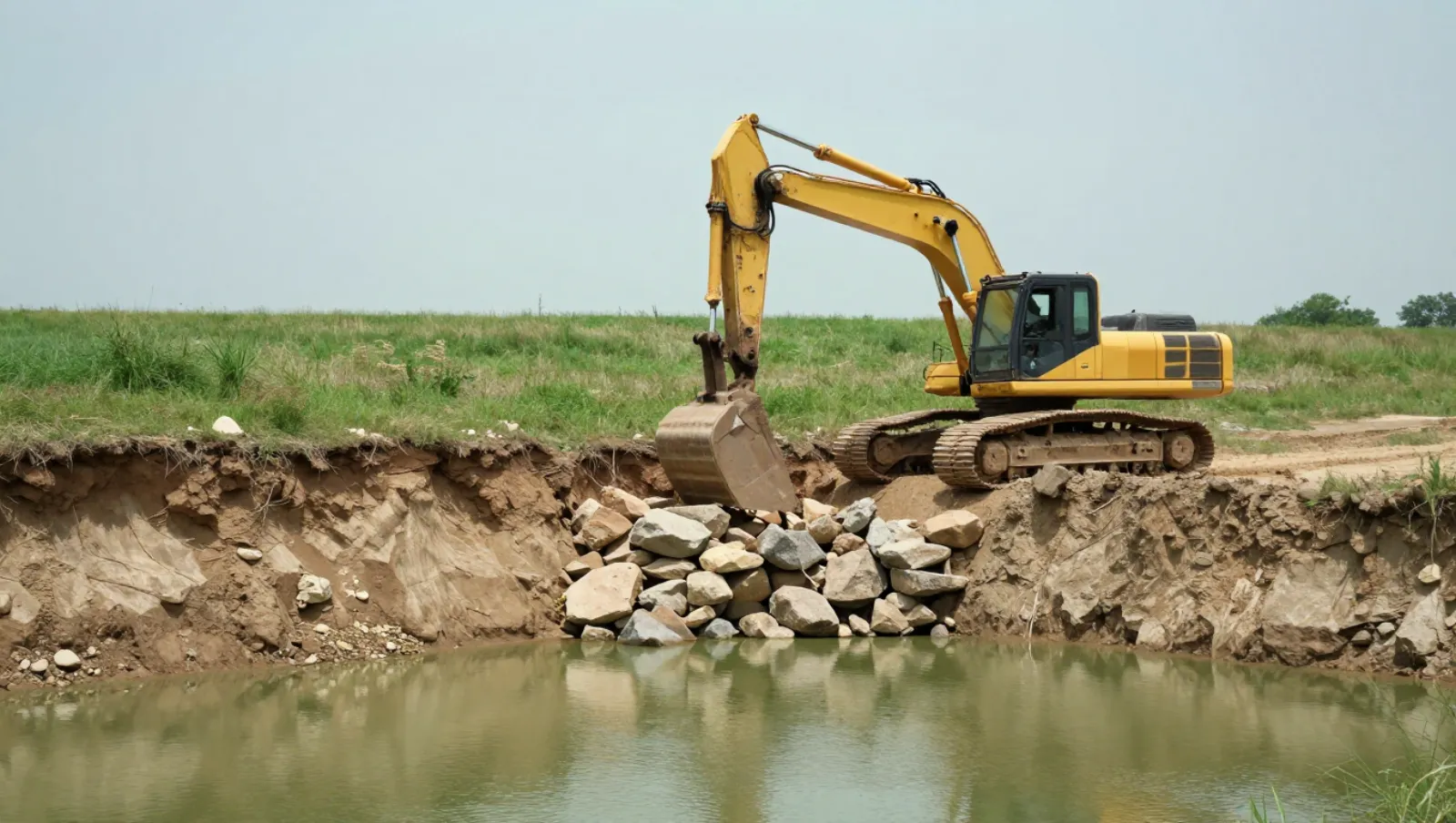
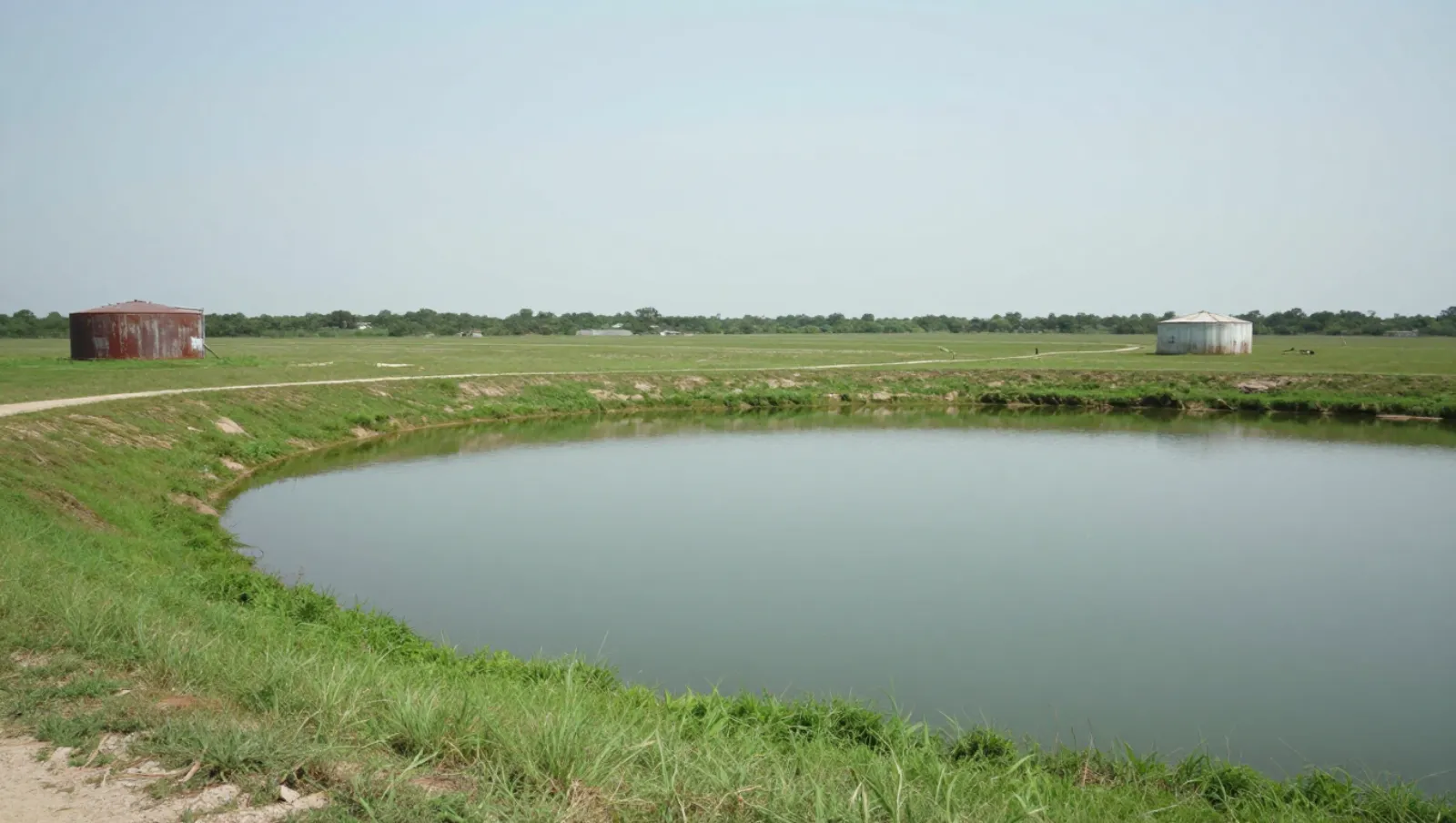
Richmond and the Fort Bend prairie around it has a lot of older stock ponds and tanks that were dug decades ago for cattle and never maintained since. What they need now is rarely a new pond — it is repair of the one that is there.
The usual pattern is the same three problems together: the basin has silted in and lost depth, the banks have been trodden down and eroded by livestock, and the dam or spillway has washed at the low point. Fixing one without the others buys a short reprieve.
Fort Bend clay generally holds water well, which is good news for repair work: a leaking pond here is more often a compromised dam or an animal burrow through it than genuinely permeable soil.
What this covers in Richmond
- Dredging and desilting to restore original depth
- Bank rebuilding and stabilisation where livestock have broken them down
- Dam repair and spillway reconstruction
- Leak investigation before assuming the soil is at fault
- Vegetation and debris removal
How the work runs in Richmond
Assess depth, banks, and water source
We sound the basin to see how much capacity has been lost to silt, check the banks and dam, and identify what feeds the pond — the source usually explains the problem.
Plan where the spoil goes
Dredged material does not disappear. Using it on site for a dam, a pad, or field spreading costs less than hauling it away, so this is settled before machines arrive.
Dewater or work wet
Repair, dam work, and desilting usually need the water managed before equipment can reach the bottom. That step is part of the schedule, not an afterthought.
Rebuild banks and stabilise
Once depth is restored the banks are reshaped and protected, or the same erosion refills what was just removed.
Pond Repair & Dredging in Richmond — common questions
- How do I know if my pond needs dredging?
- The surface looks the same whether a pond is eight feet deep or two. The signs are indirect: it warms and turns over faster, weeds take hold across more of the surface, the edges creep inward, and the water clouds after rain and stays cloudy. Sounding the basin settles it in an afternoon.
- What happens to the material you dredge out?
- It has to go somewhere, and that decision drives a large part of the cost. Using it on site — building the dam up, forming a pad, or spreading it back on surrounding ground — is considerably cheaper than hauling it off, and on agricultural land it is usually topsoil that came off those fields to begin with.
- Do you have to drain the pond first?
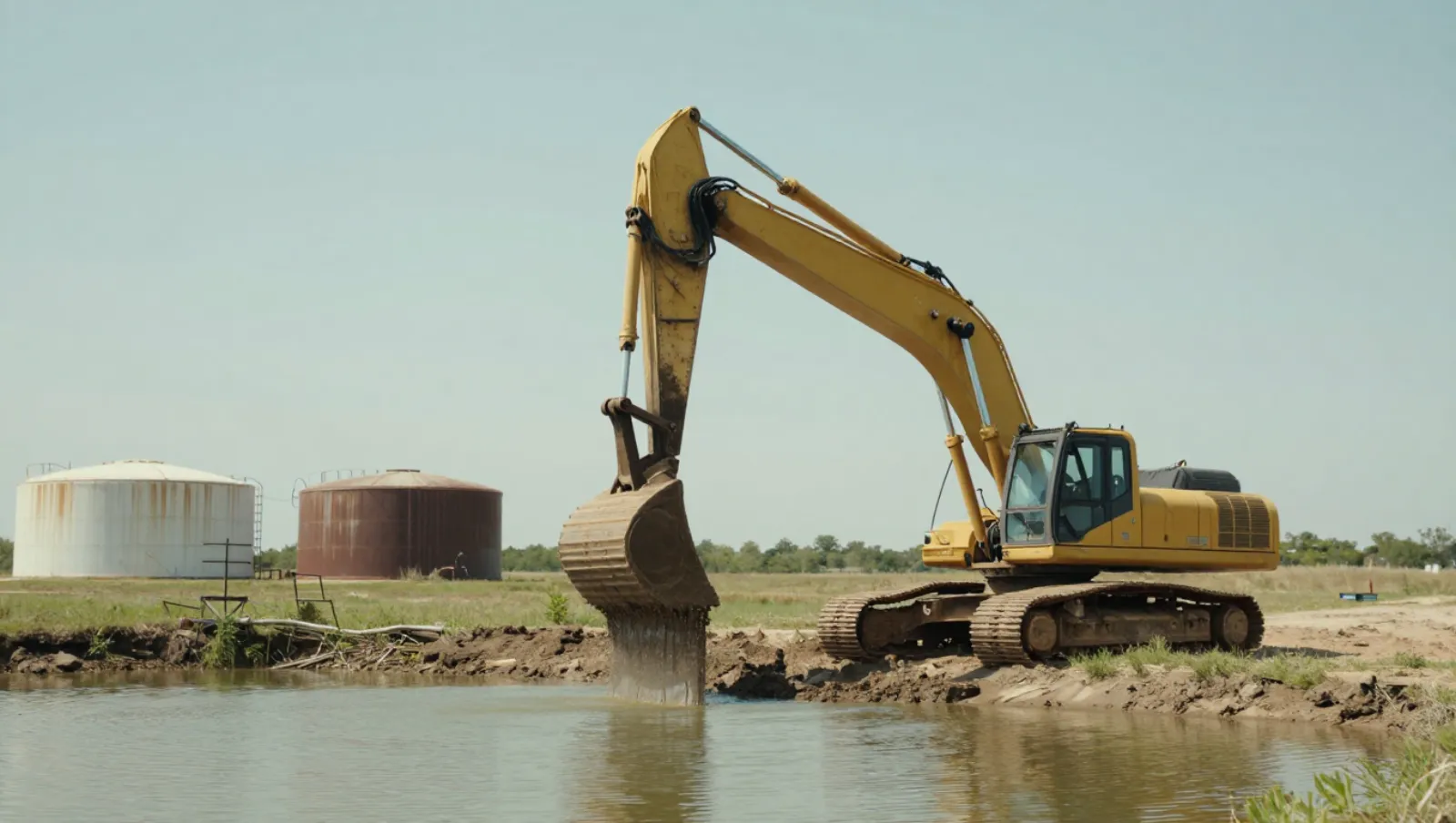
- Not always. Some work is done from the bank with a long-reach machine while the pond holds water. Dam repair, structure work, and full-basin desilting usually need the water pumped down or otherwise managed so equipment can reach the bottom, and that step is part of the schedule.
- My pond will not hold water. Is the soil the problem?
- Often it is not. Around here the soil usually holds water well, so a leaking pond is more often a compromised dam, an animal burrow through it, or a failed structure than genuinely permeable ground. Worth diagnosing before anyone sells you a liner.
Areas we serve around Richmond
Rosenberg · Needville · Fulshear · Simonton · Wallis · Fort Bend County