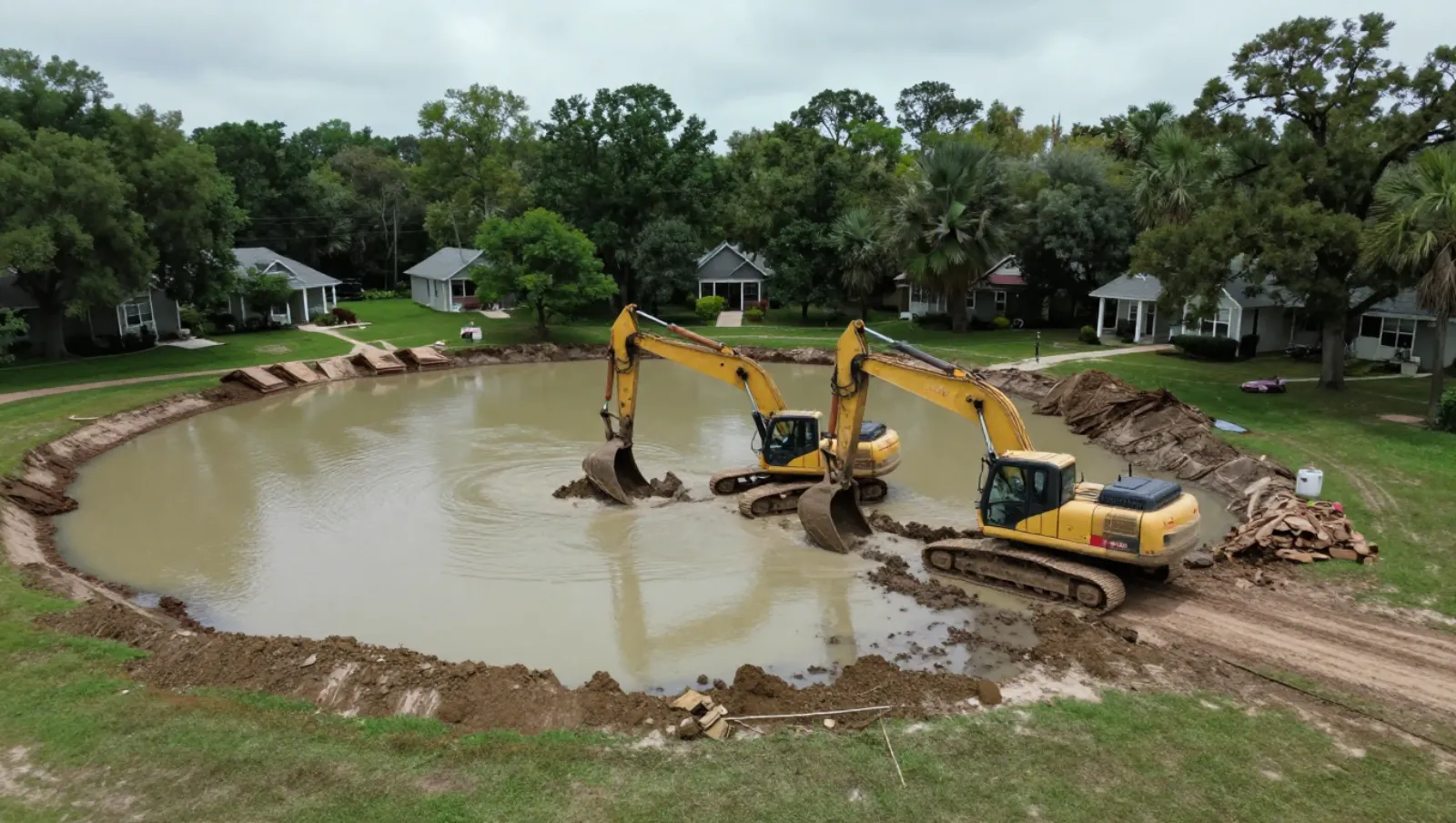
Houston sits on heavy Gulf Coast clay, which is the reason so many ponds here hold water well but silt in fast. Runoff off surrounding lots carries fine sediment into the basin every heavy rain, and over a few seasons that settles into a soft layer that steals depth without changing the surface at all.
How big the pond is and how deep you want it is the base number the rest of the quote builds on — a small stock pond behind a house in Cypress moves very different volumes of dirt than a multi-acre amenity lake on a commercial tract. We size the machine to the job and the access, not the other way around.
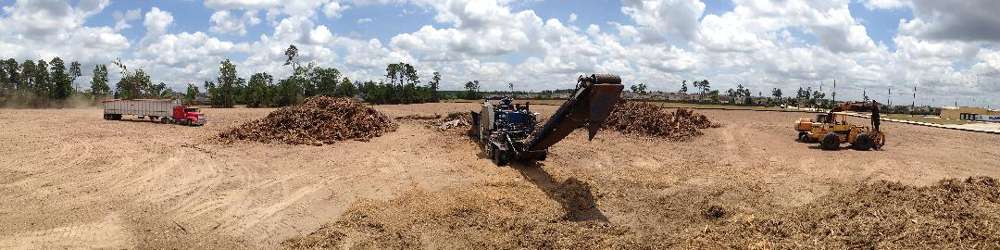
Dirt that comes out of the hole does not disappear. Building the dam, a building pad, or raised mounds from that spoil costs less than hauling it off site, so where the spoil goes is one of the first things we work out on a Houston property where haul-off means fighting traffic.
What this covers in Houston
- New pond and lake excavation, sized to the property and its water source
- Dredging and desilting to restore depth lost to years of runoff
- Dam building, repair, and spillway work
- Pumping and water management before equipment reaches the bottom
- Bank shaping and erosion protection on the finished edge
How the work runs in Houston
Assess depth, banks, and water source
We sound the basin to see how much capacity has been lost to silt, check the banks and dam, and identify what feeds the pond — the source usually explains the problem.
Plan where the spoil goes
Dredged material does not disappear. Using it on site for a dam, a pad, or field spreading costs less than hauling it away, so this is settled before machines arrive.
Dewater or work wet
Repair, dam work, and desilting usually need the water managed before equipment can reach the bottom. That step is part of the schedule, not an afterthought.
Rebuild banks and stabilise
Once depth is restored the banks are reshaped and protected, or the same erosion refills what was just removed.
Pond Construction & Dredging in Houston — common questions
- Do you design and build new ponds, or only maintain existing ones?
- Both. New construction covers siting, excavation, dam and spillway, and the shaping that decides whether the pond holds and stays clear. On existing water we dredge, repair dams, rebuild banks, and manage vegetation. Commercial and amenity ponds are also normal work — those usually come with an engineered volume and an outlet to build to.
- What happens to the material you dredge out?
- It has to go somewhere, and that decision drives a large part of the cost. Using it on site — building the dam up, forming a pad, or spreading it back on surrounding ground — is considerably cheaper than hauling it off, and on agricultural land it is usually topsoil that came off those fields to begin with.
- Do you have to drain the pond first?
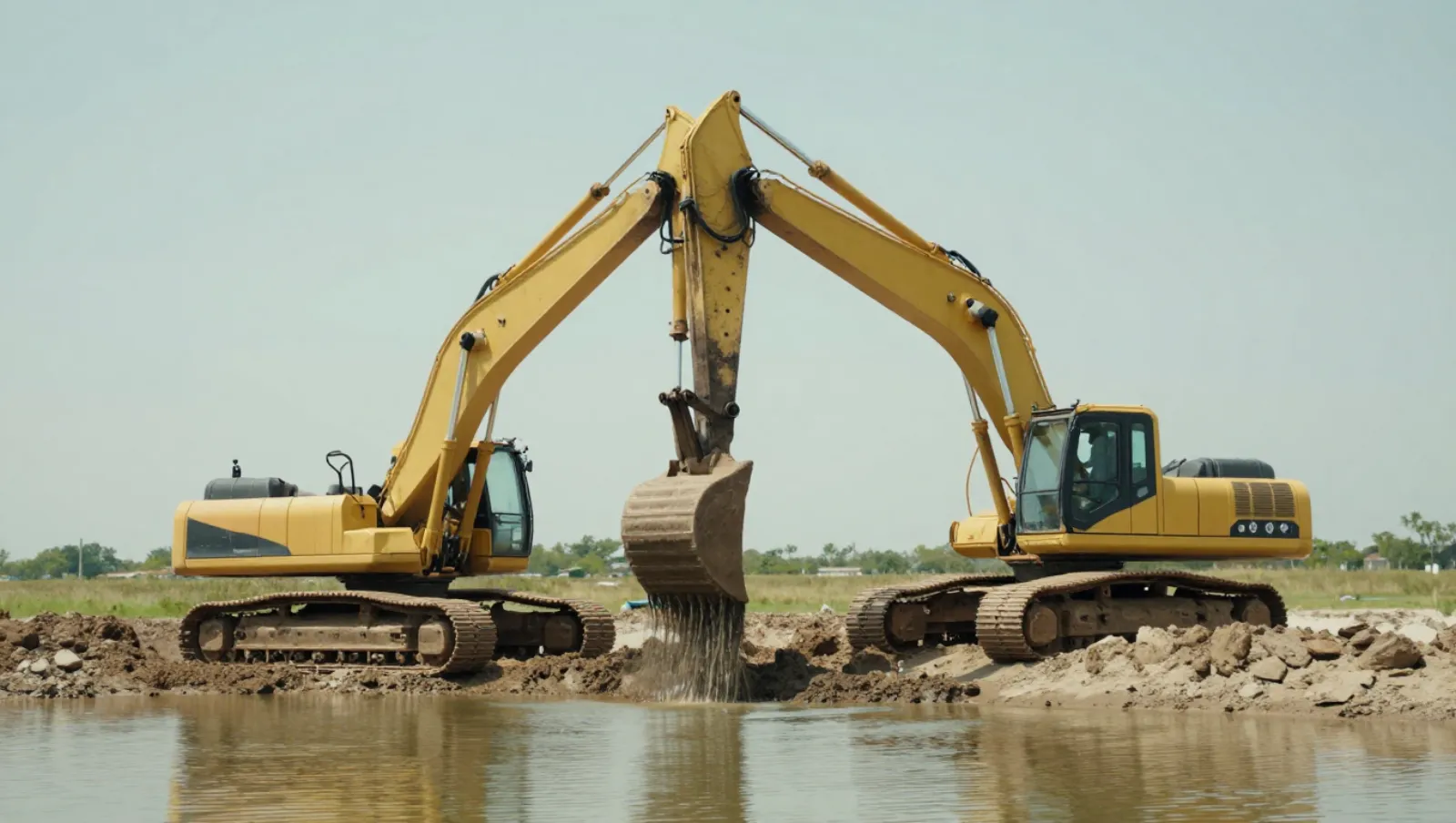
- Not always. Some work is done from the bank with a long-reach machine while the pond holds water. Dam repair, structure work, and full-basin desilting usually need the water pumped down or otherwise managed so equipment can reach the bottom, and that step is part of the schedule.
- My pond will not hold water. Is the soil the problem?
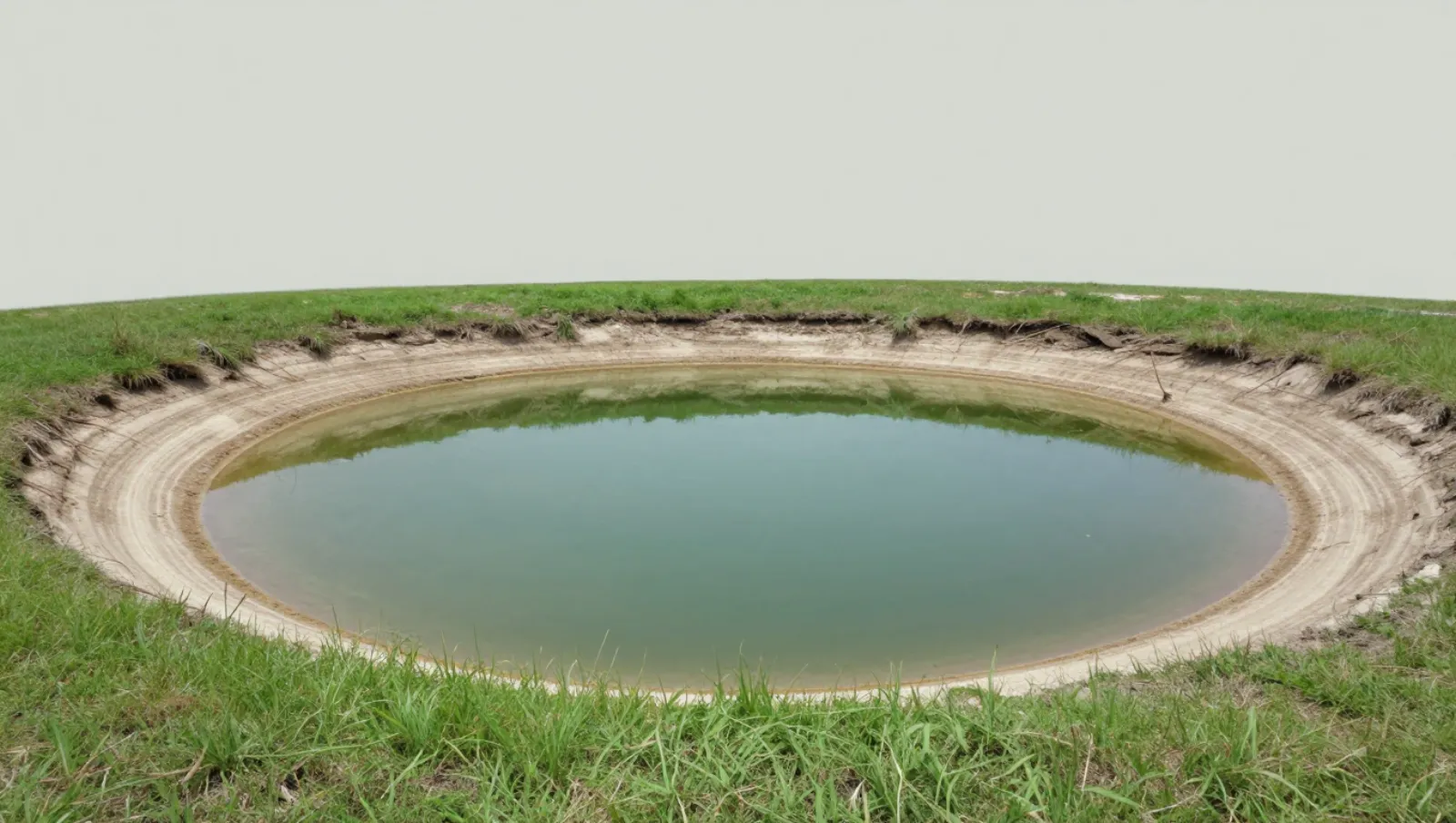
- Often it is not. Around here the soil usually holds water well, so a leaking pond is more often a compromised dam, an animal burrow through it, or a failed structure than genuinely permeable ground. Worth diagnosing before anyone sells you a liner.
Areas we serve around Houston
Cypress · Spring · Katy · Tomball · Kingwood · Sugar Land · Richmond · Fulshear